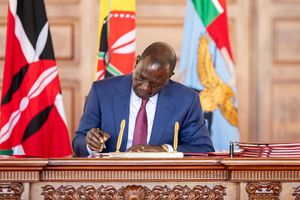
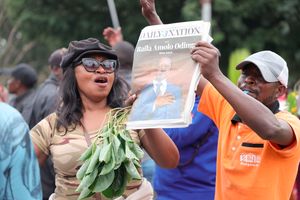
This week, Tanzanians went to the polls in what many called a predetermined outcome. As vote counting continues, President Samia Suluhu Hassan is expected to secure victory after her government systematically dismantled any meaningful opposition, with the main opposition party Chadema disqualified and its leader Tundu Lissu jailed on treason charges since April.
On election day, the government shut down the internet entirely. More than 200 cases of enforced disappearance have been recorded in Tanzania since 2019, painting a grim picture of a nation once regarded as peaceful and politically apathetic.
Yet beneath this manufactured calm, something extraordinary is stirring. Tanzania’s Gen Z, emboldened by their Kenyan counterparts, took to the streets despite brutal repression. On election day, hundreds marched singing “We want our country back”. This youth-led resistance echoes a familiar pattern from 60 years ago, one that ultimately broke the chains of colonialism across our continent.
In February 1960, British Prime Minister Harold Macmillan declared: “The wind of change is blowing through this continent and, whether we like it or not, this growth of national consciousness is a political fact”.
That speech acknowledged what colonial powers could no longer deny — African peoples would determine their own destiny. Today, a new wind of change sweeps across our nations, this time against home-grown tyranny.
The brutality President Suluhu has unleashed is not confined within Tanzania’s borders. In January, Tanzanian journalist Maria Sarungi Tsehai, who had been living in Kenya since 2020 after fleeing persecution, was abducted and assaulted in broad daylight in Nairobi’s Kilimani area. Only after massive public outcry was she released.
Subjected to horrific torture
In May, Kenyan activist Boniface Mwangi and Ugandan human rights defender Agather Atuhaire travelled to Tanzania to observe Tundu Lissu’s trial. They were arrested, held incommunicado, and subjected to horrific torture including sexual assault before being dumped at their respective borders.
Most recently, on October 1, Kenyan activists Bob Njagi and Nicholas Oyoo were abducted at a petrol station in Kampala while attending opposition leader Bobi Wine’s campaign rallies. Nearly a month later, their whereabouts remain unknown. Both the Ugandan military and police deny holding them, with courts confirming they are not detained in Uganda. This raises a chilling possibility: that they may have been handed to Kenyan authorities in yet another cross-border exchange of political prisoners.
This is transnational repression in its ugliest form. East African autocrats have forged an unspoken pact: we will crush your dissidents for you, and you will crush ours for us.
But here is what terrifies these autocrats: Gen Z refuse to be cowed. Despite over 75 young Kenyans being charged with terrorism for protesting, some for merely posting videos, and over 1,500 arrested since June 2024, they keep coming back. On the anniversary protests in June and July 2025, at least 65 people were killed by security forces, yet tens of thousands returned to the streets.
They organise across borders now, learning from each other’s tactics, sharing strategies on platforms governments desperately try to shut down. Tanzania restricted X before the polls, then shut down the entire internet on election day. But in their panic to silence us, they reveal their weakness. Dictators who must cut the internet to hold an election have already lost the moral argument.
In his chronicle “The State of Africa”, historian Martin Meredith documents how colonial powers inflicted fearful repression to stamp out rebellions, with German administrations in Tanganyika annihilating more than three-quarters of the Herero people between 1904 and 1908. President Suluhu's response to peaceful dissent mirrors the colonial mindset that saw African self-determination as a threat requiring violent suppression.
Corruption-funded alliances
Yet the colonial powers lost. Why? Because once one domino fell, the rest followed. When Ghana achieved independence on March 6, 1957, becoming the first sub-Saharan African nation to break free, it set off a cascade. By the end of the 1960s, most African countries had gained independence. Ghana's success proved liberation was possible.
This is precisely what keeps President Suluhu, President Ruto, and their fellow autocrats awake at night. If Gen Z in one country successfully takes power and governs differently, the contagion of hope will spread faster than they can contain it.
Gen Z must organise not just to protest but to govern, to build institutions, to prepare for the responsibility of power when it inevitably comes.
To Africa’s autocrats: your grip is loosening. The more violently you suppress, the more you expose your weakness. You can conspire across borders, exchange abducted activists, share tactics of repression. But understand this: we are organising too. And unlike your corruption-funded alliances, ours is built on something you’ll never understand: the unshakeable belief that this continent belongs to its people, not to you.
The wind of change is blowing through this continent again. This time, it comes not from Westminster, but from Nairobi, Dar es Salaam, Kampala, Antananarivo, from the streets where young people are reclaiming their future.
The question is not whether change will come. History has already answered that. The question is: will you be ready when it does?
The writer is a whistleblower, strategy consultant, and start-up mentor. www.nelsonamenya.com