Most clouds have a silver lining. Even the most ominous ones. That’s true of the 2007-2008 genocidal violence that followed the general elections. I won’t rehash old grievances, but Kenyans went to bed convinced ODM’s Raila Odinga had beaten PNU’s Mwai Kibaki in the presidential vote.
Then the late and mysterious Tharaka Nithi vote shocked and befuddled the nation. Mr. Kibaki was declared the winner and sworn in at night by an apparently captive electoral body chair, the late Samuel Kivuitu. The country exploded in unprecedented spasms of bloody inter-ethnic violence.
This existential crisis gave birth to the National Integration and Cohesion Commission (NCIC). A creature of statute, the NCIC is Kenya’s primary anti-hate institution. Has NCIC vindicated its mandate?
The simple answer is no. The NCIC has been a miserable failure. The first culprit of the NCIC’s dismal performance is its establishing statute. That statute denies it any teeth. So, the NCIC has been unable to bite. It says that it would need prosecutorial powers to have any oomph. But is that true?
There are several bodies, many of them constitutional, who don’t have the powers to prosecute, but unlike NCIC, they don’t lie prone. It is a basic philosophy of legal thought that institutions don’t become effective because of the law, or the powers granted them by the constitution. State institutions with purchase are so positioned because of their zeitgeist, or spirit within the public and body politic.
Conversely, there are many institutions anchored in the constitution and endowed with enormous powers but are completely impotent either by institutional design or the malignant culture of their human factotums. I don’t want to beat a dead horse, but the judiciary is one such institution. In the 2010 Constitution, we took special care – I was one of its framers – to largely insulate the judiciary from the executive.
We perceived the constitutional relationship of the two arms to be the weak link in Kenya’s justice system. We were right. But we were wrong to think the black letter law would cure the problem and make our courts independent. Instead, corruption – not the executive – is the primary menace that has robbed Kenya’s courts of independence.
What’s my point? State institutions develop cultures that define them. For the NCIC, we have bad culture. Since its founding, the NCIC has failed to develop a spine. It’s been worse than a talking shop. It hasn’t understood its role in Kenya’s constitutional architecture. Instead, it’s fond of blaming mirages for its deficits and failures. I know the NCIC’s previous leaderships.
They were all good men and women. But they completely misunderstood their roles and the innate powers they wielded versus the chattering classes. They were cozy with the powers that be, and failed to effectively wield whatever the little axes they held. They allowed themselves to be belittled and consigned into political irrelevance. Leadership and vision matter.
Let me address the current leadership of the NCIC. I want us to engage in straight talk, not semantics or shenanigans. I personally know some of the current commissioners. They are good people. They are professional and well trained. And they love Kenya. The Chair is an ethical and solid Kenyan. But that won’t be enough for the NCIC to play the role that was envisioned for it. The current commissioners must make a sharp break from their predecessors. A clean break in intent, culture, public posture, and work ethic. They cannot simply squat in office and draw a salary. The 2027 elections threaten to be existential for Kenya. That’s why the NCIC must wake up from its traditional slumber.
There is a tendency for state commissions in Kenya to hop from one hotel to the next at Kenya’s storied coast. There, they frolic and do little to no work. The NCIC must avoid the Dianis of our coast. I don’t want to deny Diani Beach business, but these are expensive jaunts that publicly funded commissions should indulge infrequently.
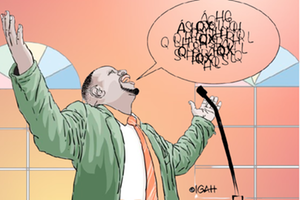
The NCIC, like other commissions, must avoid the talking shop pandemic. Sit down and create credible matrixes for combatting hate and calumny in public life without too many sanctimonious lectures. We know what’s wrong with our politics. Don’t lecture us. Instead, raise the cost to the political class for their skullduggery and poisonous rhetoric. Use true and tried tools from commissions in other countries. Public shame. Stigma. Ironclad investigations for prosecuting authorities.
I know the NCIC blames its vacuousness and impotence on scarce resources. That may be so. But resources alone have never made any agency effective. Often, it turns officials into rent-seekers. So, while the NCIC rightly makes the case for more money, it needs to provide the public with comprehensive, well thought, and credible plans for action to combat hate by the political class. I will be the first to advocate for more resources if I see such a plan. Our democracy needs an effective NCIC.
Makau Mutua is SUNY Distinguished Professor and Margaret W. Wong Professor at Buffalo Law School, The State University of New York. @makaumutua.