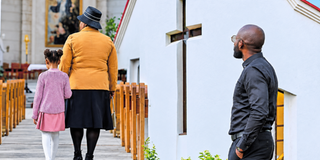
Every Sunday, as women and children dress up for church, a big number of men remain behind. Others head to work, attend to business or simply choose to stay home.
Work and family-related responsibilities, disappointment with the church, cultural differences, or a feeling of not belonging have slowly pushed some men out of the pews.
Peter Otieno’s drift from church began after a road accident changed his life about 20 years ago. For nearly 30 years, Peter had been a committed church member.
After losing both parents at a young age, church became the place where he sought comfort and hope. However, after the accident left him using a wheelchair, his relationship with the church gradually changed.
“I noticed that I was being excluded from activities involving men because of my disability. I felt the church was treating me like a beggar. That made me slowly distance myself. It has been about eight years since I last stepped into a church,” he says.
The accident happened shortly after Peter had settled in Nairobi. He was married and had two children.
“I was admitted at Kenyatta National Hospital for eight months before being transferred to the National Spinal Injury Hospital, where I spent another four months. When I was discharged, I was confined to a wheelchair,” he recalls.
Despite the pain and uncertainty, prayer remained an important source of strength.
“Before the accident, I was a youth leader and used to preach to congregations. We also had a church football team that I coordinated,” he says.
But after the accident, these opportunities disappeared. He also says his church did little to help him rebuild his life when he became unemployed.
“I made several requests for the church to help me start a business that I could manage from my wheelchair, but the help never came. Members who knew me would sometimes bring shopping, yet that was not what I was asking for,” he says.
His struggles deepened in 2018 when his wife died, leaving him depressed and separated from his two children, who were living with their maternal grandparents. He later returned to Nairobi after a friend offered him an opportunity to work. Eventually, he established a phone repair and electronics shop in Komarock. His determination was driven largely by his children, whom he wanted to give a better future.
“I wanted to improve their lives because, back in the village, they were not going to school. That is why my daughter is completing Form Four this year at the age of 20. Bringing my children to live with me in Nairobi gave me hope again,” he says.
Although Peter has not attended church for eight years, his daughter prays for him. She attends church with a neighbour whenever she is home for the holidays. When in school, sometimes she calls him using her teacher's phone.
Peter Otieno says that he does not go to church but believes that his daughter prays for him.
Photo credit: Pool
“She greets me and says, ‘Dad, I have a letter for you. Listen as I read it.’ After reading the message, she ends by saying, ‘I pray that God gives us many years so that you can see the fruits of your work.’”
For Benson Buchichi, staying away from church has less to do with disappointment and more to do with the challenge of finding a congregation where he feels at home. When he moved to Nairobi with his wife in the early 2000s, he wanted to remain in the denomination he was brought up in growing up in Bunyore, Vihiga County. However, most of the churches around their neighbourhood conducted services in vernacular languages he struggled to understand.
Benson Buchichi says that he does not go to church but believes his wife prays for him.
Photo credit: Pool
“The first two years, I forced myself to attend church because that was the tradition among people from my village who had settled in Nairobi. It was also a way of ensuring that the church would support you in times of need, such as an accident or funeral,” says the father of four.
Eventually, the language barrier became too frustrating, and his attendance became irregular. He also noticed that the church experience in Nairobi differed from what he had known back home. For instance, he says, the ACK church in Western Kenya accommodated certain Luhya traditions during funerals, including cooking and communal feasting, while the Nairobi congregation approached such occasions differently. As Buchichi withdrew, his wife moved to All Saints Cathedral, where she worships with their children. He continues to support their church activities financially and believes their prayers also cover him.
“I drop my wife at church and return home to sleep,” he says, and adds, “I believe my wife prays for me, although I cannot say that I have seen a particular prayer answered. God works in different ways. She often asks me to accompany her to church, but she is yet to convince me,” he says.
Unlike Peter and Buchichi, Bonface Musambai, a medical doctor, has not deliberately withdrawn from church. His demanding work schedule simply makes regular attendance difficult. During their 23 years of marriage, Bonface and his wife, who is also a medical professional, have built a family life around shared faith. They are both Catholics, and their five children continue to attend church.
Bonface Musambai.
Photo credit: Pool
“I have not stopped going to church, but occasionally I miss services. I support whatever is happening in church, including fundraising, because I know that when my wife goes to church, our home grows stronger. She is the pillar of our family,” he says.
With one child in college, two in secondary school and two in primary school, the family's responsibilities have grown. Sundays have consequently become difficult to balance with work and other commitments.
“At first, I used to feel guilty whenever I missed church. However, as I got used to missing services, it became normal. It is not that I am happy about it. I may not attend physically, but in my heart, I am with God because we pray as a family,” he says.
While the three men have different reasons for missing church, their experiences point to a wider concern about men's participation in religious life.
Pastor Solomon Kisakui of Communitas Christian Churches of Kenya in Kajiado County says women often outnumber men in church services because they are more involved in activities such as prayer groups, community outreach and other church programmes.
“Some men have many responsibilities related to business and employment, which leaves them with little time to attend church and worship with their families,” he says.
However, he warns that when men withdraw, women are left carrying responsibilities that should be shared.
“Men have important responsibilities in church. They are expected to provide spiritual leadership, participate in prayer and worship, nurture children in the fundamentals of faith, support their families and contribute to church development,” Pastor Kisakui explains.
Religious scholar Prof Martin Njoroge of AENI International shares similar concerns, arguing that men's involvement in church should reflect their responsibilities at home.
“A man's role in church is the same as his role at home. He should be present, serve, lead by example, protect and build others. Men have traditionally served as elders, deacons, treasurers and mentors to young boys who lack father figures. That last role worries me most,” he says.
According to Prof. Njoroge, the church may continue functioning because women faithfully sustain its activities, but the absence of men can influence how children perceive religion.
“When a father steps back, children often follow him out of the door because they watch what we do much more than they listen to what we say. They may grow up believing that faith is something for women,” he says.
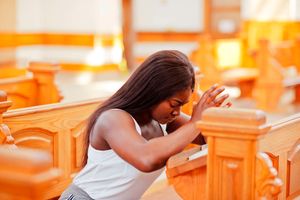
Women often outnumber men in church services because they are more involved in activities such as prayer groups, community outreach and other church programmes.
Photo credit: Shutterstock
He points to research on parental church attendance that suggests fathers' participation can influence whether children remain active in religious life. Beyond this, Prof. Njoroge says men who withdraw from church also lose opportunities for fellowship, accountability and emotional support.
“Nobody can have a relationship with God on your behalf. Your wife can pray for you, your mother can pray for you, and those prayers matter. But faith is personal,” he cautions.
He acknowledges that some men feel uncomfortable in church because they fear being judged or exposed, particularly when sermons touch on family and personal struggles. Others have grown up believing that a man should handle his problems alone rather than seek help. The result, he says, is that men dealing with job losses, marital difficulties and emotional distress often suffer in silence.
He argues that churches should create more welcoming spaces where men can speak openly and support one another without feeling judged. Men's breakfasts, informal fellowships, mentorship programmes and small discussion groups could help rebuild that connection.
“For men who have been away for years, start by attending a service, even if it means sitting quietly at the back. Go with your family, join a men's fellowship, speak privately with a pastor and gradually take up responsibilities within the church.”
“If a man walks back into church, don't make a spectacle of him or remind him how long he has been away. Just shake his hand, call him by name and make room for him,” he advises.