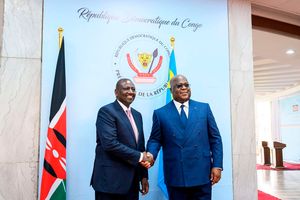
President William Ruto addresses residents in Ogembo in Bomachoge Chache Constituency on November 9, 2026.

In every election, Kenya asks itself the same question: do we want a leader who gives us something, or a leader who builds something for everyone? That is the fight between politics of patronage and merit. It is not a new fight. It is the oldest fight in politics.
Patronage says: I help you, you help me. Merit says: I build a system, the system helps everyone. Both can win an election. Only one can build a country.
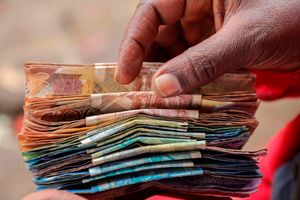
Patronage is politics by personal transaction. The leader gives a job, a bursary, a personal opportunity, a bag of cash. The supporter gives loyalty in return. In the middle sits the broker — the mobiliser, the fixer, the man who knows the leader’s number. He takes his cut, and he makes sure everyone knows who made it happen. Loyalty here is to the man, not the office.
Merit is politics by rulebook. Jobs are advertised. Bursaries are awarded on need and marks, and the list is pinned on the notice board for everyone to see. You do not need to know anyone. You need to qualify. Loyalty here is to performance. When the man goes, the system stays. Merit is slow, invisible and a little cold. That is why patronage always looks like it is winning — until you count the bill.
The late Daniel Arap Moi was the grandmaster of the patronage politics. Moi did not merely use patronage, he perfected it, he institutionalised it, he made it the operating system of the Kenyan state. For 24 years, he ruled by rotation: a job for a loyal community today, a harambee for a loyal MP tomorrow, a road for a loyal region. Electorally, it was genius. Developmentally, it was a disaster. Appointments went to the loyal, not the competent. The economy collapsed in the 1990s. Corruption stopped being a scandal and became a culture. When Moi left, Kenya did not just need a new president. It needed a new state.
President William Ruto modernised the same model and gave it a hustler’s jacket. Wheelbarrows, church donations, cash to youth groups, jobs for mobilisers. It worked brilliantly in 2022 because it made ordinary people feel seen — not as statistics, but as people with names.
System that is not working
But here is the arithmetic that no hustler can escape: a system that works for a constituency of 100,000 cannot work for a country of 50 million. The man who got Sh10,000 during the campaign will want Sh100,000 after victory. And the man who gets Sh100,000 will want a tender.
Let us be blunt: Kenya does not have a corruption problem. Kenya has a birthday problem. We expect our leaders to come to our funerals and birthdays with an envelope, and then we act surprised when they go to the Treasury to refill it.
Ferdinand Marcos of the Philippines did the same thing with more drama. Cronies got monopolies. The masses got subsidised rice and photo opportunities. He kept power with patronage and fear — and left the Philippines bankrupt, 20 years behind Singapore.
You can spot patronage with your own eyes. Go to many seats of power on a Monday morning — a county headquarters, or State House — and look at the queue. If you find hundreds of people, some who travelled all night, all waiting to physically see the big man, that is patronage. One wants school fees. One wants a transfer. One wants a job for his son. One wants a tender, or a hospital bill paid.
That long, desperate line is the clearest proof that the system is not working. The people have reasoned, correctly, that nothing moves unless you touch the centre with your own hands. In a rule-based system, that queue would not exist. People would be at home, waiting for an advert, a shortlist, a published list — because they trust that the rules will find them.
Mwai Kibaki was the opposite of Moi, and Kenyans punished him for it at first. He was cold. He did not do handouts. He did not keep a stable of praise-singers. He did not attend every funeral to be seen weeping louder than the widow. In 2007, he nearly lost because he had no patronage machine to push voters to the polling station. And yet, his 10 years remain the most productive in Kenya’s history. Free Primary Education. A systematised CDF. Thika Superhighway. Growth at 7 per cent.
Obscenely expensive elections
But here is the uncomfortable truth: Kibaki looks like a historical accident. He was the exception that proves how badly our system is wired. Our political system does not reward good leaders. It punishes them. Elections in Kenya are obscenely expensive. To win, you must pay for crowds, for fuel, for posters, for handouts, for brokers, for funerals you did not cause.
Where does that money come from? From businessmen who will want tenders later. From loans that must be repaid from the public purse. A good man who refuses to play this game arrives in office already broke, already indebted, already surrounded by people demanding their return on investment.
A merit-based, rule-based system would reverse the incentives. If jobs are advertised and audited, a politician gains nothing by promising a job to his friend. If bursaries are published, he gains nothing by hiding the list. In such a system, the politician who behaves well is rewarded with re-election, because the system delivers for everyone. The politician who behaves badly is exposed quickly, because there is nowhere to hide. Kibaki should not have been a miracle. He should have been the normal product of normal rules.
Lee Kuan Yew of Singapore understood this and paid the price gladly. He recruited by exam, not by tribe. No one could ever say, “Lee helped me personally.” He won for 30 years anyway, because performance became his patronage. People voted for him because the tap ran, the school worked, the house was built. He took Singapore from Third World to First World in one generation.
Closer home, John Michuki proved the point at ministerial level. He enforced the matatu rules, cleaned Nairobi River, built roads, and did not care whether you liked him. The cartels hated him. Ordinary commuters still speak his name 15 years after his death. In the short term, patronage wins. It produces crowds, noise, and instant gratitude. In the long term, merit wins. A road does not forget. A school does not expire. Patronage gets more expensive every cycle. Merit gets cheaper once the system is built. A cash handout is forgotten in a week.
A dispensary is remembered for 30 years. When a patron leaves, his network scatters like chickens when the maize runs out. When a merit leader leaves, his system stays behind and keeps working.
Dr Irungu Kangata in Murang’a Governor. [email protected]