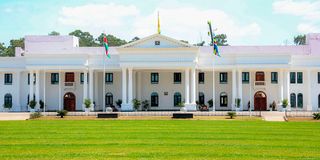
Civil society groups have lost their bid to inspect State House grounds amid claims that construction of a Sh1.8 billion church is almost complete despite a court order halting the project.
Justice David Mburu rejected their application, ruling that they had presented no evidence to justify a site visit. He said the petitioners could not use the court to investigate the alleged construction on behalf of the petitioners.
The groups, Transparency International Kenya, the Kenya Human Rights Commission, Inuka Kenya Ni Sisi and the Institute of Social Accountability, told the court they had received information from a confidential source that the church was almost complete, potentially in violation of an existing court order dated August 26, 2025.
The case started in August 2025 after the groups sued challenging the proposed construction of a permanent church at State House, Nairobi.
A third petition has been filed in court challenging President William Ruto's decision to build a church at State House.
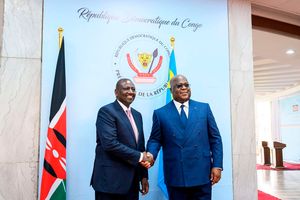
Photo credit: Pool
They argued that the project violated constitutional provisions on separation of State and religion, public land and the use of public resources, equality, freedom of belief and public participation. The petition relies on Article 8 of the Constitution, which states that there shall be no State religion. The petitioners seek constitutional declarations.
During the proceedings, the petitioners’ lawyer told the court that reliable sources said the church was “almost complete”. If so, the petitioners said, construction had occurred in “total disregard of a subsisting court order”.
Their advocate sought a site inspection to establish whether the proposed church had already been constructed, as alleged by their confidential sources, and whether the construction had proceeded in disregard of a subsisting court order, potentially rendering the petition overtaken by events.
The lawyer said the petitioners would withdraw the case if the church had been completed. He said State House was protected and inaccessible to them for evidence gathering. He declined to identify his source, citing legal protection for whistleblowers.
The Attorney-General opposed the request, saying it was based on rumours unsupported by an affidavit or documentary evidence.
The AG called the claim rumours, adding that the petitioners should have filed an application supported by an affidavit and evidence, and urged the court to reject it.
Katiba Institute supported the inspection. Its lawyer argued the Government should allow site visit if it had nothing to hide.
However, the court said parties must present evidence to prove their cases. Justice Mburu said courts should not investigate allegations or search for evidence on a litigant’s behalf.
“The parties to a dispute have a duty to present the necessary evidence to the court to enable the court render an informed decision,” he ruled.
The judge said though the Civil Procedure Rules allow inspections to clarify a disputed matter a visit should help the court understand evidence, not replace a party’s duty to prove its case.
“The petitioners are trying to use the court as a vessel for the collection of evidence,” Justice Mburu said, dismissing the application. A site visit should clarify evidence already tendered, “not to fill a gap in a party's case”.
The case also concerns financing of the project, with the organisations arguing that private financing would not resolve questions about using State land, facilities or personnel.
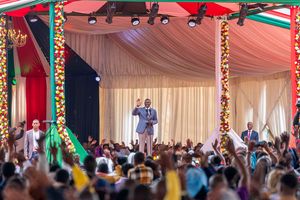
President William Ruto said in July 2025 that he found an iron-sheet prayer structure at State House and wanted a permanent building. He said private donations would fund it and disputed reports of a Sh1.2 billion cost, citing Sh350 million.
The petitioners cited a July 11, 2025 State House letter which they said confirmed private donations led by the President and no public funding.