I have just finished reading a well-meaning article on the best African expos and trade exhibitions of 2025. The truth, no matter how politically incorrect, is that too many of these events here in Kenya are often an endless soul-crushing loop of the same few things. You find the same sorry pattern, and far worse, right across the continent.
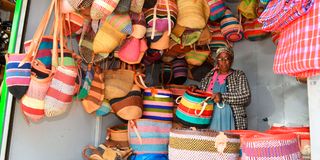
Walk into a show at Nairobi's KICC or in Nakuru, and your eyes will feast on a familiar carnival of colour. The brightly patterned Ankara, Kitenge, and Maasai blankets are, without question, beautiful. The hand-woven baskets are authentic. The small-batch curry powders smell wonderful enough to pull you in. The vials of essential oils and tubs of petroleum jelly, the very lifeblood of someone's honest hustle, are everywhere. And those ubiquitous metal pans, sufurias and plastic karai? The pans are robust, they cook the beans, and they anchor the local market.
But let us be brutally serious. These very things, the foundation of our vibrant informal economy, have become a confirmation, year after year, of the narrative of the "Exotic, Developing Africa," a continent stuck forever in the handicraft and primary product bracket. We are selling beautiful souvenirs, and the rest of the world is selling the machinery.
You walk through the halls optimistically branded 'Innovation', and what do you actually see? You may not see modular, locally designed solar panels that could electrify dark towns and villages, or affordable, locally assembled lithium batteries to store the juice. You do not see locally made diagnostic ultrasound machines or simple, reliable ventilators for our perennially under-equipped district hospitals.
Obsession with 'exotic' primary product
Despite a few sparks in the digital sector, we are still so far down the manufacturing chain that the truly heavy, complex, and high-value stuff, the MRI machines that see into the body, the industrial robots that automate the factories, or the microprocessors that power the modern world, do not even warrant a mention. They are not even on our radar for local production, assembly, or serious trade.
Until our trade expos start being dominated by locally made fridge compressors, locally engineered flat-screen TV displays, or locally sourced and purified water systems, we are merely hosting a large, beautiful market for well-meaning tourists and aid-funded buying groups, not a serious platform for trade and industrial growth. We are celebrating the past, while the future waits outside the tent, holding a power drill.
This whole problem, being imprisoned by the obsession with the "exotic" primary product, ties directly into the recent, disappointing reports on tourist spending across the continent. There is a big problem in African tourism that goes beyond just visitor numbers. The tourists who come often leave without spending the money they came with. In neighbouring Uganda, one report suggested the amount tourists take back is a whopping 60 per cent. The money is spent on flights, visas, and high-end safari operators who repatriate their profits. Still, once the tourists are on the ground, there is surprisingly little else beyond the wildlife safari to compel them to open their wallets further.
Contrast this with global examples of destinations built around deliberate, high-value, unforgettable civic spaces. Take the Dubai Fountain, a free-to-watch spectacle. It is estimated to attract around 15 million visitors annually. Visitors do not pay to see the show itself, but they spend staggering amounts in the surrounding restaurants, cafes, and the gargantuan Dubai Mall.
Key to our economic success
Or look at culture. Africa has long treated its history as a quaint afterthought. We have hardly any world-class museums, save for a few notable exceptions. The recently opened Grand Egyptian Museum (GEM) in Cairo, for instance, is projected to attract millions, with recent reports indicating it was drawing as many as 19,000 visitors daily after its soft opening. This is a monumental structure, a proper tourist magnet.
The other is the Zeitz Museum of Contemporary Art Africa (Zeitz MOCAA) in Cape Town. These spaces succeed not just in drawing visitors, but in ensuring a long "dwell time", the length of time a visitor spends engaging with the space, which is what supports the retail services around it. But here is the final, crushing disappointment. Even in the few imaginative spaces we have, when you leave, the gift shops, if they even exist, are devoid of inventive, high-quality, locally manufactured, or licensed items truly worth taking home. They stock the same old kitsch.
Getting this balance right, moving from a primary product economy to one of industrial capacity and high-value experience, is the real key to our economic success.
We need to radically reorient our trade expos to prioritise industrial-grade inputs rather than just handicrafts. We need a national policy that creates incentives for the engineer who can build a better water pump, not just the fundi who can carve a beautiful wooden rhino.
This is a model not to shun the beauty of Ankara, but to build the sophisticated machine that weaves the cloth. Otherwise, we will remain exactly where we are, smelling richly of shea butter, beautifully dressed, but perpetually borrowing the tools to build our own house.
The author is a journalist, writer, and curator of the "Wall of Great Africans". X@cobbo3