Kenya could once again be dragged back into a role it thought it had outgrown. It was once one of several African cities offering shelter to political refugees: rebels, dissidents and ousted leaders. Alongside capitals such as Dar es Salaam, Cairo, Lusaka, Dakar and Addis Ababa, it formed part of a broader informal asylum network.
Then things changed. From roughly 1990 to 2015, Africa was shedding political exile. One-party and military rule ended in several countries, voting became chaotic but regular, and coups declined.
Presidents fleeing under fire felt like relics of another era. It seemed the continent was ageing out of its worst habits. That calm is striking against the violent backdrop of 1965–1995.
Nigeria lost two heads of state to bullets — Maj-Gen Johnson Aguiyi-Ironsi in 1966 and General Murtala Mohammed in 1976. Ghana’s Ignatius Kutu Acheampong was executed by firing squad in 1979. Liberia’s Samuel Doe was captured, tortured, and executed on camera in 1990.
In East Africa, Nairobi and Dar es Salaam were key nodes in this sanctuary from the 1960s to the 1980s. As Ntongela Masilela notes in “Nairobi, the Capital of African Political Exiles in the 1960s”, Nairobi hosted a remarkable tableau of political exiles and refugees from many parts of Africa.
Its universities, English-language press, libraries, and cosmopolitan milieu provided intellectual space, cultural continuity and networks, making it a hub for debate, writing and trans-African activism.
Dar es Salaam offered structural and ideological sanctuary. Eric Burton observes in Frontline Citizens that Tanzania “provided numerous liberation movements…shelter, land, material resources, office space, diplomatic support, military training and access to local and global networks”. Under Julius Nyerere, it became a continental base for anti-apartheid movements.
Together, the cities offered exiles complementary spaces: Nairobi for intellectual and cultural engagement, Dar es Salaam for logistical, political and ideological backing.
In Kenya, exiles passed through, but several seldom stayed long. Uganda’s Yoweri Museveni lived here on and off as a young rebel commander before seizing power in 1986. John Garang ran the Sudan People’s Liberation Movement (SPLM) from Nairobi. Somalia’s exiled politicians formed informal communities in Eastleigh.
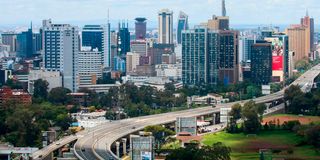
As exile declined, Nairobi transformed. Rebels returned home, and exiles became ministers or presidents. Nairobi ceased being a sanctuary and became the continent’s respectable mediator. In place of rebels came international businesspeople and tech innovators. Mwai Kibaki-era reforms helped turn Nairobi into the “Silicon Savannah”, ushering in a new era of growth and connectivity.
Now exile is creeping back. Guinea-Bissau’s military ousted President Umaro Sissoco Embaló in November 2025 after contested elections; he fled to Senegal.
In Gambia, opposition figure Issa Tchiroma Bakary was sheltered following Cameroon’s disputed October 2025 elections. Ali Bongo of Gabon, removed in August 2023, only left for Angola after more than a year of restricted movement.
As these upheavals multiply, cities like Nairobi are already being swept into political storms. Sudan showed its anger when a Rapid Support Forces delegation, reportedly led by Abdelrahim Hamdan Dagalo, met in Nairobi in February 2025 to discuss a proposed Government of Peace and Unity.
Kinshasa raised similar alarms when Nairobi hosted opposition figures, including former president Joseph Kabila and ex-prime minister Augustin Matata Ponyo, in October 2025 for the Save the DRC Movement, dismissing the gathering as a meeting of fugitives.
The greater concern lies nearer home. Uganda has never experienced a competitive or democratic leadership change since its independence in 1962. President Museveni, in power for nearly 39 years, seeks another term in January. At 81, he is nearing the end of his tenure. The army and security services are heavily politicised; any transition could trigger violent competition.
Tanzania carries similar risks. While it has changed presidents through elections, all have been ruling Chama Cha Mapinduzi (CCM) candidates since 1964. The October 2025 vote, in which President Samia Suluhu Hassan won 98 per cent after opposition leaders were jailed and thousands of protesters were reportedly killed, exposed the fragility beneath the veneer of stability.
Ethiopia, after the deadly 2020–2022 Tigray conflict, still faces simmering federal tensions. Further afield, Nigeria faces fragility of a different sort — armed groups control large areas, the north-south balance strains, and federal authority is stretched. Cameroon, under 92-year-old Paul Biya for nearly 43 years, remains a pressure point as uncertainty looms over succession.
Happily, on the sunny side, countries like Botswana have a reliable political conveyor belt. Presidents serve, retire and write memoirs. South Africa, troubled as it is, has institutions that continue to restrain its worst impulses. Namibia, Mauritius and Cape Verde remain steady. Ghana has wobbled but still manages peaceful handovers.
These countries show that stability is possible even in a continent that often seems determined to forget lessons learned the hard way. Africa can learn from them: have more explicit succession rules, and do the boring work of building institutions that survive their founders. It will not end coups and political unrest entirely, but it will at least keep the airports free of panicked former heads of state looking for the next flight out.
The author is a journalist, writer, and curator of the “Wall of Great Africans”. X: @cobbo3