Hanaano programme and its trail of gains in vulnerable Mandera Triangle
Sponsored by Concern Worldwide
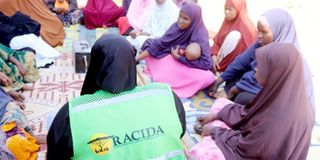
Bismillahi Group Village Savings and Loans Association (VSLA) monitoring activity at Neboi in Mandera East, on March 2025.
Previously, our children went to school hungry. Now, they eat and learn.” This statement by Hussien Abdulahi, a 60-year-old farmer from Alloley Kebele in the Somali Region of Ethiopia, rounds up a rare transformative experience in the area.
Severe climate shocks and fragile cross-border systems have left households in the Mandera Triangle exposed to repeated losses, disrupted markets, and high levels of child wasting.
The region, where Kenya, Ethiopia, and Somalia meet, faces recurrent droughts, flash floods, and displacement, placing immense pressure on food security, livelihoods, and basic services.


According to Kenya’s Ministry of Health, Mandera County consistently reports child wasting rates above emergency thresholds. Similar trends are observed in Ethiopia’s Dawa Zone and Somalia’s Gedo Region.
These are the shared vulnerabilities that motivated the Hanaano cross-border programme.
In the Mandera Triangle, stunting and undernutrition are visible in daily life. Children often appear thin and lethargic, with delayed growth and frequent illnesses. Breastfeeding mothers describe the struggle of balancing limited food availability with the nutritional needs of infants. “Our porridge is often too thin for the children. We worry if it is enough for them to grow strong,” a mother in Banisa sub-county, Kenya, explains. Households rely on irregular relief supplies when crops fail or livestock perish, making long-term nutrition and stability difficult.
Hanaano, funded by Irish Aid implemented by Concern Worldwide in partnership with RACIDA in Kenya, Pastoralist Concern in Ethiopia, and Lifeline Gedo in Somalia, all humanitarian actors, addresses these challenges by strengthening local capacity to prevent child wasting. The programme focuses on improving feeding and caregiving practices for infants, children, adolescents, and women; supporting resilient livelihoods and food security; and informing cross-border policy and coordination through evidence-based engagement.
In Kenya, the programme reached 13 community units and 37 villages across Banisa, Mandera North, and Mandera East sub-counties. Thirty-seven mother-to-mother support groups were established, each with 15 members. Pregnant women and mothers of children under two attended bi-monthly sessions on nutrition, hygiene, and maternal health. Facilitated by lead mothers and community health promoters, the sessions led to measurable improvements in nutrition knowledge, uptake of antenatal care, skilled delivery, and immunisation.
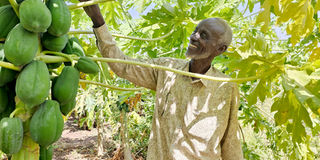
Hussien Abdulahi at his farm in Alloley Kebele, Ethiopia, in this photo taken in June 2025.
To address food access, the programme supported 180 home gardens and 17 community farms, producing vegetables and fruits that households previously struggled to obtain.
Cooking demonstrations using locally available ingredients reinforced practical nutrition knowledge, ensuring that even during market disruptions, households maintained access to diverse foods.
In Neboi, Mandera East, Hussein, a father of five, has witnessed his farmlands transform. “We used to plant with hope, but most times the crops dried before maturity. We survived mainly on relief food,” he recalls. Through a Natural Resource Management grant under Hanaano, Hussein’s farmer group received a generator pump, farm tools, and training in irrigation and soil fertility management. Previously barren fields along the Daua River are now lush with onions, watermelons, maize, sorghum, cowpeas, and fodder crops. Households sell surplus produce in Mandera and across the border in Ethiopia, improving incomes while feeding their families.
Farming is our hope
The programme also fostered collective resource management, enabling equitable water access and shared use of farming equipment.
Hussein reflects: “We now know that with the right tools and knowledge, we can feed our families and earn an income from our land. Farming has become our hope again.”
In Alloley Kebele, Dollo Bay District, Hussien Abdulahi, a farmer and father of 12, describes how Hanaano has changed his farming and nutrition practices. “I used to work with someone else and we shared the harvest. Now with these tools and training, I farm on my own land and produce more,” he says. His 15 hectares now yield over 100 sacks per season, compared with 55-60 sacks previously. Crop diversity has increased to include tomatoes, peppers, bananas, papaya, and cabbage, providing both income and improved dietary variety.
Hussien is also a member of a Father-to-Father group, which meets twice a month. The sessions help participants understand the root causes of malnutrition and how to prevent it. He notes: “Before, we did not know. I had a malnourished child, and we treated children like adults. Now, we have vegetables, fruits, and knowledge. Children eat before school, and they learn better.”
The programme established youth groups for out-of-school adolescents, providing mentorship, grants, and skills training through Natural Resource Management platforms. These groups promote delayed marriage, child spacing, and informed health practices while offering income-generating opportunities in a region with limited employment.
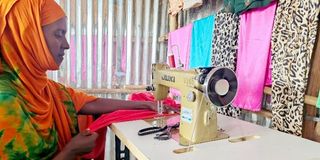
Habiba Subo at her tailoring shop in Dollo Bay Woreda, Ethiopia, in June 2025.
Hanaano also applied market-based approaches to enhance livelihoods. For example, youth and mother groups produced around 2,000 fuel-efficient stoves, sold locally to generate income. Reduced reliance on firewood conserves the environment and frees time for childcare and farming activities.
Access to water remains a major constraint across the Mandera Triangle. Hanaano rehabilitated or constructed earth pans, boreholes, water tanks, and distribution systems. Solarisation of water systems and protection of dams improved reliability, benefiting an estimated 36,977 people and 30,160 livestock in Kenya alone, with additional populations reached through NRM grants.
Sanitation improvements included the construction of 479 household latrines across 18 villages, reducing open defecation and waterborne disease risks. In a region where many water points are open earth pans, these measures directly affect child health outcomes.
Climate-smart agricultural training, seeds, tools, and beekeeping support strengthened household food security. Farmers learned soil protection, moisture conservation, pest control, and postharvest management techniques. Honey sales have created additional income streams, while providing nutritional benefits. A crisis modifier mechanism ensured rapid cash transfers to 500 households within two weeks of a shock. These transfers helped families avoid harmful coping strategies, repay debts, and resume livelihoods promptly.
Hanaano leveraged IGAD platforms to coordinate across Kenya, Ethiopia, and Somalia, aligning health, nutrition, and livelihood interventions with national policies. By recognising shared markets, mobility, and social networks, the programme is proving that cross-border coordination increases the effectiveness of prevention and resilience efforts.
The evidence shows that integrated interventions across nutrition, livelihoods, water, and governance strengthen household and community resilience in highly vulnerable border regions.
Combining technical support with local knowledge, participatory approaches, and rapid crisis response improves child nutrition, food security, and economic stability.
Sustained cross-border cooperation and policies that reflect community mobility and shared vulnerabilities remain critical to maintaining these gains.
By Mohamed Jimale Hassan, Programme Manager- Health & Nutrition, Concern Worldwide, and Shaloam Strooper, Media and Communications, Concern Worldwide
For a printable version, click the following link: https://static.nation.co.ke/pdfs/026EAK22112025b_compressed.pdf