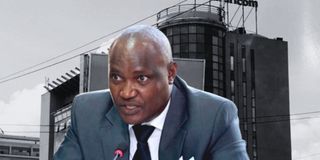
Treasury Cabinet Secretary John Mbadi has confirmed that the State forfeited Sh15.5 billion worth of future dividends from Safaricom in exchange for an upfront payment of Sh40.2 billion from Vodacom Group, but defended the move as a calculated trade-off.
He argues that the State factored in the uncertainties of long-term dividend projections and the advantage of receiving cash immediately, even though his ministry and Safaricom omitted the amount in notices to Kenyan investors.
“The evaluation looked at all these factors. Don’t just look at it as a discount on the money, but also on the time we will get this revenue. The advantage is that we are getting money in advance, and there is value in that,” he said in an interview on Friday.
CS Mbadi: Why We Surrendered Sh15bn in Race For Safaricom Dividends
Treasury’s offloading of a 15 percent Safaricom stake to Vodacom Group will see it sell the right to receive future dividends of Sh55.7 billion. The State has opted to receive a lump-sum payment now rather than wait for future dividend flows, effectively giving the South African firm a 27.8 percent discount.
Only Vodacom disclosed the discount to its shareholders via the official disclosures bulletin of the Johannesburg Stock Exchange (JSE).
“Vodafone Kenya has agreed to buy the right to receive future Safaricom dividends amounting to Sh55.7 billion (7.4 billion rands), that would have accrued to the government of Kenya on its remaining shares in Safaricom for an upfront payment of Sh40.2 billion (5.3 billion rands),” said Safaricom’s parent company.
In the year ended March 2025, the Treasury banked full-year dividends worth Sh16.83 billion from its 14.02 billion Safaricom shares, at the rate of Sh1.20 per share.
This means if Kenya’s largest telco were to maintain the same dividend rate, the State would be in line to earn Sh9.6 billion annually from its reduced stake of 8.01 billion shares. It would take Treasury about six years to offset the dividend rights sold to Vodacom.
Still, the CS argued that the forgone dividend projection assumes Safaricom’s current profitability will remain unchanged, which is not guaranteed.
“If you are getting money in advance, you must also forego a few things… the markets are dynamic; the dividend is not guaranteed,” Mbadi said, calling the deal “properly valued” and beneficial to the State.
“Public participation will take place, and I’ll go to the National Assembly to defend it.”
The sale is expected to be completed in the first quarter of 2026, and the government's stake in Safaricom will drop from the current 35 percent to 20 percent.
Concurrently, Vodacom is also buying a five percent stake in Safaricom that is held by its parent firm, UK-based Vodafone Group, at the same price of Sh34 per share.
Once the twin transactions are concluded, Vodacom will raise its ownership in the telco to 55 percent, giving it control after spending a total of Sh272.4 billion on the share purchases. The Vodafone stake will cost it Sh68.1 billion.
Public investors in the telco hold a 25 percent stake equivalent to 10 billion shares, which Treasury offloaded in a March 2008 initial public offering that raised Sh51.75 billion after being oversubscribed by 532 percent.
For the Treasury, Safaricom’s annual payouts have been among the largest sources of investment income owing to its long track record of profitability and generous dividend policy. The government is now looking to frontload on these returns through the dividend and share sale deal with Vodacom.
Mbadi has said the proceeds of the share sale will provide the seed capital for the proposed Infrastructure and Sovereign Wealth Funds, which will support projects in energy, roads, water and irrigation, and airports.