United Kingdom multinational Diageo has survived a second court attempt to block the sale of its majority stake in East African Breweries Limited (EABL) to a Japanese brewer for Sh305 billion.
The High Court dismissed an application from Bia Tosha Distributors Limited for orders to stop the transaction pending conclusion of a multi-billion distributorship row with EABL.
The rejection of the application puts Diageo on track to complete the sale of its 65 per cent stake in the Nairobi-listed brewer to Japan’s Asahi Group Holdings between July and December.
The deal is expected to generate about Sh42 billion in capital gains tax for the Treasury, giving the Kenya Revenue Authority one of its biggest single transaction tax windfalls.
Clients seeking services at KRA headquarters, Times Tower, Nairobi.
Photo credit: File | Nation Media Group
Bia Tosha had moved to the High Court seeking to freeze the transaction pending the Court of Appeal determination of whether the transaction should proceed or not.
However, the court found that the distributor had sought a similar relief at the appellate court after an earlier High Court setback. It ruled that the distributor could not return to the High Court for orders simultaneously sought at a superior court.
“The petitioner opted to move to the Court of Appeal,” the judge said, adding that the choice was “definitive and binding” and that the applicant could not escape the consequences of that decision.
The court held that although both the High Court and the Court of Appeal have powers to issue conservatory orders, those powers cannot be exercised concurrently over the same dispute.
“In my view, what the court is being invited to do is to superintend the Court of Appeal and I’m not convinced that I have the jurisdiction to do so,” said the judge.
London-listed Diageo, maker of Johnnie Walker whisky and Captain Morgan rum, said in December it had agreed to sell its 65 per cent stake in EABL to the Japanese brewer as it implements a turnaround strategy to reduce debt and revive growth.
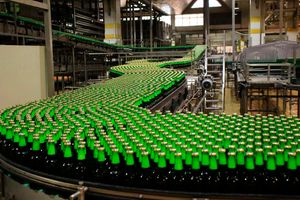
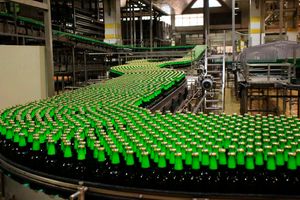
Beer production line at the EABL plant in Ruaraka, Nairobi.
Photo credit: Jeff Angote | Nation Media Group
But the deal soon ran into uncertainty after Bia Tosha petitioned the High Court to block the deal in January over pending litigation dating back to 2016. The court rejected and later unfroze the bid, paving the way for the completion of the deal, which is set to be one of the country’s biggest.
The completion of the deal is also important to the Kenyan government, which is seeking to attract foreign investors to boost its industrial sector and create jobs, with government officials saying failure would send the wrong signal.
Meanwhile, Asahi has been hunting for opportunities in markets including Africa and South America as it implements its global expansion strategy.
The latest ruling follows an earlier decision delivered on April 9 by the High Court, which dismissed a separate application seeking to halt the transaction and discharged interim conservatory orders that had been in force, except those issued on June 29, 2016.
After losing that application, Bia Tosha’s advocates sought directions from the High Court and were advised to file a formal application. They also moved to the Court of Appeal and applied for temporary orders against the ruling. Although the application was certified urgent, no interim orders were granted.
Bia Tosha told the High Court that its latest application was not a repeat of earlier requests and only sought temporary orders to preserve the dispute pending the hearing of its appeal. Its lawyers contended that the court had inherent powers to preserve the substratum of the case and that public interest favoured maintaining the status quo until the appellate court considered the matter.
However, the judge found that even if he were wrong on the jurisdictional issue, he was not persuaded that conservatory orders were justified.
He noted that previous findings had established that the key respondents remained domiciled in Kenya and that the subject matter of the petition was unlikely to be rendered nugatory by completion of the share sale.
The judge observed that after the April ruling, Bia Tosha stood at a “fork on the road” and could either seek conservatory orders pending appeal before the High Court or move directly to the Court of Appeal.
“The petitioner opted for the latter option. My view is that the choice it made was definitive and binding on it,” he said.