For generations, sugarcane farming has been the economic backbone for thousands of families in Western Kenya, acting as a source of livelihoods for thousands of people while also contributing to the national economy.
In Kakamega, Bungoma, Busia, Kisumu, and Migori, large- and small-scale farmers reaped from cane, and spawned dozens of indirect businesses in those regions. Not anymore.
A report by the Senate’s Agriculture Committee on challenges facing the sugar sector has laid bare the dog’s life that sugarcane farmers from the region have had to endure since the fall from grace of the once-vibrant sub-sector.
Farmers have little to show for their years of labour, the report shows.
Low wages, poor working conditions and short-term contracts headline the struggles of workers contracted by sugar factories.
Sugar factory workers in government-owned millers are owed Sh9.89 billion in salaries, pensions and related employee benefits.
As of October 31, 2025, unremitted statutory and administrative deductions relating to permanent employees, casual workers and savings and credit cooperative societies amounted to Sh2.8 billion, while the total amount required to fully settle all outstanding liabilities was estimated at Sh3.61 billion.
The committee, chaired by Bungoma Senator David Wakoli, heard how, despite the ongoing reforms in the sugar sector, farmers continue to face several challenges, including delayed payments, exploitation by millers and intermediaries, and rising production costs.
The rising cost of production is occasioned by expensive seed cane, rising fuel prices, increasing labour costs and the high cost of agricultural inputs, thereby reducing the profitability of sugarcane farming.
Others are frequent fluctuations in sugarcane prices and delayed harvesting and transportation, which reduce farmers’ income.
Farmers have also been forced to endure delayed payments for cane that long ago became sugar on supermarket shelves, as intermediary cartels and infrastructure deficits also haunt the once vibrant industry.
The committee’s inquiry further established that these structural weaknesses compelled seven regional sugar mills to suspend operations for approximately three months, significantly disrupting production and farmer incomes.
Smallholder farmers continue to bear the burden of high transport costs arising from poor road infrastructure, limited access to affordable state-backed credit, and exploitative market practices.
The report decried that despite the sub-sector supporting hundreds of thousands of smallholder families across the country and its critical importance to national food security, rural livelihoods and economic growth, the sector recorded a severe 27.2 per cent decline in 2025.
At the heart of the decline are widespread extortion and fraud at miller-controlled weighbridges, the criminal “helicopter harvesting” permit brokerage system, and the systematic withholding of the farmers’ retention fund, which now exceeds Sh500 million in outstanding debts.
The entrance to Mumias Sugar Company.
Photo credit: File | Nation Media Group
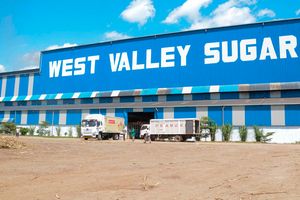
Kenya has 11 sugar factories, mostly located within Western Kenya, including Mumias Sugar Company , Nzoia Sugar Company, West Kenya Sugar, Butali Sugar Mills, Muhoroni, Chemelil and Sony Sugar.
At its peak, Mumias Sugar Company used to support over two million people directly and over five million indirectly. The miller is now a pale shadow of itself.
The committee observed that while the Sugar Act, 2024 introduced important reforms in enforcement, pricing, payment timelines, import regulation, funding allocation, land use, and stakeholder participation, implementation remains weak and inconsistent.
According to the report, payment delays persist, import waivers are granted without clear triggers, and the Sugar Development Levy lacks adequate farmer allocation.
“Cane poaching and harvesting of immature cane continue to undermine mill operations, restrictive zoning provisions limit farmer choice, and the Sugar Pricing Committee has not adequately safeguarded farmer incomes amidst rising input costs,” reads the report.
The Kenya Sugarcane Growers Association and the Kenya National Federation of Sugarcane Farmers, in their submissions, revealed how sugarcane farmers lost a staggering Sh46 billion in cane losses between 2014 and 2024 alone.
Sh46 billion cumulative losses
The farmers delivered approximately 74 million tonnes of cane to millers but incurred an average loss of Sh615 per tonne, resulting in cumulative losses estimated at Sh46 billion.
The farmers’ representatives laid the blame on the current sugarcane pricing formula, which they described as commercially unsustainable, with prices consistently falling below the cost of production.
They argued that the leasing of government-owned sugar mills to private investors, which was intended to improve operational efficiency and ensure payment to farmers within seven days of cane delivery, has not delivered much.
Further, they pointed out that sugarcane productivity remains below its potential due to inadequate access to subsidised farm inputs.
“Despite Bungoma County having approximately 54,000 hectares under sugarcane cultivation and nearly 100,000 sugarcane farmers, the full economic benefits of the ongoing sugar sector reforms had yet to be realised,” reads the report tabled before the Senate last month.
The entrance to Nzoia Sugar Company in Bungoma County.
Photo credit: File | Nation Media Group
The two organisations also indicated that the introduction of sugarcane harvesting permits by private millers had fundamentally altered the traditional harvesting system and was reported to have contributed to cane poaching, brokerage, selective harvesting and non-adherence to approved harvesting schedules, thereby disadvantaging many farmers.
The farmers argued that continued uncontrolled sugar imports, including the issuance of duty waivers and import permits, have depressed returns to local farmers.
For instance, Bungoma County, where the meeting took place, has between 65,000 and 75,000 hectares under sugarcane cultivation and the potential to achieve yields of 100–150 tonnes per hectare. However, most smallholder farmers attain only between 20 and 30 tonnes per acre, resulting in significantly lower production and incomes.
Data from the Kenya Sugar Board showed that national sugar production declined from 815,454 metric tonnes in 2024 to 611,576 metric tonnes in 2025, with the decline attributed to cane shortages, premature harvesting of immature cane, adverse weather conditions and disruptions arising from the restructuring and leasing of state-owned sugar factories.
The committee, in its recommendations, now wants the Ministry of Agriculture, in consultation with the Kenya Sugar Board and other relevant stakeholders, to reform the sugarcane pricing framework to reflect production costs and by-product revenues, guarantee timely payment to farmers, establish statutory thresholds for regulating sugar imports as well as safeguard land designated for sugarcane production with a view to protecting the interests of sugarcane farmers.