In a coffee roastery on Mombasa Road, green coffee beans tumble through a heated drum, gradually changing colour as heat reduces their moisture content and triggers the chemical reactions that shape their flavour and aroma.
As the roasting progresses, notes of chocolate, fruit, nuts or flowers begin to emerge, with the final profile shaped by the beans’ origin, the temperature and the time spent in the drum.
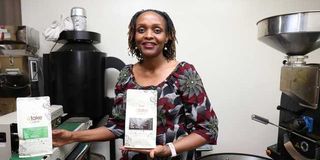
For Mbula Musau, who founded Utake Coffee, the process is part of a wider challenge facing Kenya’s coffee industry, where a long-established reputation for producing coffee for international markets has not translated into comparable consumption at home.
“I was concerned that coffee consumption in Kenya lagged behind, and I wanted to help bridge that gap by encouraging greater local consumption alongside production,” she says.
Ground coffee ready for brewing in a portafilter at Utake Coffee Limited’s roastery in Greatwall Gardens, Athi River, Machakos County, on October 21, 2026.
Photo credit: Bonface Bogita | Nation
Ms Musau established the venture in 2016, combining coffee processing with professional training and quality assessment services. The business sources coffee from farmers across Kenya and also purchases beans mainly through the Nairobi Coffee Exchange.
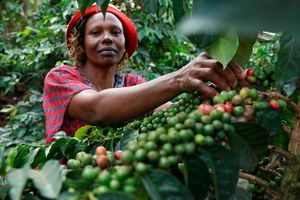
“This allows us to source the best coffee from different regions, depending on seasonal availability. We work with farmers to assess the quality of their produce before it reaches the market,” she adds.
For producers, reliable evaluation provides crucial information about the quality and potential market value of their coffee. To support this, Utake operates an SCA (Speciality Coffee Association)-certified and accredited testing lab where farmers can submit samples for physical and sensory analysis.
“Farmers who want to establish their bean quality before entering international markets bring their samples to us, where we generate reports that enable them to negotiate from an informed position,” she explains.
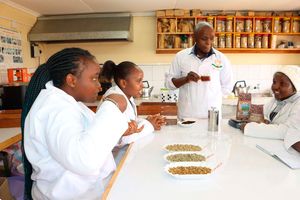
The enterprise also offers training in roasting, brewing, barista skills, green coffee grading and sensory evaluation at the same venue, a triple-certified Speciality Coffee Association (SCA) Premier Training Campus.
Ms Musau says Utake has conducted hundreds of courses, with its programmes contributing to the international certification of more than 1,000 Q Graders and coffee professionals from Kenya and other countries of Africa and the world. Its training portfolio includes eight SCA course pathways, delivered across Africa, Asia, Europe and the United States.
These trainings cover different stages of the coffee value chain, from assessing the quality of green beans to roasting and preparing the beverage. For coffee professionals, understanding these processes provides a basis for evaluating quality and maintaining consistency in preparation.
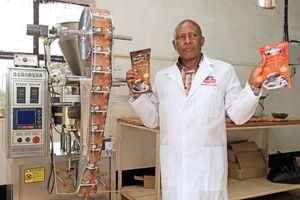
Utake Coffee Limited’s range of packaged coffee products displayed at its roastery in Greatwall Gardens, Athi River, Machakos County, on October 21, 2026.
Photo credit: Bonface Bogita | Nation
Ms Musau says roasting requires more than changing the colour of green beans, as the process involves chemical and physical transformations that determine the final beverage's character.
“Roasting is not transforming coffee from green to brown, as many people believe. The process requires managing a complex series of chemical and physical transformations that define the beverage’s ultimate character. It is a science as well as an art,” she explains.
Once roasted, the beans are packaged whole or ground to suit different brewing methods, including espresso machines, French presses and filter systems.
Grind size, she explains, affects extraction and, consequently, the taste of the brewed coffee, while packaging prepares the product for distribution and affects its shelf life and therefore its quality.
The enterprise employs a team of 10 full-time employees and produces a range that includes whole-bean and ground coffee, drip coffee bags and coffee accessories. Its retail products sell for between Sh650 and Sh2,600, depending on the product and its size, with the company supplying hotels, restaurants and cafés alongside few supermarkets across Kenya. Given the speciality nature of its coffee, the company primarily uses a business-to-consumer (B2C) sales approach, delivering freshly roasted coffee directly to customers’ doorsteps.
The company has an annual roasting capacity of 200 tonnes, with current production averaging 15 tonnes a month.
The company has operated as a licensed coffee dealer since 2018, enabling it to import, export and roast coffee from different origins. Its green coffee exports serve buyers in markets including China, the United States, Qatar, Canada and Germany.
Although Kenyan coffee commands demand in speciality markets for its distinctive flavour characteristics, much of the industry remains oriented towards overseas markets. Ms Musau says growing domestic consumption would create demand for locally processed coffee sold through cafés, restaurants, hotels and retail outlets.
“We export green coffee to markets that want to do the processing themselves, but we also value-add locally to ensure that more of the economic benefits stay in Kenya,” she says.
Exporting green beans allows overseas buyers to undertake roasting and subsequent processing in their own markets, while domestic roasting, grinding and packaging retain more stages of value addition within Kenya.
Commercial returns depend on bean prices, processing and distribution costs, and buyers’ quality specifications. Serving both markets also requires Utake to meet differing buyer requirements while maintaining consistent quality standards
Operating across processing, laboratory analysis and professional training involves significant capital investment in specialised equipment, accredited facilities, qualified personnel and steady supplies of quality green coffee, alongside distribution overheads such as packaging, logistics and retail margins.
The coffee sector faces challenges at both production and retail levels. Farmers contend with rising input costs and unpredictable weather patterns, while processors depend on steady supplies of raw coffee that satisfy strict quality parameters. In the domestic market, coffee competes with established beverages such as tea. The cost of brewing equipment and limited familiarity with coffee preparation methods may also affect consumption.
Ms Musau attributes tea’s dominance in Kenya’s drinking culture, in part, to the country’s colonial history, which she says helped entrench tea-drinking habits over coffee consumption.
“Professional training and consumer education are important to our long-term strategy. The more people who understand coffee, the bigger the market will be,” she says, adding that the company is now eyeing further regional and international growth.
Achieving those plans will involve reaching new customer bases while scaling the technical skills required across the supply chain.
“Building a sustainable domestic market remains closely tied to product affordability, accessibility and consumer preference, even as we continue to manage the strict quality and volume demands of export markets,” she concludes.
It was also named Coffee Brand of the Year at the FMCG Kenya Awards in 2024. On the global front, Utake was feted for winning the AVPA- Paris Coffee Roasted at Origin Award (Gourmet category) in 2025 and 2026.