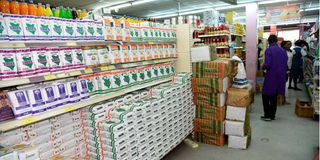
Two years after thousands of young Kenyans took to the streets to protest against high taxes and the rising cost of living, the price of putting food on the table remains a source of financial strain for many households even as the overall food bill rise remains relatively modest.
An analysis of official retail prices shows that a basket of seven commonly consumed food items cost Sh1,101.37 in May this year compared to Sh1,068.48 in June 2024 when the deadly anti-Finance Bill protests erupted, representing an increase of Sh32.89 or 3.1 percent.
The independent analysis by this publication took a sample of a food basket containing two kilogrammes of sifted maize flour, a kilogramme of sugar, one litre of cooking oil, and a kilogramme of onions, sukuma wiki, cabbages and tomatoes.
While the increase appears modest, the figures show that the cost pressures that partly fuelled the June 2024 demonstrations remain firmly embedded in household budgets.
The price of a two-kilogramme packet of sifted maize flour has risen to Sh159.12 as of May this year, up from Sh134.89 in June 2024, representing an increase of nearly 18 percent.
The increase means that a household buying four packets of maize flour every month now spends nearly Sh100 more on the staple than it did during the protests.
Similarly, the cost of a litre of cooking oil has climbed by nine percent to Sh355.79, up from Sh326.36 two years ago, while sukuma wiki, a key component of meals in many Kenyan homes, has become 32.7 percent more expensive, with a kilogram now retailing at Sh110.07 compared with Sh82.94.
The price of tomatoes has also risen to Sh120.75 per kilogramme from Sh104.48, marking an increase of almost 16 percent.
In Kenya, food takes up the largest share of spending among low-income and middle-income households, meaning even small changes in the price of staple foods can significantly alter monthly household budgets.
Data from the Kenya National Bureau of Statistics (KNBS) further indicates that general food inflation has accelerated sharply since the protests, with annual food and non-alcoholic beverages inflation standing at 9.4 percent in May this year compared to 5.6 percent in June 2024.
Overall inflation has also risen to 6.7 percent in May 2026, up from the 4.6 percent recorded when thousands of young Kenyans took to the streets two years ago.
The June 2024 protests were initially sparked by opposition to proposed tax increases under the Finance Bill. They then evolved into broader demonstrations over economic hardship and the rising cost of living.
Food prices took centre stage in the frustrations, as they directly determine how much disposable income households have left after meeting their basic needs.