High Court throws out suit against KPC chair Faith Bett Boinett
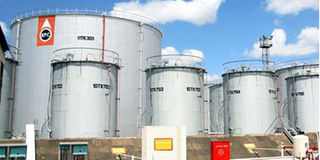
A Kenya Pipeline Company depot in Nairobi.

The High Court has struck out a workers’ union petition challenging President William Ruto’s appointment of Faith Bett Boinett as Kenya Pipeline Company (KPC) chairperson, ruling that it lacked jurisdiction to hear the dispute.
The Kenya Petroleum Oil Workers Union alleged that Ms Boinett’s links to Fastnett Energy Ltd, a company that does business with KPC, raised a conflict of interest.
It also challenged KPC's board decisions, including the recruitment of a managing director, plans to restructure the company, and a proposal to downgrade the existing staff medical scheme, after the company transitioned to a listed firm.


But the court rejected the case on jurisdictional grounds without determining the allegations, saying the Employment and Labour Relations Court (ELRC) had jurisdiction over the employment-related grievances, while the Companies Act governed the company-related claims.
“The dispute falls within the jurisdiction contemplated under Article 162(2)(a) of the Constitution and Section 12 of the Employment and Labour Relations Court Act,” Justice David Mburu said.
He said the High Court could not determine employment complaints assigned by the Constitution to a specialised court. Claims concerning matters belonging to KPC itself were governed by the Companies Act.

Kenya Pipeline Company headquarters in Nairobi.
KPC raised Sh106.3 billion in March 2026 by selling 65 per cent of its shares through an initial public offering, while the government retained 35 per cent.
The union moved to court in July 2026. It had asked the court to suspend Ms Boinett as chairperson, stop KPC from doing business with Fastnett, halt recruitment of a managing director and block major investments before Uganda’s government-appointed director joined the board.
It also sought to stop a proposed change to the staff medical scheme and refer the petition to a bench of at least five judges.
President Ruto appointed Ms Boinett on December 19, 2025, for a three-year term effective December 23. The union argued the appointment was not preceded by the competitive process required under the Government Owned Enterprises Act, which took effect on November 27, 2025.
It also alleged she was disqualified because she was a shareholder and director of Fastnett, which had a fuel storage and transportation agreement with KPC made in 2018 and later renewed.
The petitioner sought orders restraining KPC from trading with Fastnett, quashing their storage and transportation agreement and restraining further dealings between them.
The union said KPC ceased to be a National Government Entity on April 22, 2026, after becoming a public limited company. It argued the existing board then operated only as a caretaker board and lacked authority to make strategic decisions reserved for a substantive board.
These included recruiting a managing director, hiring a human-resources consultant for restructuring and approving capital projects.
The dispute also concerned workers’ medical cover. The union said KPC informed it on July 8 of plans to downgrade the existing scheme and outsource it to an external provider. It alleged the proposal contradicted earlier discussions and lacked transparency and consultation.
The union said it wrote to the Capital Markets Authority on May 15 and June 2 seeking investigations into the board’s conduct. It also wrote to the Energy and Treasury Cabinet Secretaries, but alleged no substantive action followed.
It argued the decisions could expose KPC and the public, which retained an interest through government shareholding, to loss.
The State raised a preliminary objection against the suit, arguing that the petition combined separate disputes involving a presidential appointment, commercial contracts and employment matters, each subject to different legal procedures.
It said employment complaints belonged before the Labour Relations Court and company-related claims should be pursued under the Companies Act.
The respondents, led by the Attorney General, opposed use of the Constitutional Division Court to challenge a listed company’s management.
The court heard that the union's case against the Presidential appointment contained in the gazette notice was barred by the six-month limitation period under the Law Reform Act. This was because the contested decision was published on December 19, 2025, while the petition was filed on July 15, 2026.
"The petitioner cannot circumvent the statutory limitation period by framing the challenge as a constitutional petition," said the State advocates.
Fastnett Energy Limited director, Stephen Kipsang Boinett, also filed a replying affidavit, maintaining that KPC's Article 15 of the amended Articles of Association does not prohibit a director from carrying on business or trading with the KPC.
Mr Bonnet said by the time the petition was filed, KPC was no longer a government entity and was operating pursuant to its amended Articles of Association following a resolution passed on February 19, 2026.
"KPC, as presently constituted, is neither a State corporation, Government Owned Entity nor a “reporting entity” within the meaning of the Conflict of Interest Act," he said, adding that the statutory and governance provisions relied upon by the Petitioner are inapplicable to the KPC.
He contended that the order sought to quash the Storage and Transportation Agreement executed in 2018 was time-barred, having been filed more than six months after the contested contract or decision.
In its ruling, the court upheld the respondents’ argument on constitutional avoidance, finding that the union had improperly used a constitutional petition to pursue disputes that could be addressed through established legal procedures.
Follow our WhatsApp channel for breaking news updates and more stories like this.


