Members of Parliament (MPs) have allocated Sh25 billion invested by the Affordable Housing Board in Treasury Bills, averting the risk of more than 1,700 affordable houses stalling after the Treasury failed to factor the money in the supplementary budget.
The National Assembly last Thursday approved the report of the Budget and Appropriations Committee (BAC) which allocated the State Department for Housing an additional Sh25 billion.
“Increase Sh25 billion (Development) for affordable housing (Appropriations in Aid),” Samuel Atandi, who chairs BAC, said in a report on the Supplementary Estimates I of 2025/26 that reorganised the Housing Development and Human Settlement vote under the State Department for Housing.
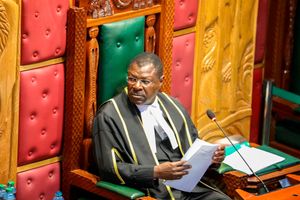
MPs in session.
Photo credit: File | Nation Media Group
The allocation followed a warning by Housing and Urban Development Principal Secretary Charles Hinga that more than 1,700 affordable houses were at risk of stalling after the National Treasury failed to allocate money invested by the Affordable Housing Board in Treasury Bills.
While appearing before the Housing committee chaired by Buuri MP Mugambi Rindikiri to defend the State department budget as outlined in the Supplementary Budget I on March 19, 2026, Mr Hinga revealed that the Treasury had declined to factor the funds into Supplementary Budget I for the 2025/26 financial year.
He warned that the department will be unable to pay contractors or utilise the Sh6 billion generated monthly from the Housing Levy for the months of April, May and June 2026 due to constrained fiscal space.
As of January 2026, the Affordable Housing Board had utilised 79.5 per cent of its allocated budget, even as it continued to receive and process payment certificates for ongoing housing and related infrastructure projects nationwide.
“Given the scope of the programme, the State department is seeking an enhanced budgetary provision of Sh25 billion under Supplementary Estimates I for the 2025/26 financial year to ensure smooth implementation. The funding will be drawn from Housing Levy investments,” Mr Hinga said.
He warned that failure by the Treasury to approve the allocation would halt projects across the country.
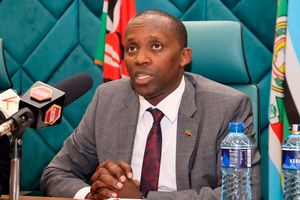
Housing Principal Secretary Charles Hinga.
Photo credit: Dennis Onsongo | Nation Media Group
The funds, currently invested in 90-day Treasury Bills, are due to mature, and the ministry has already written to the Central Bank of Kenya to have the Sh25 billion released by the end of this month.
“I have invested money in Treasury Bills, which are maturing, but if the Treasury does not create fiscal space in the Supplementary Budget, I will not be able to spend it even as certificates of completed works continue to come in,” he said.
Mr Hinga added that failure to release the funds would mean contractors go unpaid for at least three months, affecting thousands of workers, particularly youth employed in the housing projects.
He further warned that stalling the projects would negatively impact the broader economy, disrupting momentum in a sector that had begun to recover.
“It will be a grave mistake to stall projects at various stages across the country. We risk disrupting an economy that had started to pick up,” he said.
The department, he said, is not seeking additional funding from Treasury, only approval to spend money already generated through the Housing Levy and invested as permitted under the Affordable Housing Act.
The Act allows the board to invest surplus funds in interest-earning instruments such as Treasury Bills.
“We are not asking for new funds from the Treasury or Parliament—we are asking to use our own money held in Treasury Bills. We wrote to Treasury and they declined,” Mr Hinga explained.
Mr Rindikiri accused Treasury of frustrating the affordable housing programme, which is one of President William Ruto’s flagship projects. He ordered a Treasury representative out of the meeting and directed Treasury Cabinet Secretary John Mbadi and Principal Secretary Chris Kiptoo to appear before the committee within the week.
“Treasury is sabotaging a key national project and, at the same time, the growth of the economy. This will not be business as usual,” Mr Rindikiri said.
Mr Hinga also stated that an additional Sh2 billion in development funding under Appropriations-In-Aid is earmarked for titling housing projects to boost uptake.