Auditor-General Nancy Gathungu has flagged the National Treasury for escalating the country’s fiscal deficit for the period 2024/25 to Sh1.26 trillion without the requisite approval of the National Assembly.
This was an increase of Sh492.12 billion above the projected Sh768.6 billion deficits for the period, or about 6.3 per cent of the GDP, and significantly higher than the limits approved by the MPs.
A fiscal deficit refers to the shortfall in a government’s revenue compared to its spending during a certain period. When a country runs a fiscal deficit, it means the government spends beyond its means.
Ms Gathungu, in her latest report on the audited accounts of the National Treasury for the fiscal year 2024/25 before Parliament, notes that the move was a deviation from the recommendations of the Public Debt and Privatisation Committee as approved by the National Assembly.
“In the circumstances, the National Treasury was in breach of the MTDS (Medium-Term Debt Strategy) recommendations of the Public Debt and Privatisation Committee,” the audit reads.
The House committee, while considering the 2023 MTDS and the annual borrowing plan, recommended a mix of 45 per cent borrowing from external sources and 55 per cent from the domestic market to plug the Sh768.6 billion deficits in the budget for the 2024/25 fiscal year.
The 2023 MTDS provides the strategies and initiatives to be undertaken by the National Treasury to meet the fiscal deficits for the period 2023/24 to 2025/26, as contained in the 2023 Budget Policy Statement (BPS).
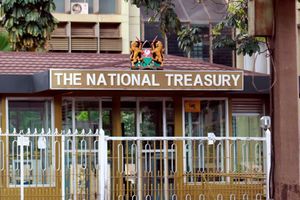
The National Treasury Building in Nairobi.
Photo credit: Pool
The MTDS essentially aimed to reduce the country’s debt costs and manage risks as it capped a financing of Sh355.5 billion from the external market and Sh413.1 billion in domestic borrowing for the 2024/25 fiscal period.
However, the audit reveals that the country’s actual borrowing as of June 30, 2025, was Sh374.01 billion in external loans and Sh886.61 billion from the domestic market, representing a ratio of 30:70, a deviation from the 45:55 ratios as approved by the MPs.
“There was no approval for the deviation contrary to the resolution of Parliament that any deviation from the approved borrowing strategy required approval from the National Assembly,” the audit says.
The Public Debt and Privatisation Committee, chaired by Balambala MP Abdi Shurie, recommended that, “any deviation from the approved borrowing strategy will require the approval of the National Assembly.”
This led to an increase in the country’s public debt stock to Sh11.74 trillion as of June 30, 2025, from Sh10.5 trillion as of July 1, 2024, even as external loans rose from Sh5.1 trillion to Sh5.45 trillion during the same period.
Similarly, the domestic borrowing shot up from Sh5.4 trillion to Sh6.3 trillion over the same period.
The Shurie-led committee, in a bid to help the country consolidate its fiscal space, recommended that the National Treasury align the country’s borrowing strategy in the MTDS “in order to ensure credibility of the government's planning documents.”
The committee recommended that the fiscal deficit target for the medium term be approved and set at no more than 4.4 percent of the GDP for the fiscal year 2023/24, 3.9 percent of GDP for the period 2024/25, and 3.6 percent of GDP for 2025/26 “in line with the fiscal consolidation path.”
“Going forward, the MTDS should live up to its expectation as a medium-term document by showing consistency in proposed debt management strategies, including deficit financing on a three-year rolling framework, from one MTDS to another,” the committee’s report, adopted by the House, reads.
The MTDS, prepared by the National Treasury, is a framework that was developed by the World Bank and the International Monetary Fund (IMF) to guide countries in debt management decisions and operations.
Cabinet Secretary for National Treasury and Economic Planning John Mbadi before the National Assembly Public Debt and Privatisation Committee at Continental House Nairobi on November 28, 2024.
Photo credit: Dennis Onsongo | Nation Media Group
The government document links the country's borrowing with macroeconomic policy and outlines how the State intends to borrow and manage its debt in order to minimise costs and risks while meeting financing needs.
Auditor-General Nancy Gathungu has flagged the National Treasury for escalating the country’s fiscal deficit for the period 2024/25 to Sh1.26 trillion without the requisite approval of the National Assembly.
This was an increase of Sh492.12 billion above the projected Sh768.6 billion deficits for the period, or about 6.3 per cent of the GDP, and significantly higher than the limits approved by the MPs.
A fiscal deficit refers to the shortfall in a government’s revenue compared to its spending during a certain period. When a country runs a fiscal deficit, it means the government spends beyond its means.
Ms Gathungu, in her latest report on the audited accounts of the National Treasury for the fiscal year 2024/25 before Parliament, notes that the move was a deviation from the recommendations of the Public Debt and Privatisation Committee as approved by the National Assembly.
“In the circumstances, the National Treasury was in breach of the MTDS (Medium-Term Debt Strategy) recommendations of the Public Debt and Privatisation Committee,” the audit reads.
The House committee, while considering the 2023 MTDS and the annual borrowing plan, recommended a mix of 45 per cent borrowing from external sources and 55 per cent from the domestic market to plug the Sh768.6 billion deficits in the budget for the 2024/25 fiscal year.
The 2023 MTDS provides the strategies and initiatives to be undertaken by the National Treasury to meet the fiscal deficits for the period 2023/24 to 2025/26, as contained in the 2023 Budget Policy Statement (BPS).
The MTDS essentially aimed to reduce the country’s debt costs and manage risks as it capped a financing of Sh355.5 billion from the external market and Sh413.1 billion in domestic borrowing for the 2024/25 fiscal period.
However, the audit reveals that the country’s actual borrowing as of June 30, 2025, was Sh374.01 billion in external loans and Sh886.61 billion from the domestic market, representing a ratio of 30:70, a deviation from the 45:55 ratios as approved by the MPs.
“There was no approval for the deviation contrary to the resolution of Parliament that any deviation from the approved borrowing strategy required approval from the National Assembly,” the audit says.
The Public Debt and Privatisation Committee, chaired by Balambala MP Abdi Shurie, recommended that, “any deviation from the approved borrowing strategy will require the approval of the National Assembly.”
This led to an increase in the country’s public debt stock to Sh11.74 trillion as of June 30, 2025, from Sh10.5 trillion as of July 1, 2024, even as external loans rose from Sh5.1 trillion to Sh5.45 trillion during the same period.
Similarly, the domestic borrowing shot up from Sh5.4 trillion to Sh6.3 trillion over the same period.
The Shurie-led committee, in a bid to help the country consolidate its fiscal space, recommended that the National Treasury align the country’s borrowing strategy in the MTDS “in order to ensure credibility of the government's planning documents.”
The committee recommended that the fiscal deficit target for the medium term be approved and set at no more than 4.4 percent of the GDP for the fiscal year 2023/24, 3.9 percent of GDP for the period 2024/25, and 3.6 percent of GDP for 2025/26 “in line with the fiscal consolidation path.”
“Going forward, the MTDS should live up to its expectation as a medium-term document by showing consistency in proposed debt management strategies, including deficit financing on a three-year rolling framework, from one MTDS to another,” the committee’s report, adopted by the House, reads.
The MTDS, prepared by the National Treasury, is a framework that was developed by the World Bank and the International Monetary Fund (IMF) to guide countries in debt management decisions and operations.
The government document links the country's borrowing with macroeconomic policy and outlines how the State intends to borrow and manage its debt in order to minimise costs and risks while meeting financing needs.