A dispute over mineral extraction that started under colonial rule, simmered through devolution and exploded into a Sh17.4 billion tax demand is now at the Supreme Court, where judges will decide how far counties can go in taxing strategic mining investments.
The Supreme Court has allowed Kajiado County Government to pursue an appeal against a landmark Court of Appeal decision that quashed the county's claim for Sh17.4 billion in land rates and royalties from Tata Chemicals Magadi Ltd.
Although the county filed its notice of appeal three days late, the apex court ruled the delay was minimal. It also found the delay was reasonably explained by statutory consultations required between the County Attorney, County Executive and County Assembly before authorising litigation.
The ruling revives a case that could redefine the constitutional limits of county governments taxation powers, clarify whether counties can impose charges on mining operations and settle the relationship between county revenue laws and national legislation governing minerals and land valuation.
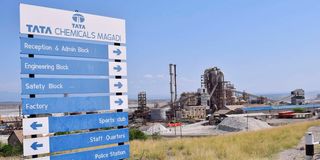
At the centre of the dispute is one of Kenya's oldest industrial investments concerning excavation and extraction of soda ash.
Tata Chemicals Magadi traces its rights to Lake Magadi to a 1928 lease granted by the British colonial government, allowing it to extract soda ash from more than 222,000 acres covering Lake Magadi and Lake Natron.
Under the lease, the land rates and royalties were reserved and payable to the Government of Kenya. The leases granted the company “full, free and uninterrupted rights to search for, dig, get and carry away all the Magadi deposit.” A further lease between the company and national government executed in December 2004 extended those rights until 2053.
This lease reserved for the national government “all mines, minerals and mineral substances including precious stones and all coins, treasure relics, contingencies and other similar things lying in or under the demised premises other than the Magadi deposit.”
For decades, the parties coexisted under negotiated arrangements on land rates.
The dispute first surfaced in 1997 when the former Olkejuado County Council sought to levy land rates on the leased land.
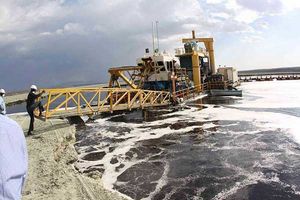
Tata Chemicals Magadi Limited machine harvests soda ash from Lake Magadi in 2011. PHOTO | FILE | NATION MEDIA GROUP
That disagreement ended with a 2004 settlement under which Tata agreed to pay industrial rates of Sh50 per acre on 50,000 acres, less 14,031-acre-land which it was already paying industrial rates.
The agreement also contemplated a future review under the Rating Act after determining how much land the company still required.
That arrangement held until the devolution system of governance fundamentally changed county revenue collection. In 2014, Kajiado County government increased the industrial rate from Sh50 to Sh120 per acre as the company struggled financially and sought repayment plans for outstanding rates amounting to about Sh20.3 million.
The dispute escalated sharply after the county enacted successive Finance Acts that raised industrial land rates to between Sh11,000 and Sh14,000 per acre before later prescribing Sh2,000 per acre.
Tata argued the increases ignored the Rating Act and Valuation for Rating Act, lacked proper valuation and breached constitutional safeguards governing public finance and county taxation.
By February 2018, the county demanded Sh17.4 billion from the company for alleged land rates and royalties covering the period between 2013 and 2018.
Tata rejected the demand, saying it had consistently paid rates and royalties under existing legal arrangements and had invested heavily in the economic and social development of Kajiado County.
The company challenged both the legality of the assessment and the county's authority to demand royalties on soda ash.
The confrontation intensified later that year when the county appointed an agent to recover the claimed arrears.
In January 2019, county officials, accompanied by police officers, entered the company's premises and shut down operations to enforce payment.
According to court records, the closure paralysed production, exports and transport while disrupting social services provided by the company to surrounding communities, including schools, hospitals and water supplies.
The company had over 1,000 employees. Also paralysed was the supply and transport of soda ash to the Port of Mombasa for loading and export by ships.
The High Court, in a judgment delivered on May 3, 2019, dismissed the petition, holding that Kajiado County had acted within its constitutional mandate to levy land rates and that the dispute was largely contractual rather than constitutional.
It also found that the county's Finance Act remained valid, public participation had been conducted, and there was no basis to quash the Sh17.4 billion demand or invalidate the county's revenue measures.
However, those findings were later overturned by the Court of Appeal after the company escalated the legal dispute.
The Court of Appeal found that the county government's enforcement actions breached Article 209(5) of the Constitution, which bars counties from exercising revenue-raising powers in ways that prejudice national economic policies or the movement of goods, services and capital across county boundaries.
The appellate judges in the judgment dated October 24, 2025, also rejected Kajiado's claim to royalties on soda ash.
They found the company's leases were executed with the national government and reserved royalties to the State.
They further held that Article 62 of the Constitution vests minerals in the national government, while the Mining Act assigns responsibility for prescribing and collecting royalties to the Cabinet secretary.
The judges also concluded that even if the leased land were rateable, Kajiado was still required to comply with the statutory framework governing valuation and assessment of land rates before demanding payment.
They found no evidence that the county had undertaken the valuation process required under the Rating Act and the Valuation for Rating Act before imposing the disputed charges.
"The demand made to the appellant was arbitrary and illegal," the Court of Appeal said.
The court further found the county failed to establish "an open and accountable framework" for determining payable land rates or give the company an opportunity to challenge the assessments, contrary to Article 201 of the Constitution governing public finance.
It, therefore, quashed the Sh17.4 billion demand, declared the county's royalty charges unlawful, found the closure of Tata's operations infringed the company's constitutional right to property and allowed the company's petition.
The judgement declared the Kajiado County Assembly Finance Bills (2013–2018) null and void for contravening Articles 201 and 209(3) and (5) of the Constitution, and for non-compliance with the Rating Act and the Valuation for Rating Act.
The county was aggrieved by those findings but did not file its notice of appeal to the Supreme Court within the statutory 14 days.
The Supreme Court has allowed the late filing but has not disturbed any of the court of appeal findings.
Instead, it ruled that Kajiado should be allowed to challenge the Court of Appeal's decision because the delay in filing its notice of appeal was short and reasonably explained by the legal approval processes required within county government.
"We are persuaded by the justification that layered decision-making structures of the applicant as a public body are necessary, particularly where decisions of significant financial and legal consequence, like in this case, are concerned," said the Supreme Court judges.
Mr Augustine Siamito Sekeiyan, the applicant's County Attorney, explained that the delay arose from the county’s governance framework.
He added that these consultations coincided with a period of heightened county activity, including the Maa Cultural and Tourism Festival, making it difficult to convene all relevant decision-makers in time.
Nevertheless, a preliminary resolution was reached, and advocates were instructed to file the Notice of Appeal on November 11, 2025, three days out of time, two of which were days falling on a weekend.
The company had opposed the application, contending that the court dispute has been ongoing since 2019, exposing it to a substantial claim of approximately Sh17 billion.
When the appeal is eventually heard, the Supreme Court is expected to determine whether county governments can impose land rates on long-term mining leases without following national valuation laws.
It is also expected to determine whether counties can impose charges that affect mineral extraction governed by national legislation, and how constitutional revenue powers should be balanced between county governments and the national government.
The outcome could shape future taxation disputes involving major investors and provide authoritative guidance on the extent of county governments' revenue-raising powers under the devolved system.