The long-standing strained relationship between the Independent Police Oversight Authority (IPOA) and security agencies in the country continues to undermine the timely delivery of justice, particularly in cases involving alleged police brutality and extrajudicial killings.
Despite efforts to build public confidence and strengthen accountability, IPOA continues to face strained ties with police, which hampers accountability efforts, amid growing pressure over rising case numbers, delayed investigations and a mounting backlog.
The police oversight body now says it is moving to rebuild trust and restore a more cordial working relationship with security agencies in a bid to improve service delivery and enhance accountability.
IPOA is currently handling about 40,000 complaints nationwide, with roughly half, about 20,000 cases, involving alleged inaction, where complaints were not followed up on or assigned to an investigator.
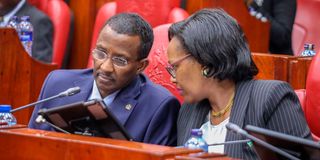
Speaking during a consultative forum in Trans Nzoia County involving civil society groups, human rights defenders and security officers, IPOA Vice Chairperson and acting Chair Anne Wanjiku said mistrust, propaganda and negative perceptions have significantly affected cooperation between the two sides.
She said the situation has, in some instances, compromised investigations where officers of interest allegedly interfere with evidence or undermine inquiry processes.
“We are working closely with the Office of the Director of Public Prosecutions (ODPP) to get justice for all victims. At some point, we stand with the police to protect them when their rights are also violated in an incident,” Ms Wanjiku said at the forum where both sides traded blame.
She raised concern over what she termed increasing inaction on complaints lodged by members of the public, saying IPOA currently has about 40,000 complaints, half of which involve cases that were never acted upon or assigned for investigation.
“In some cases, a complaint is made, but it is not followed up on or not even assigned to an investigator,” she said.
In Trans Nzoia County alone, IPOA has seven matters in court and seven under investigation, including the death of a Kitale National Polytechnic student allegedly shot by police last year and the shooting of a man in Saboti allegedly by Kenya Forest Service officers.
Ms Wanjiku said some complaints received by the authority do not necessarily involve public order incidents but arise from private disputes between officers and members of the public.
She added that IPOA has introduced Alternative Dispute Resolution (ADR) mechanisms through stakeholder engagement to strengthen community policing and speed up justice delivery.
However, the forum also exposed deep frustrations from police officers, who accused IPOA investigators of bias and pre-judging cases. Some officers claimed investigations are sometimes launched with predetermined conclusions against police officers, rather than being conducted objectively.
“Most officers have been victims of your investigations because investigators come to the scene with an informed mind instead of doing due diligence to find the truth,” said one officer during the meeting.
In response, IPOA North Rift Regional Coordinator Eugene Muteshi said police officers have at times frustrated investigations by refusing to record statements or submit reports.
He defended the integrity of IPOA processes, saying all files undergo strict review before any officer is recommended for prosecution in line with the 2025 regulations.
“Our investigations go through several stages before a charge is approved,” said Muteshi.
Police officers also raised concerns over long-standing grievances regarding poor working conditions and unimplemented recommendations from previous reform commissions.
Trans Nzoia West Sub-County Police Commander Erick Ngetich criticised some infrastructure projects funded through the Constituency Development Fund (CDF), saying some police facilities are poorly constructed and pose security risks.
“Some of the structures built by CDF are poorly done and even allow suspects to escape from police cells. This is wrong,” he said.
In response, IPOA said it has recommended to the Inspector General of Police a review of standards and designs of police infrastructure funded through CDF.
Ms Wanjiku said audits conducted by the authority found that several stations built under the fund do not meet basic operational and safety standards required for police work.