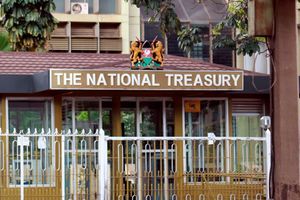
National Treasury Principal Secretary Chris Kiptoo has admitted that reliance on borrowing to finance the budget is not sustainable as the country raids lending institutions to plug the Sh1.12 trillion deficit in the 2025/26 financial year.
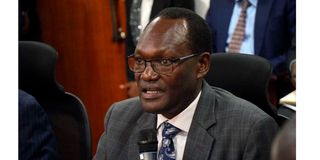
At a meeting with the National Assembly’s Public Debt and Privatisation Committee, Dr Kiptoo singled out fiscal consolidation as the only way out from a possible financial crisis at a time the country is faced with maturing loans due in one to five years.
The enhanced borrowing, to be sourced from the local and foreign markets, will escalate the country’s debt stock to Sh12.8 trillion, which includes Sh7.1 trillion local borrowing and Sh5.8 trillion foreign loans.
“Borrowing is not sustainable. We are working hard, but without achieving fiscal consolidation, it is going to be very difficult going forward," said Dr Kiptoo, noting that expanding the tax base will help in fiscal consolidation.
The drivers of the enhanced borrowing are government expenditures contained in the supplementary estimates I for the 2025/26 fiscal period, currently before the National Assembly, which will escalate, by Sh245.9 billion, the Sh4.2 trillion budget for the year, appropriated by the National Assembly in June 2025.
Kenya's public debt is projected to hit Sh1.2 trn by 2026/27. This obligation now consumes a quarter of the total budget, leaving less for essential services and infrastructure.
Photo credit: Pool
A document Dr Kiptoo presented to the House committee, chaired by Balambala MP Abdi Shurie, indicates that the fiscal deficit “is expected to be financed” with a domestic financing of Sh924.5 billion and net financing of Sh229.8 billion.
“We want the burden of taxation to go to everyone, not only those who are complying,” said the PS.
This leaves Kenya Revenue Authority (KRA) with the burden of broadening the tax bracket “so that everyone is there.”
The net domestic financing includes disbursement of Sh903.5 billion, inclusive of commercial loans of Sh540.1 billion, programme loans of Sh130.9 billion and project loans of Sh224.1 billion.
It also includes principal repayments of Sh673.8 billion, inclusive of Sh135.7 billion liability management payments.
But even as the PS spoke, a section of the committee members blamed the country’s huge public debt on fiscal indiscipline at the National Treasury that includes a lack of “proper” budget planning and over-projection of revenues, whose shortfall necessitates increased borrowing.
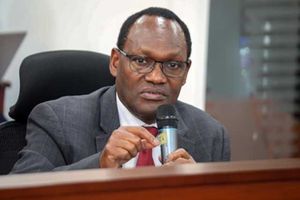
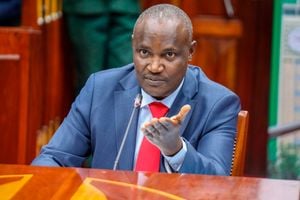
Cabinet Secretary for National Treasury and Economic Planning John Mbadi before the National Assembly Public Debt and Privatisation Committee at Continental House Nairobi on November 28, 2024.
Photo credit: Dennis Onsongo | Nation Media Group
“When revenues are not increasing, who would you consider spending more?” posed Mr Shurie.
This, as Baringo North MP Joseph Makilap accused the National Treasury of a lack of sound budget planning.
“The things you want financed in the supplementary budget should have been in the main budget,” said Mr Makilap, noting that an increase in domestic debt, which has overtaken foreign debt, exerts more pressure on the interest rates.
However, Dr Kiptoo said that failure to hit the right revenue targets forces the government into a borrowing spree.
“With all these pressures and revenue not coming in, we only work with the budget that parliament has approved,” the PS said.
The drivers of the supplementary budget expenditures, according to the PS, include the salary reviews for the Kenya Defense Force (KDF) personnel.
There is also the implementation of the 2025-29 Collective Bargaining Agreement (CBA) for teachers under the Teachers Service Commission (TSC) and civil servants, and Sh3.7 billion in “deliberate effort to support” Kenya Revenue Authority (KRA) in revenue mobilization efforts.
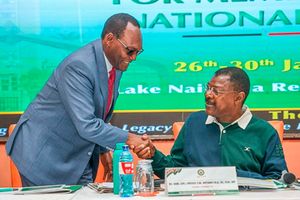
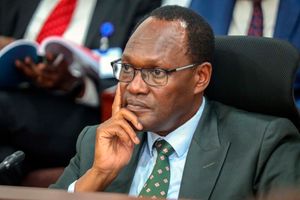
The Cabinet Secretary for the National Treasury and Economic Planning John Mbadi (left), and National Treasury Principal Secretary Dr Chris Kiptoo appear before a joint sitting of the Departmental Committee on Finance and National Planning and the Select Committee on Public Debt and Privatization to deliberate on the proposed partial divestiture of the government's shareholding in Safaricom PLC, at Glee Hotel, Nairobi, on January 13, 2026.
Photo credit: Bonface Bogita | Nation Media Group
There is also a Sh3 billion shortfall carryover towards Social Health Authority (SHA) support for teachers and civil servants, and a Sh3 billion shortfall carryover for Kenya Forestry Service (KFS).
The PS also noted that the government navigates the fluid fiscal space, “there are domestic risks that could affect revenue performance, scale up expenditure pressures and worsen public debt sustainability.”
They include potential slower economic growth, which could reduce revenue collections and widen the fiscal deficit, and public debt vulnerabilities in the event of exchange rate fluctuations.
The others include contingent liabilities from state corporations and public-private partnerships through government guarantees and long-term contractual commitments, and the high pending bills and elevated wage expenditures.