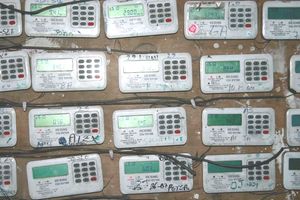
Kenya Power is seeking to procure 19,103 smart meters to meet rising demand from large electricity consumers and curb revenue leakages associated with outdated metering systems.
The listed electricity distributor has placed an order for 18,000 three-phase smart meters, alongside 267 units rated at 300/5 Amperes (A), 200 units rated at 200/5A and other smart metering units with capacities ranging from 200/5A to 11kV 400/1.
The utility says the procurement is driven by growth in its commercial and industrial customer base and forms part of its wider plan to digitise operations and improve revenue collection.
“Most of these meters are for the large power customers. We have a growing customer base that requires these meters,” General Manager for Supply Chain and Logistics John Ngeno said on Friday.
Kenya Power General Manager for Supply Chain and Logistics John Ngeno.
Photo credit: Dennis Onsongo | Nation Media Group
Three-phase smart meters are designed for high-load users, including industries, commercial buildings and large residential developments. They support real-time consumption monitoring, remote meter reading and automated integration with the power grid.
Kenya Power had 15,706 large and small commercial customers as of June last year. Although they account for a small share of the utility’s customer base, they generate more than half of its annual electricity sales.
The procurement comes as Kenya seeks to expand electricity access under reforms tied to a planned $500 million (Sh64.7 billion) sustainability-linked bond.
The National Treasury has said the financing will be priced according to Kenya’s performance against agreed targets, including increasing rural electricity access to 81.8 per cent by 2030 from 67.9 per cent in 2023.
The country would exceed the target if rural electrification reaches 94.4 per cent over the same period.
Kenya Power serves more than 10.2 million customers, but persistent revenue losses linked to billing disputes and non-payment have increased pressure on the utility to modernise its metering infrastructure.
The company says expanding the use of prepaid and smart meters remains central to efforts to improve billing accuracy and reduce losses, particularly among commercial and industrial consumers who account for the bulk of electricity sales.
“The company continues to install prepaid and smart meters as strategies to minimise the risk of non-collection,” Kenya Power says in its latest annual report.
The latest procurement is expected to support both the utility’s revenue protection strategy and the government’s broader push to increase electricity connections as Kenya pursues cheaper climate-linked financing.