The value of fish produced in Kenya jumped by 10.3percent to Sh39.6billion in 2024, defying a drop in output in the main Lake Victoria source.
Fresh data by the Kenya Fisheries Services (KeFS) showed that the country’s total fish production in 2024 stood at 168,424 tonnes worth Sh39.6 billion, marking a 4.4 percent increase in output compared to 161,307tonnes worth Sh35.9 billion landed in 2023.
Women clean Tilapia fish captured from Lake Victoria.
Photo credit: File | Nation Media Group
“As has been the trend in the past, most of the production was from inland capture fisheries, amounting to 86,527tonnes with an ex-vessel value of Sh. 14.5 billion. The fish production from marine and aquaculture was 48,474 tonnes and 33,423 tonnes worth Sh. 18.6 billion and Sh 9.9 billion, respectively,” KeFS said.
Inland capture fisheries contributed 52 per cent of Kenya’s total fish production, with the principal catches coming from Lake Victoria. The lake accounted for 67,575 tonnes, which was a four per cent decline in catch compared to 70,313 tonnes caught the previous year.
“This can be attributed to increased fishing pressure, fish-critical habitat destruction, and the prevalence of illegal unreported fishing activities,” KeFS said.
Lake Turkana, the world’s largest desert lake, produced 15,618 tonnes of fish in 2024, marking a two percent decline compared to 15,899 tonnes caught in 2023. The Fisheries Department attributed this decline mainly to the raised water level of the lake in most parts of the year, which inhibited traditional fishers from accessing the fishing ground.
“Freshwater bodies of commercial importance whose catches increased in 2024 were Lake Baringo (9 percent), Lake Jipe (13 percent), and small dams (1 percent). The catches from the lakes in 2024 were 456 tonnes, 319 tonnes, and 440 tonnes, respectively, compared to 420 tonnes, 282 tonnes, and 434 tonnes in 2023,” KeFS said.
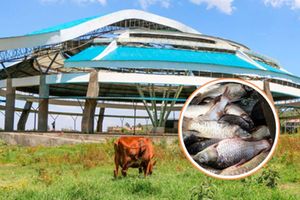
Inland capture fisheries contributed 52 per cent of Kenya’s total fish production
Photo credit: File | nation Media Group
“The water bodies that registered a decline in production are Naivasha (2 percent), Turkana (11 percent), Lake Kanyaboli (83 percent), Tana River dams (4 percent), Tana River Delta (6 percent), and Turkwel Dam (4 percent),” it added.
Fish farming (aquaculture) recorded a five percent increase in production of 33,423 tonnes of fish harvested in the year 2024, compared to 31,767 tonnes in 2023. The fish production from cage culture continues to increase steadily, accounting for about 76.4 percent (25,547 tonnes), while land-based freshwater aquaculture and mariculture along the coast produced 7,742 tonnes and 134 tonnes, respectively.