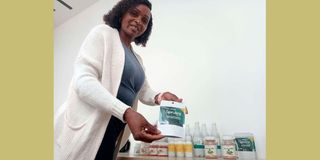
Elizabeth Mwenda Mbogo during an interview at the Bioeconomy Cluster Development Workshop organized by the Stockholm Environment Institute (SEI) in Nairobi on November 6, 2025.

When Elizabeth Mwenda gave birth to her first child, she never expected that breastfeeding would become her greatest challenge.
"I got my baby, but I didn’t have any breast milk. My mother-in-law kept telling me that I wasn’t eating enough, but nothing worked. I was desperate,” she recalls.
At the time, her husband was working with farmers through an NGO and so he sought help from the communities he was training. The answer that came back would change their lives forever: moringa.
“He came home with a small polythene bag of moringa leaves. Nobody knew what moringa was back in 2007. It was something only PhD researchers or scientists talked about,” says Elizabeth, adding: "But I decided to try it."
Within hours of adding a teaspoon of the herb powder to her porridge, Elizabeth’s body responded dramatically. The shortage of breast milk that she had been struggling with was resolved.
“I became a total ‘Friesian’. I had so much milk that I would express a cupful from one breast while the baby fed from the other. The baby was even choking!”
This remarkable recovery marked the beginning of a journey that would transform a mother’s frustration into Botanic Treasures, a thriving natural health enterprise that has since become one of Kenya’s leading producers of moringa-based products.
Armed with curiosity and a newfound belief in the herb’s potential, Ms Elizabeth began researching the moringa tree.
She discovered that, although moringa had been widely studied globally, very few people in Kenya knew about it.
In 2008, with just Sh5,000 in seed capital, she and her husband decided to explore this niche market, starting with just seven kilos of dried moringa leaves sourced from local farmers.
“We would pack them, make brochures, attend agricultural shows, and educate people about moringa,” she says.
Elizabeth Mwenda Mbogo during an interview at the Bioeconomy Cluster Development Workshop organized by the Stockholm Environment Institute (SEI) in Nairobi on November 6, 2025.
At the time, most people didn’t believe in herbal products. "They would tell us they had to do some research first," she recall
However, the couple persevered, going from one agricultural show to another with nothing but determination and samples.
Over time, their persistence paid off
“When we started, Kenyans didn’t even know what moringa was. Now, it’s a household name,” says Elizabeth.
After four years of laying the groundwork and training farmers, the couple officially registered Botanic Treasures in 2012. "We had been working with farmers since 2008, helping them to grow moringa through a cooperative," she explains. By the time the company finally opened its doors, they already had a strong network of farmers
They started small, processing around 30 kilos every few months. Today, the company processes up to 2,000 kilos of moringa a month and works with over 300 farmers across the country.
"We started with fewer than 20 farmers, most of whom had been abandoned by NGOs that encouraged them to grow moringa but never came back to buy it," she says.
They trained the farmers to dry and process the leaves properly because moringa spoils easily if not handled well
From their facility, which also serves as a resource centre, Botanic Treasures provides training to farmers in the organic production of herbs such as lemongrass, hibiscus, stevia and baobab.
In an interview with Seeds of Gold, Elizabeth said that they also train farmers in organic farming methods. The company then purchases the raw materials, processes them, and packages them into its product lines.
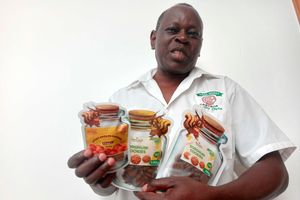
Their moringa products range from powders and teas to oils and fermented health tonics. Popular products include pure moringa leaf powder, moringa and baobab blends, probiotic detox drinks, Rekava health tonics and cold-pressed moringa oil.
“We make child-friendly products with moringa, hibiscus and beetroot that are sweetened with stevia, so children can enjoy the taste,” says Elizabeth.
“These products can be mixed with porridge, sour milk or juice to boost nutrition.”
The company also produces tea blends, including moringa and hibiscus, moringa and cinnamon, moringa and ginger, and moringa and Prunus africana.
Elizabeth’s curiosity didn’t stop at moringa. She reveals that she pursued a course in nutrition to better understand the science behind the healing properties of plants. “I wanted to explain to people how moringa works — how it boosts immunity and alkalises the body,” she says.
This curiosity led to the development of fermented herbal products.
“We looked at the Japanese and Koreans. They eat fermented foods such as kimchi every day and enjoy long, healthy lives. So, we started fermenting moringa with other vegetables and herbs, such as purple cabbage and turmeric,” she explains.
Running a herbal processing business hasn’t been easy.
"Our biggest bottleneck is the lack of organic certification. We have already secured export contracts with companies in Germany and Sweden, but without certification, we can’t ship large volumes,” she admits.
Elizabeth Mwenda Mbogo during the Bioeconomy Cluster Development Workshop in Nairobi on November 6, 2025.
The other hurdle is the mindset of farmers. “Many were spoiled by NGOs. Now, whenever you call farmers to discuss an opportunity, they expect to be paid just for attending,” she says.
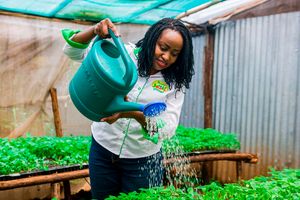
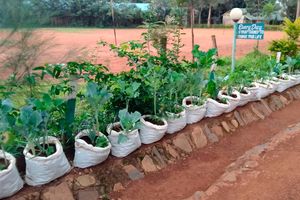
To address the shortage of seedling bags, Botanic Treasures has partnered with banks to collect used plastic cups for planting seedlings. “We recycle the cups into seedling containers. It’s our way of promoting sustainability,” she adds.
When the business first started, it was just Elizabeth, her husband and their toddlers, filling sachets at the dining table. Today, Botanic Treasures employs 16 permanent members of staff and up to 60 casual labourers during planting seasons.
Their 15-acre farm in Tharaka Nithi provides a steady supply of moringa, enabling them to maintain consistent quality. “We started with just four acres, but demand kept growing,” says Elizabeth.
She says that her greatest sense of fulfilment has come from seeing her family benefit from the products.
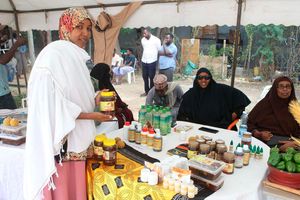
Botanic Treasures was among this year’s exhibitors at the Bioeconomy Cluster Development Workshop organised by the Stockholm Environment Institute (SEI) in Nairobi on November 6. With funding from the Swedish International Development Cooperation Agency (Sida), SEI is implementing the Advancing Bioeconomy Development in Kenya (ABDK) project, which promotes sustainable farming.
Elizabeth’s commitment to growing and processing moringa aligns with the principles of the bioeconomy.