Some Mt Kenya MPs are accusing the government of plans to introduce “suspicious” charges in the coffee sector, a move they say could reverse gains in the sector.
The latest development stems from a gazette notice by President William Ruto’s administration containing the controversial levies, which, if implemented, could prove to be a death knell to farmers in the coffee sector.
Contained in the Kenya Subsidiary Legislation, 2025, the gazette notice of December last year by National Treasury Cabinet Secretary John Mbadi proposes several charges including transaction and membership fees.
The first schedule proposes one percent as broker fee, 0.3 percent as coffee exchange fee, 0.3 as direct settlement system (DSS) fees and 0.2 percent to the Capital Markets Authority (CMA) as statutory fees.
In the second schedule, brokers will be required to pay Sh75,000 as annual membership fee, category one coffee buyers purchasing more than one percent of annual coffee to pay 75,000 membership fee while those in the second category, buying less than one percent, will part with Sh50,000.
An annual membership fee of Sh115,000 will be charged on warehouse operators, millers, transporters, export bags providers, input suppliers, other commercial banks, DSS providers and any coffee or commodity fund.
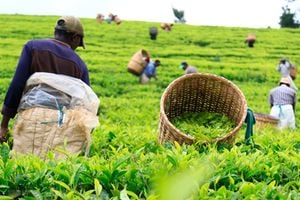
A farmer tends to a coffee bush in Nyeri town on May 10, 2023.
Photo credit: Jospeh Kanyi | Nation Media Group
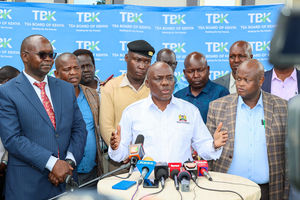
Raising the alarm, the MPs led by Kirinyaga Senator James Murango said the proposed charges will only hurt the coffee farmers as they are the ones to bear the levies, a move that will only reverse gains farmers have begun enjoying as part of reforms initiated by former Deputy President Rigathi Gachagua.
This year, the payout to farmers has hit a high of Sh157 per kilogramme of cherry, with the lowest now at Sh121.
He wondered why the government was in a rush to introduce such charges without involving Parliament as the representatives of the people.
“The proposals have come from CS Mbadi and have not passed through Parliament. I don’t know why the rush yet there are enough laws governing the coffee sector,” said Mr Murango.
“The charges will eat into farmers’ income. It is like if a farmer sells coffee to Nairobi Coffee Exchange (NCE), a charge of 0.3 percent will be deducted as coffee exchange fee from what they were supposed to take home,” he added.
The move comes at a time when the NCE does not have a legal board in place, hence cannot issue directives as its ownership is also in question.
The former Senate Agriculture committee chairperson also questioned why the government single-sourced Cooperative Bank as DSS provider, instead of subjecting the process to open tender and awarded to whoever offered the lowest price for the service.
He noted that a new legislation by the CMA – the Capital Markets Act, 2025 – is keen on defining DSS as a banking facility provided by a commercial bank regulated by the Central Bank of Kenya for the clearing and settlement of coffee proceeds, going against Coffee Regulations, 2019 which said banks and not bank because the government wants to single source.
“Banks benefit either from interest rates on loans or transaction fees in case of deposits. This is like 0.3 percent being charged on your salary and given to a bank where you receive the salary from despite the same bank enjoying transaction fee when you are withdrawing your salary,” said Senator Murango.
On the 0.2 percent CMA statutory fee, the lawmaker wondered why farmers are being levied to fund an Authority already funded by the Exchequer.
“Why should coffee be the only crop taxed to fund the CMA? I have not seen the same being done to tea or livestock,” he said.
He further questioned the move to reduce brokerage fee by one percent instead of two percent as it is in the Coffee Regulations, 2019.
“In Kirinyaga for example, we normally pack and mill our own coffee, then sell them through Kirinyaga Slopes Brokerage. Now this money has been reduced and it is the farmer who is going to suffer,” said Mr Murango.