Four former employees at the East Africa Portland Cement (EAPC) are still signatories of the company’s bank accounts despite repeated queries by Auditor General Nancy Gathungu, raising concerns of potential financial risks.
Ms Gathungu has revealed that the quartet is still registered as signatories of EAPC bank accounts despite having exited the company, pointing to a risk of unauthorised transactions and financial fraud.
“Review of the bank confirmations received from the financial institutions revealed that four (4) former staff were still signatories to the bank accounts despite having ceased being employees of the company,” the Auditor-General said in an audit report on EAPC’s operations for the financial year to June 30, 2024.
“There is a risk of unauthorised access to the bank accounts. In the circumstances, the existence of effective controls in the management of bank accounts could not be confirmed,” it added.
Audit reports often delay, and some of the issues raised could have changed by the time they are published.
Ms Gathungu’s report revealed that EAPC had a balance of Sh18.10million in its bank accounts by the close of the financial year to June 30, 2024, a drop compared to Sh77.96million reported in the previous year.
Auditor-General Nancy Gathungu.
Photo credit: Dennis Onsongo | Nation Media Group
Banks generally require companies to have at least two authorised signatories to transact through their accounts.
In the event of resignation or retrenchment, managers who run bank accounts for a company are expected to relinquish such and other responsibilities immediately upon their departure.
Apart from the questionable bank account signatories, Ms Gathungu also flagged EAPC’s weak debt collection system and non-remitted employee pension contributions, tax deductions, and mining levies, among other accounting weaknesses.
For instance, the audit revealed that the company has been unable to settle its obligations on statutory deductions, including Sh2.98billion in pay-as-you-earn, Sh893million in value-added-tax, and Sh227million pension liabilities, being principal, penalties, and interest.
“The management made subsequent payments totalling Sh60,000,000 after the year-end to reduce the outstanding pension liabilities,” the audit said.
The audit said that EAPC faced significant contingent liabilities owing to employee-related claims arising from unpaid salaries based on collective bargaining agreement terms with an estimated total exposure of Sh1.5billion and claims by suppliers totalling Sh3billion, as well as Sh383million in claims from contract breaches.
“All these claims have been provided for in the financial statements,” Ms Gathungu said.
The audit further flagged flaws with the EAPC receipting system, saying that it exposed the company to risks of fraud.
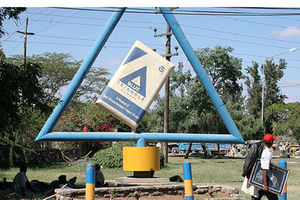
A signpost near the entrance to the East African Portland Cement Company factory in Athi River.
Photo credit: File
“As previously reported, review of the credit process revealed the system in place does not automatically apply the customer receipts to the corresponding accounts, and manual intervention is required to apply the receipts to the customer invoices,” the Audited General pointed out.
“The manual application of the receipts is tedious and prone to error or fraud. The total unapplied receipts as at 30 June 2024 amount to Sh4.8 billion (2023: Sh2.1 billion). Unapplied receipts distort the ageing of trade receivables balances, impacting the reliability of the aged analysis report as a basis for computing estimated credit losses,” Ms Gathungu added.
Proceeds from partial land sales helped EAPC end a 13-year dividend drought, after posting a Sh1.06 billion net profit for the year to June 2024. The firm’s current liabilities, however, exceeded its current assets by Sh6.09billion, an indication of negative working capital.