Kenya’s food security is under increasing strain as climate extremes intensify, exposing serious vulnerabilities in the country’s agricultural systems.
The ‘State of the Climate Report 2025’, released last month, reveals that erratic rainfall, prolonged dry spells, and rising temperatures are steadily reducing farm productivity. This is leaving millions of households with shrinking food supplies and growing uncertainty.
During the March–April–May (MAM) long rains in 2025, most parts of the country recorded above-average rainfall.
However, erratic distribution, prolonged dry spells, and shifting rainfall patterns undermined crop performance, particularly in marginal agricultural zones.
National maize production was estimated at 4 million tonnes, which is 10 per cent above the five-year average.
"This was driven by favourable conditions in high and medium rainfall zones such as the Rift Valley, Western and Central Kenya,' the report stated.
Irrigation offered some relief, with the area under irrigated farming increasing by 10 per cent.
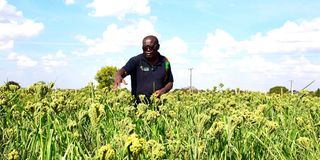
Sorghum production increased by 49 per cent, indicating a shift towards climate-resilient crops.
However, tomato production fell by 39 per cent due to pest outbreaks, particularly of Tuta absoluta, as well as water shortages.
"Flooded lowlands lost significant acreage of beans and vegetables," the report read.
Household maize stocks are estimated to be 37 per cent below average, with supplies lasting just one to three months in pastoral and coastal regions. This is said to be well below the usual four to five months. This has led to many families becoming dependent on the market early on, leaving them vulnerable to price shocks.
Smallholder farmers in Asal counties have been hit hardest, caught between climate variability and limited access to affordable resources.
"Smallholder farmers in Asal counties were most affected," the report read. The report read. "The performance of the October–November–December (OND) 2025 season led to widespread crop failures."
The situation worsened following the poor performance of the OND 2025 short rains, which triggered further crop failures.
In marginal agricultural areas, maize production fell 20–30 per cent below average, with total crop losses reported in coastal counties such as Kilifi and Lamu and in north-eastern regions including Mandera and Wajir.
"Maize production in marginal areas was 20–30 per cent below LTA, with total crop failure reported in coastal counties such as Kilifi and Lamu, and in north-eastern regions such as Mandera and Wajir." The report read.
By mid-2025, approximately 1.8 million Kenyans were facing acute food insecurity, classified as IPC Phase 3 (Crisis) or worse.
Of these, 179,000 were in IPC Phase 4 (Emergency), with the worst-affected counties being Turkana, Mandera, Marsabit and Baringo. The lean season, typically marked by depleted food stocks, intensified the crisis.
"This period coincided with the lean season, when household food stocks are usually depleted," the report read.
Climate-driven declines in food production have contributed to rising malnutrition, particularly among children and pregnant women. This weakens immunity and increases vulnerability to disease.
Under climate stress, livestock diseases such as foot-and-mouth disease and lumpy skin disease have also spread, eroding pastoral livelihoods and household nutrition.
Furthermore, drought conditions have exacerbated water scarcity and sanitation issues, creating an environment conducive to disease outbreaks and putting a strain on already overburdened health services.
According to experts, the March–April–May 2026 season presents a mixed outlook, offering both opportunities and risks.
The March–April–May (MAM) 2026 Long Rains season is expected to have various socioeconomic implications across Kenya, influenced by regional rainfall patterns and warmer-than-average temperatures.
"The March–April–May (MAM) 2026 Long Rains season is expected to have varied socioeconomic implications across Kenya,"' the report read, "influenced by regional rainfall patterns and warmer-than-average temperatures."
Regions expected to receive above-average rainfall, including the Lake Victoria Basin and parts of the Rift Valley and central highlands, could see improved crop yields, better livestock productivity, and increased economic activity in agricultural markets.
However, these gains could be offset by risks such as flooding, soil erosion, pest öutbreaks and post-harvest losses
"These regions face risks of flooding, landslides, soil erosion and pest outbreaks, which could potentially disrupt supply chains, damage infrastructure and increase production costs due to nutrient leaching and post-harvest losses," the report read. The report read.
Conversely, areas likely to receive below-average rainfall may experience declining crop yields, worsening food insecurity, and heightened competition over scarce water and pasture resources.
"They include the south-eastern lowlands, north-eastern Kenya and the coast," the report read.
Forecasts suggest that the long rains from March to May may be below average across much of the Asal regions, particularly in north-eastern Kenya.
Pastoral areas are expected to remain in crisis (IPC Phase 3), with counties such as Mandera facing emergency (IPC Phase 4) conditions due to poor pasture regeneration and low livestock productivity.
In marginal farming zones, many households will continue to rely heavily on markets amid high food prices and limited access to agricultural resources.
"If the forecast materialises, we expect water sources to dry up earlier than usual, forcing households and pastoralists to travel longer distances for water," the National Drought Management Authority (NDMA) noted. 'This will also increase reliance on boreholes, water trucking and emergency interventions, driving up operational costs.'
The NDMA also warned that livestock body conditions would deteriorate, milk production would fall, and distress sales could rise.
"Pastoral households could face serious setbacks if herds continue to decline,' the NDMA warned.
For households dependent on crops in marginal agricultural zones, below-average harvests are expected to increase market dependence, push up staple food prices and strain purchasing power.
Speaking at the launch of the famine relief food distribution programme in Nairobi, Ahmed Idris, Secretary General of the Kenya Red Cross, said that the drought crisis is worsening and leaving millions grappling with empty granaries, dying livestock and dwindling water sources.
The Kenya Red Cross emphasised the need for long-term solutions to help families build resilience against future droughts.
“Emergency food aid is important today,” said Idris. “However, our focus must also be on empowering communities for the future.”
Interventions such as rainwater harvesting, the construction of small dams and water pans, the promotion of drought-resistant crops, and the improvement of livestock management practices are critical.
"Providing food today saves lives, but empowering communities to secure water, diversify their crops and protect their herds ensures they can withstand the next dry season," said Idris.
Strengthening local early warning systems, training communities in sustainable farming techniques, and supporting income-generating activities are also essential steps towards reducing dependence on emergency aid and fostering lasting food security.
Edward Muriuki, acting managing director at KMD, advises that farming activities should be planned and carried out in close consultation with agricultural extension officers.
“Farmers should plan and carry out their activities in close consultation with agricultural extension officers to ensure optimal outcomes,” he said. Muriuki advised.
He also urged them to continue monitoring official weather advisories issued by KMD to inform their planning and preparedness.
'I am asking our farmers to use the products we issue in the advisories for their future planning and preparation,' he said.