The Sh25 billion Soin-Koru Multipurpose Dam Water Project, which was expected to supply water to millions of residents of Kisumu and Kericho counties as well as rice farmers in the Ahero Irrigation Scheme, has stalled.
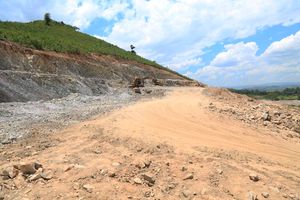
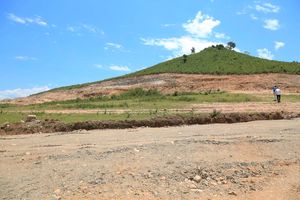
A National Treasury report has disclosed that implementation of the project has stalled due to lack of government funding, compounding concerns raised in an earlier Auditor-General’s report, which indicated that the Chinese contractor had abandoned the site.
The National Water Harvesting and Storage Authority (NWHSA) awarded the contract for Lot One of the Soin-Koru Multipurpose Dam Water Project, covering the dam component, to China Jiangxi under a joint venture arrangement on May 11, 2022, at a contract sum of Sh19.99 billion.
“Project stalled due to lack of allocation,” reads the report, which puts the estimated cost of the project at Sh25 billion. According to the report, only 8 per cent of the project has been completed, having absorbed Sh1.67 billion as of June 30.
The project is being undertaken through a joint venture between China Jiangxi and its parent company, China Jiangxi International Economic and Cooperation Company Ltd. It started on August 27, 2022, and was scheduled for completion on August 27, 2027.
China Jiangxi insists they have not abandoned the site. However, a physical inspection by a team from the Office of the Auditor-General in September found that little progress had been made despite the project having consumed nearly three years of its implementation period.
A separate report by a Treasury unit lists the dam among the projects being considered for implementation under the public-private partnership (PPP) framework.
Sources from the Ministry of Water explained that although the project has been wrongly assigned in the PPP report, talks to onboard a private investor to finance and build it to its conclusion have been considered.
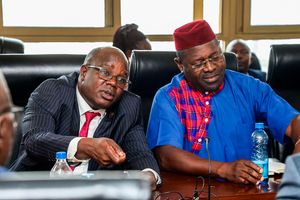
Despite the project being listed as a PPP, NWHSA Acting Chief Executive Officer Julius Mugun said the China Jiangxi contract had not been terminated.
“It stalled due to lack of funds, but it hasn’t been terminated,” said Mr Mugun, adding that talk of the project being terminated were “erroneous”.
“The government will proceed to allocate funds for it in subsequent budgets,” he said.
A source said the consideration to shift the project to a private investor was informed by its bankability.
The government reckons that the project targets irrigation areas in Muhoroni and Chemilil, and the existing Ahero and West Kano schemes. It targets about 27,000 acres in Kisumu County.
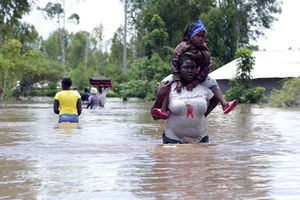
The dam could also benefit the surrounding households in Kericho and Kisumu who could consume its potable water. It will also be used to generate hydro-electric power and control flooding in the Nyando Basin.
Among the works yet to begin are the construction of a 54-metre-high zoned earth rock-fill dam, diversion culverts, coffer dams, seepage control works, grouting, diaphragm walls, relief wells and laboratory testing facilities.
The contractor had also not started construction of intake tower B, river diversion works, road pavements, drainage structures, access roads, water abstraction facilities, hydropower infrastructure and security installations.
Only the side-channel spillway, comprising a concrete-lined chute and plunge pool, had started, with auditors estimating progress at about 15 per cent.
The Auditor-General also observed that the resident engineer’s offices, laboratory and staff houses remained incomplete.
The setback threatens to derail a project that the government has repeatedly described as critical to improving water security, flood control, irrigation and industrial development in western Kenya.
The multipurpose dam, which will sit on approximately 2,170 acres on the Kisumu-Kericho border, is expected to store 93.7 million cubic metres of water.
It is designed to supply 72,000 cubic metres of water daily for domestic and institutional use, irrigate about 2,570 hectares of land and generate 2.5 megawatts of electricity.