Kenya is in talks with the World Bank for Sh16 billion ($135 million) in funding to digitise land registries and combat cartels, following warnings from the US about a surge in fake title deeds.
Rogue brokers and intermediaries in cahoots with government officials have been selling non-existent land or double-registering title deeds.
Principal Secretary Nixon Korir told National Assembly’s committee on Lands that the World Bank billions will help automate registries across the country.
The Ministry of Land hopes to clean up the mess through reforms, including moving decades-old records online, to make it possible for people to register and verify titles on the internet.
The government argues that digitising registration documents will help prevent fraudulent dealings by sealing loopholes that allow duplicate titles to be created, which are then used to transfer land without the rightful owner’s knowledge.
A report from the Office of the United States Trade Representative (USTR)—which serves as President Donald Trump’s primary adviser on trade—has for the first time cited the bogus land ownership documents as a barrier for investments in Kenya.
The report serves as a reference for trade deals between the US and foreign countries, signalling that the menace of fake titles will be placed on the table in trade and investment talks between Nairobi and Washington.
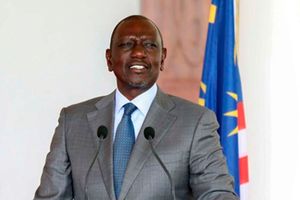
Qimiao Fan is the World Bank Division Director for Kenya, Rwanda, Somalia and Uganda.
Photo credit: Pool
“We have engaged the World Bank to support us with $125 million, about Sh16 billion, to support digitisation of land registries,” Mr Korir told MPs during the scrutiny of the Supplementary Budget I for 2025/26.
“We have sent documentation to the World Bank for approval. If we get these funds, we will make a lot of progress on digitisation of land registries.”
Some lawyers and cartels have opposed the digitisation plan, slowing its implementation.
In 2024, the Government Printer revealed, through a gazette notice, that 367 sheets of paper used for printing title deeds had been stolen from its custody, highlighting the extent of land fraud syndicates.
Mr Korir said the budget cuts have affected automation of land services after the Ministry revised its annual target to digitise five offices to three.
“The State Department had targeted five registries –Baringo, Machakos, Kajiado, South, Marsabit and Mombasa Mainland – for digitisation,” Mr Korir said.
“But due to budget constraints, we expect to digitise only three – Kajiado South, Machakos and Baringo.”
The sale of non-existent land or double-registering title deeds has sparked an avalanche of court cases and disputes that have at times resulted in deaths.
The intricate web of a fraudulent syndicate is manipulating records at the land registry, creating fake titles that have been used in fraudulent land transactions, including access to bank loans. This has seen banks, workers and companies lose billions of shillings through the bogus titles and manipulated official records, catching the attention of Washington.
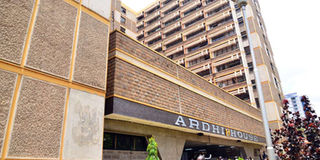
Lands and Physical Planning Principal Secretary Nixon Korir.
Photo credit: Lucy Wanjiru | Nation Media Group
“The process for leasing developed land and property is clear and established, but the process for obtaining leasehold title of undeveloped land is opaque and unreliable,” according to the report from the USTR.
“For undeveloped land, investors risk receiving fake title deeds or leasing a plot with multiple titles and unauthorised sales,” the report says.
In Kenya, the farming sector, which accounts for 25 per cent of the GDP, has upped demand for land, which is now viewed as an essential commodity.
This comes amidst new demand from the real estate sector, buoyed by rising urbanisation and growing appetite for home ownership.
The department is home to the green card or the “birth certificate” of land parcels, which captures a detailed history of a piece of land, including ownership, transactions, and encumbrances.
The green card is crucial for due diligence and ensuring a smooth and legal transfer of land ownership.
The ‘green card’ also has details of the land’s acreage, registration number, names of the registered owner, address, national identity card number, title deed number and when it was issued, and the signature of the land registrar.
With such information, the fraudster starts the mission of forging documents similar to the originals.
They forge the land’s ownership documents such as the title deed, ID card and signature of the land registrar who signed the last entry of the genuine proprietor. They also alter the records in the registry to match the forgeries.
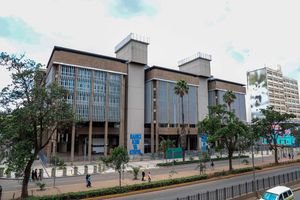
The World Bank Group headquarters building in Washington, DC.
Photo credit: Courtesy | AFP
After forging the documents, brokers later come in with potential buyers.
The buyer would be given the documents, unaware they are forgeries, to conduct their search at the land registry and compare the details.
The results of the search turn positive since the copies of the documents are generated from those in the official archives.
In 2019, NCBA and Equity Bank lost nearly Sh500 million through a title deed fraud racket after the Court of Appeal ruled that Co-operative Bank of Kenya had the right to a property that had been used to acquire loans from the three banks.
The three lenders laid claim on the single property in Riruta, which is registered in different names and was used to secure over Sh450 million in loans.
Judges said that the circumstances surrounding the dispute between the three banks were fraught with fraud, which neither lender could be strictly responsible for, as they all believed they held a first charge on the Riruta plot.
The suit brought to the fore a title deed racket that has seen lenders lose billions of shillings on non-existent security.
The citation of fake titles in the US report looks set to thrust the hazard of Kenya’s fake titles into the global limelight.