Globally, few faults would be found in contracting Ernst & Young, PriceWaterhouseCoopers (PwC), Deloitte or KPMG to audit books or oversee governance structures. Even fewer carry the weight of the famed “Big Four” accountancy firms.
In less than two years, however, Kenyan arms of two of the Big Four have confessed to the very wrongs that corporates and governments pay them millions of dollars to detect.
First, it was the Kenyan arm of Ernst and Young LLP (EY Kenya) in 2024, after confessing to fraudulent and corrupt practices in the race for a World Bank-funded project in Somalia. A 30-month ban from World Bank Group projects came in force.
As EY was entering the last nine months of its time in the coldroom, the World Bank announced that the Kenyan, Rwandan and Mauritian arms of PriceWaterhouseCoopers (PwC) had admitted to fraudulent and collusive practices used to secure a consultancy deal in Ethiopia.
This time, the World Bank decreed a 21-month ban.
The Kenyan, Rwandan and Mauritian PwC arms admitted to colluding with project officials to obtain confidential information that was then used to win tenders financed by the World Bank.
The contract involved consultancy to assist Kenya and Ethiopia build power transmission lines which would then enable electricity exports from Addis Ababa.
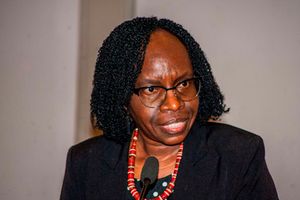
Members of the Institute of Certified Public Accountants of Kenya, led by the Chair, Philip Kakai (centre), and CEO Dr Grace Kamau (third left), during a past press conference in Nairobi in November 2024.
Photo credit: Lucy Wanjiru | Nation Media Group
Much like it was with the EY Kenya debarment, the settlement between World Bank and PwC is expected to trigger exits from the consultancy’s arms in Kenya, Rwanda and Mauritius.
The PwC arms will be expected to take disciplinary action, including removal from office of employees involved in the misconduct.
“The settlement agreement provides for a reduced period of debarment in light of the companies’ admission of misconduct, cooperation, strengthening of aspects of their integrity compliance programme and voluntary remedial actions – including an internal investigation, internal action against responsible parties, ceasing business with all involved sub-consultants, staff training and voluntary restraint from bidding for Bank Group-financed contracts during the settlement agreement negotiations,” the World Bank said.
EY Kenya and PwC admitted to the infractions in return for lenient sentences. For EY Kenya, the settlement included further internal action against staff directly involved in the violations.
That saw EY Kenya push out partner Laban Gathungu, who later sued the firm for wrongful removal and sought Sh450 million in damages.
In both instances, the bans were extended for implementation by other multilateral development lenders who in 2010 signed an agreement for mutual enforcement of debarment decisions.
Ernst & Young Tower in downtown Toronto.
Photo credit: File
The partners include the African Development Bank (AfDB), Asian Development Bank, European Bank for Reconstruction and Development and the Inter-American Development Bank Group.
It means half of the local arms of the “Big Four” have admitted to exporting a Kenyan habit – corruption and collusion with government bureaucrats, at times oiling palms, to secure lucrative state-backed tenders.
The Institute of Certified Public Accountants – which regulates players in accountancy and audit fields – did not respond to queries on the impact on the World Bank debarments, and whether they point to larger industry problem. Kenya ranks second in the list of African nations with AfDB projects that have attracted sanctions by the multilateral development lender.
The World Bank bans come as an indictment of the procurement space, particularly in relation to the consultancy and audits which the “Big Four” have dominated for decades.
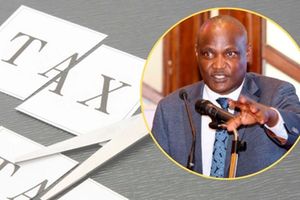
Mr Kwame Owino, the Institute of Economic Affairs (IEA) Chief Executive, says World Bank debarments raise many questions and that they could be a sign that something in the industry could be amiss.
According to Mr Owino, more is expected of the industry regulator – the Institute of Certified Public Accountants (ICPAK) – after the bans.
He says that after every ban, ICPAK should have taken action to deter repeat incidents by industry players.
“It (the World Bank debarments) suggests that something is broken in the profession. Professional associations need to let people know that they are following up after the debarment,” he said.
“I place this responsibility on professional associations. They need to do better. Part of the reason they regulate is to ensure certain standards are maintained. That includes ethics.”
Mr Owino says he was puzzled by the risk EY Kenya and PwC staff took by engaging in unethical behaviour under World Bank projects, adding that the development lender usually goes through details with a fine-tooth comb.
The IEA chief added, however, that some of the markets the consultancy companies operate in are volatile as corruption is so deeply entrenched to the point that it pushes some firms that are morally upright into paying for information.
“I’m surprised someone would take such a risk with a World Bank project. With the World Bank, it’s not a question of if, but when they will catch you. The World Bank tends to be very strict and usually hires outsiders to review its projects,” he said. Mr Owino is a little sympathetic with such firms because it shows government employees trade secrets.
“When operating in countries where corruption is rife, the companies have to be more careful. It tells you that when government officials have information of financial value, they can readily sell it. We need to exercise caution with government procurement,” Mr Owino said.
“I give credit to the World Bank. I’m not sure the sanctions are strong enough. Investigating the matter, making a determination and making it public shows the World Bank is not covering up anything. It proves the World Bank system works.”
EY Kenya was hired as a consultant for the Somalia Core Economic Institutions and Opportunities (Score) programme and the Second Public Financial Management Capacity Strengthening Project (PFM II).
Part of that was the Drought Resilience and Sustainable Livelihoods (DRSL) programme, implemented by the Inter-Governmental Authority on Development (Igad) and AfDB.
EY Kenya was found to have failed to reveal conflict of interest in the awarding of four contracts under the Somalia drought resilience project and payment of irregular allowances which were construed to be bribes.
World Bank investigations showed that Mr Gathungu had secret and unethical communication with a Somalia government official.
The official reportedly provided Mr Gathungu with confidential information on discussions between Igad and AfDB on recruitment of experts.
A March 10, 2018 whistleblower letter was sent to Mr Gathungu when he was operating from Somalia.
In responding the wrongful removal suit Mr Gathungu filed in Nairobi, EY Kenya said he failed to escalate the whistleblower letter to his superiors, which the company said would have triggered action on its part.
EY Kenya’s chief executive officer wrote to Mr Gathungu on October 22, 2018, raising the allegations of unethical conduct.
Mr Gathungu responded on October 28, 2018 but Ernst & Young Kenya said the response was unsatisfactory and terminated his partnership immediately.
The High Court termed the process of removing Mr Gathungu unlawful and awarded him Sh43.12 million. The court declined to award him a higher amount, citing questionable behaviour.
It also allowed some of EY Kenya’s claims, totalling Sh148 million. That figure consists of $1.053 million (Sh135.8 million), ZAR850,001 (Sh6.56 million) and Sh5.69 million.
EY Kenya told the court that Igad sought to trigger a $564,000 (Sh72.69 million) guarantee issued by EY Kenya for the consultancy contract. EY Kenya also paid $447,398 (Sh57.6 million) to its Indian sister group for a forensic review when the World Bank launched an audit of the happenings in Somalia.
The ZAR850,000 was paid to EY South Africa, which investigated fraud, corruption and irregularity allegations in the Somalia project.