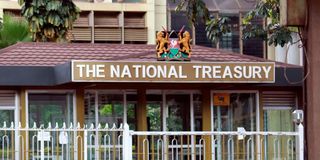
The National Treasury Building in Nairobi.
The National Treasury faces pressure to pay up 139.03 billion in equitable share of revenues to counties by June amid competing spending demands.
Article 202 of the Constitution requires that revenue raised nationally be shared equitably among the national and county governments.
County governments may also be given additional allocations from the national government's share of the revenue, either conditionally or unconditionally.
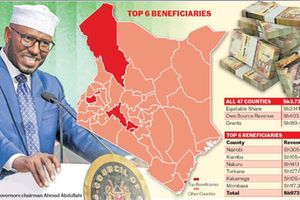
Official data shows that the national government had disbursed a sum of Sh275.98 billion by the end of March 2026, representing 66.5 percent of the Sh415 billion allocated to counties for the current fiscal cycle.
John Mbadi, the Cabinet Secretary for National Treasury and Economic Planning.
The remaining amount places Treasury in a race against time to meet its Constitutional obligation of transferring funds to the devolved units before the financial year ends in June. County governments depend heavily on exchequer releases to finance essential services such as healthcare, infrastructure development, and payment of salaries for devolved staff.
The devolved units, however, have over recent years been forced to endure delayed disbursement of the money amid revenue shortfalls and mounting debt payments.
The delayed cash disbursements to counties impact their service delivery and payment to suppliers and contractors, which has been blamed for the growth in pending bills.
Even in the current fiscal year, governors have complained of delays in releasing the equitable share of revenues, which often leaves counties unable to deliver some services. The pattern has prompted the Council of Governors (COG) to repeatedly raise the alarm, warning that irregular releases undermine the effectiveness of devolution. The challenge is often linked to cash flow constraints at the national level, where competing expenditure demands limit the Treasury’s ability to release funds consistently.
The delayed funding to counties is likely to replay this year owing to the government’s thinning fiscal space. For example, the fallout from the US-Israel war with Iran has worsened Kenya’s cash position, prompting the State to turn to the World Bank for rapid additional funding by June to cushion its economy—a position that signals pressure which could affect some obligations such as the pending pay outs to counties.
Kenya’s rising public debt burden has also tightened the government’s fiscal space, with a significant portion of revenue directed towards debt servicing obligations ahead of other expenditures.
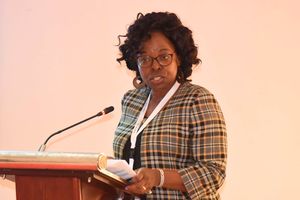
Controller of Budget Margaret Nyakang'o.
During the nine months to March, for instance, Kenya’s debt servicing costs stood at Sh1.36 trillion, accounting for 79.5 per cent of the country’s total tax revenues for the period.
Revenue collection shortfalls have also occasionally constrained the government’s liquidity position, further affecting the timing of transfers to counties.
The Controller of Budget (COB) has, in past reports, flagged delays in exchequer releases as a key risk to county operations and fiscal discipline. Counties are required to utilise funds within the same fiscal year, making delays problematic when large sums are disbursed close to, or past, the June deadline.
Follow our WhatsApp channel for breaking news updates and more stories like this.