The National Treasury has lined up a new portfolio of seven additional port-linked infrastructure facilities owned by the Kenya Ports Authority (KPA) for investment under a public-private partnership (PPP) arrangement.
The additional assets proposed for inclusion under the expanded PPP portfolio include, Mombasa port container terminal II (Berths 20–22); Mombasa port container terminal (Berths 23–24); Mombasa port cargo terminal – Mbaraki Wharfs; Mombasa port cargo terminal – Berths 1–5; Mombasa port cargo terminal (Berths 7–10); Inland Container Depot (ICD) Nairobi (Embakasi); and Inland Container Depot (ICD) Naivasha.
“These assets are operationally interconnected and may share common infrastructure and interfaces, including yards, access channels, terminal support facilities, and landside logistics systems,” the Treasury said in a disclosure as it kicked off recruitment of an advisor to guide the planned PPP deal.
“Consequently, decisions taken in relation to one asset have material implications for the performance, efficiency, and bankability of the other assets within the portfolio,” it added.
The Treasury had initially listed four KPA assets for hiring under the PPP model. They included: Lamu Port Container Terminal (Berths 1-3), Mombasa Port (Berths 11-14), Mombasa Port Container Terminal I (Berths 16-19), and the Lamu Special Economic Zone (SEZ).
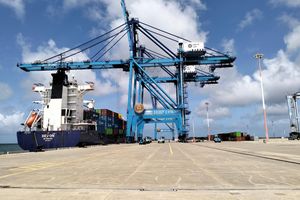
A section of the Lamu Port site in Kililana, Lamu West on June 5,2025.
Photo credit: Kalume Kazungu | Nation Media Group
“Given the scale of the assets, their shared demand drivers, and the strategic objective of transitioning to a landlord port model, it is necessary that these assets are assessed and structured under the PPP framework on a portfolio basis, rather than through fragmented, asset-by-asset transactions,” the Treasury said.
KPA, there weeks ago, started the search for an investor to run the Shimoni fish port under a landlord-model PPP arrangement. The Shimoni deal could open up the planned lease out of some operations at the Mombasa and Lamu ports.
"In 2018, a feasibility study was undertaken for Shimoni fish port, which recommended development and operations of the port under the PPP landlord model. In view of this, construction of the port commenced in October 2022 and was completed in June 2025,” KPA, which runs the port, said.
“Shimoni port is one of the projects identified under the Kenya Vision 2030 to support the exploitation of the blue economy resources for accelerated socio-economic development.”
A landlord PPP model is a structured deal where the public sector retains ownership of land and foundational infrastructure while leasing it to a private investor who is then tasked with financing, constructing, and operating the facility.
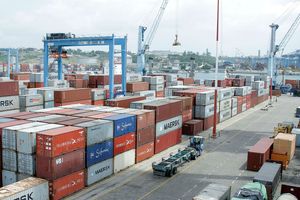
Containers at the Mombasa Port.
Photo credit: POOL|NMG
KPA said that in the PPP deal, the operator of the Shimoni port would be required to acquire cargo handling and ICT equipment, hire staff, market its services, provide security, and maintain infrastructure within the facility.
On its part, KPA will maintain the berth at Shimoni port and coordinate compliance with government regulations.
The Shimoni, which has a capacity of handling 24,000 tonnes of fish annually, is the largest of a series of small seaports on the Kenyan coast, including Kiunga, Ngomeni, Malindi, Kilifi, Funza, and Vanga, among others.
Data by the Kenya Fisheries Services (KeFS) showed that in 2024, Kenya produced 168,424 tonnes of fish worth Sh39.6 billion, marking a 4.4 per cent increase in output compared to 161,307tonnes worth Sh35.9 billion landed in 2023.