Addressing multiple taxes levied on second-hand clothes, popularly known as mitumba, at the point of entry is among the reasons the National Treasury proposed the introduction of a one-off payment of taxes in the Finance Bill, 2026.
National Treasury Cabinet Secretary John Mbadi said the move was also informed by a request from representatives of mitumba traders who complained about complicated payment of taxes anytime their mitumba consignment lands in the country.
John Mbadi the Cabinet Secretary for National Treasury and Economic Planning.
Photo credit: File | Nation Media Group
Although the proposal has been dropped in the final Bill published by the National Assembly, Mr Mbadi said it is among the proposals the National Treasury will be pushing for adoption by MPs.
“I have noticed that this has been dropped from the final Bill from the National Assembly, but our proposal was to have this provision, and I still insist we should have it,” Mr Mbadi said.
Mr Mbadi clarified that the proposed model would have introduced a deemed profit approach, where 5 per cent of the customs value of imported goods would be treated as profit, which would then be taxed at 30 per cent, resulting in an effective 1.5 per cent income tax component.
“Notwithstanding any other provision of this Act, tax shall be payable by any person in respect of income derived from the importation into Kenya of used clothing, used footwear and other goods classified under the relevant tariff heading,” reads the proposal that was contained in the draft Bill.
There were concerns that the tax would see the majority of Kenyans who rely on second-hand goods, including clothes and shoes, pay more due to the introduction of the presumptive tax of five percent on the value of imported goods at the point of importation.
Mr Mbadi, however, dismissed assertions that the tax will increase the cost of mitumba, saying that by paying only five percent of the value of their customs goods, traders will have more to spend on their goods.
“It was not a move for us to raise more money, but it was addressing an industry problem that has been there for a long time,” Mr Mbadi said.
The CS said the proposal was introduced upon request by the leadership of the mitumba business sector, which paid him a courtesy call during preparation of the draft Bill.
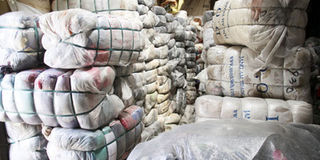
Bales of second hand clothes as pictured at Gikomba market in Nairobi.
Mr Mbadi said the traders expressed concern over the numerous taxes levied on them when the consignment lands in the country, hence there was need to align them into one.
“When you bring in mitumba, there are taxes you pay at the point of entry, followed by more taxes down the line, like income tax. This, the mitumba people told me, is cumbersome,” Mr Mbadi said.
“The business people told me that upon their goods landing, they have to engage accountants after selling them so that they calculate for them the taxes they should pay based on the profits they have made. This, they said, was too expensive for them because the accountants too must be paid,” the CS added.
Mr Mbadi said the traders asked for a simplified system of paying tax so that they can just pay it once at the point of entry only.
“We therefore agreed that for income tax, we deem five percent of the customs value of imported goods, whether clothes or any other thing, as profit, which is then taxed at 30 percent, thereby becoming the final tax, and no one should go for them again,” Mr Mbadi said.
“This was their request and, as a government that listens to the people, we believed that it was the right way to go and that is the proposal that we took to the National Assembly. Unfortunately, it has been dropped, but I still want to insist that the particular provision should be recommended to Parliament for reinstatement through an amendment because it is addressing an industry problem,” he added.
The National Assembly is set to conduct public participation on the Bill starting tomorrow, before it is debated and passed by June 30, 2026.