The government has proposed new taxes on second-hand goods (mitumba) and mobile phones in an attempt to curb tax evasion and 'simplify' the taxation system. If approved by the National Assembly, these changes will come into effect in July.
In the proposal, importers will be required to pay for the tax before their consignment is released at the port or any border entry.
The applicable income tax rate is applied to a deemed profit, with the tax collected at the point of importation before goods are released into the market.
The draft Finance Bill 2026, presented by National Treasury Cabinet Secretary John Mbadi, seeks to finance the Sh4.8 trillion budget for the 2026/27 fiscal year. It further proposes a higher excise duty on mobile phones and communication devices, with smartphones and related devices set to attract a 25 per cent tax.
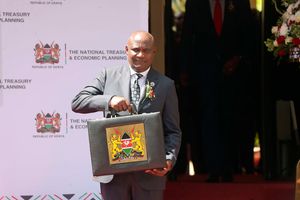
John Mbadi the Cabinet Secretary for National Treasury and Economic Planning.
Photo credit: File | Nation Media Group
The Finance Bill 2026 introduces Section 12H into the Income Tax Act, establishing a tax on income derived from the importation of worn clothing, footwear, and other used articles classified under tariff heading 6309.
“Notwithstanding any other provision of this Act, tax shall be payable by any person in respect of income derived from the importation into Kenya of used clothing, used footwear, and other used goods classified under tariff heading 6309,” the Bill states.
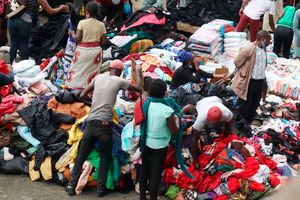
There are concerns that these changes will see Kenyans who rely on second-hand goods, including clothes and shoes, will pay more due to the introduction of the presumptive tax of five per cent on the value of imported goods at the point of importation.
Also anticipated is an increase in the cost of phones imported into the country, as the excise duty will now be charged at the point of activation (when the phone is first used), rather than at importation or purchase.
However, Mr Mbadi has defended the two proposals, saying Kenyans will not pay more for second-hand goods and mobile phone services.
He says that the draft Bill, tabled in the National Assembly on April 30, 2026, together with the estimates of revenue and expenditure for the next financial year, offers Kenyans a good bargain as it simplifies taxes on second-hand clothes and mobile phone services.
The CS adds that the requirement for mitumba importers to pay for the tax before the consignment is released at the port or any border entry will be a relief to the traders.
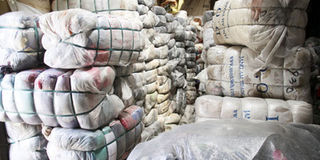
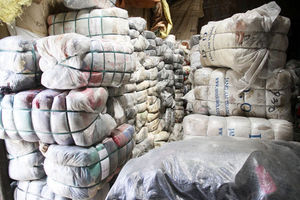
Bales of second-hand clothes.
Mr Mbadi says the tax was proposed by traders following a consultative meeting with them at his National Treasury office.
“During our meeting, they told me that KRA was harassing them over numerous tax compliance requirements. They suggested a unified tax regime applicable only at the point of entry, which then becomes one final, unified tax. That is what my team incorporated for consideration by the National Assembly,” he says.
“So, we agreed that VAT be simplified to make it easy for them to pay the taxes and also easy for KRA to collect them.”
The Bill shifts the tax burden from standard import duty and Value Added Tax (VAT) to a direct tax based on traders’ income.
The initial strategy involved introducing a minimal withholding tax on imports, which would be treated as an advance tax. However, the Finance Bill takes a different approach, introducing a final presumptive tax that eliminates the need for reconciliation or further filings.
This change is intended to address concerns about tax evasion and traders filing nil returns even when handling significant volumes of goods.
However, traders warn that this tax proposal could increase the retail price of mitumba as they are likely to pass the added cost down the supply chain to consumers.
Some estimate a 5 percent increase in import costs could lead to a 15 to 20 percent surge in final retail prices.
“The initiative is part of a broader push to increase domestic revenue and protect the local textile industry by making imports more expensive,” said Ms Khadija Mohammed, a second-hand goods dealer in Marikiti market, Mombasa County.
“This will directly affect us who rely on mitumba for our survival as purchasing power of Kenyans will go down. This is a punitive tax to struggling Kenyans.”
She noted that as the government aims to create a more balanced trading environment between imported second-hand goods and locally produced products, “it should understand the current inflation, which makes Kenyans go for affordable mitumba.”