The 30th UN Climate Change Conference (COP30) will take place from November 6 to 21 in Belém, Brazil. Africa is a key stakeholder given that the continent produces the least greenhouse gas emissions but suffers the highest impact of climate change.
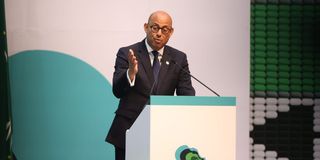
Simon Stiell, the executive secretary, United Nations Framework Convention on Climate Change (UNFCCC), discusses the issues that are likely to be at the centre of the conference, especially in relations to Africa.
From the UN perspective, what do you think Africa is likely to achieve from COP30 that is different from previous conferences?
COP30 provides an opportunity for African countries to show that they are shaping the future, not only by cutting emissions but also by building resilience and adapting to the impacts of climate change. This COP is about implementation.
I anticipate Africa will push for concrete delivery on the commitments made at COP28 and COP29 because these are critical to the continent’s economic transformation. Africa has a strong voice - negotiators will arrive with new national climate plans setting out visions for green economies, and a united voice through the Addis Ababa Declaration that links climate action directly to economic growth and development.
How should African negotiators position themselves at COP30 to ensure the continent’s priorities on loss and damage are not pushed to the back burner?
As a highly diverse continent that has contributed least to this crisis but feels its impacts most, Africa’s voice is strong. Working collectively and building alliances with other regions can help build global progress on loss and damage at COP30.
The Addis Ababa Declaration urged Africa to shift from lamentation of victimhood to a driver of climate solutions. What is Africa expected to do to realise this shift?
The Addis Declaration showed that Africa is not waiting for others to act. The shift lies in translating potential into results. Countries are already investing in renewable energy, climate-smart agriculture, and sustainable land management. By integrating these priorities into updated Nationally Determined Contributions (NDCs), governments can create enabling environments for business and finance. The continent should showcase its innovations and results to the world, proving that Africa is a hub of climate solutions, while still needing more support to scale up and accelerate progress.
Again, the Addis Ababa Summit called for Africa to raise its share of global renewable energy investment from two per cent to 20 per cent by 2030. What, in your view, should be the roadmap?
It starts with policy certainty and regional cooperation. Governments should use their national climate plans –NDCs - to articulate clear renewable energy goals and projects, create stable regulatory frameworks, and strengthen regional power pools to share resources. Partnerships with the private sector, supported by measures that make investment less risky, can unlock large-scale investment. Africa also needs to prioritise skills development so the energy transition creates local jobs. The potential in working together is vast. But this cannot be done by Africa alone. We need more climate finance - more grants and more investment. The Addis Summit provided the vision; policy and partnerships can make it real.
The continent faces large gaps in funding needed for adaptation to climate change effects such as droughts, floods, erratic rainfall and desertification. What is currently available to Africa in monetary terms, and how is it utilised?
Africa receives only a fraction of the adaptation finance it needs, with estimates showing that less than 25 per cent of identified needs are currently met. Funding comes through the Green Climate Fund, the Adaptation Fund, and bilateral channels, but access remains slow and fragmented. The United Nations Framework Convention on Climate Change (UNFCCC) works with African countries to strengthen national institutions so they can receive finance directly and align it with national adaptation plans. Greater predictability and scale are needed, which is something countries can target together at COP30.
The Africa Climate Innovation Compact and the African Climate Facility hope to mobilise $50 billion annually. How realistic is it?
Are the Parties committed to climate finance? If not, what are some of the challenges?
There is broad political commitment, but delivery remains inconsistent. Predictability is a critical challenge as well as accessibility. Many African institutions still face complex procedures to access funds. That is why simplifying processes, increasing direct access, and scaling up grants are so important. These are the kinds of challenges that multilateral spaces like the COPs can mobilise the political commitment to address.
Developed nations still use fossil fuels while telling countries like South Africa to reduce its coal dependency without providing alternatives. Comment?
Equity is at the heart of the Paris Agreement. Developed countries have a responsibility to lead in reducing emissions and to support developing countries through finance, technology and capacity-building. The transition must be just, meaning no country should be asked to sacrifice development without the means to build cleaner alternatives.
Africa’s transition will succeed fastest if it is supported with investment, technology transfer, and fair market access for its renewable resources. African countries’ NDCs are critical economic blueprints for setting out national ambitions to create jobs and attract investment. Ultimately, I anticipate Africa will dramatically increase clean energy use, reducing previous dependencies while driving growth and benefitting societies.
Through the UN, countries have agreed the framework through which all countries accepted to take action to cut planet-heating greenhouse gas emissions, which are largely causing the global climate crisis and worsening climate disasters like massive droughts and floods. The Paris Agreement’s transparency and stocktake mechanisms help to highlight whether countries are meeting their commitments.
Peer pressure from other countries and international credibility are powerful forces for action, and they are already influencing national decisions on climate policy and investment. The massive economic opportunities in the green energy transition are a powerful pull factor.