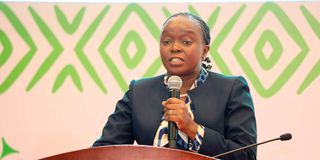
Africa's fight against climate change is being actively sabotaged by the very institutions designed to help it, according to Cabinet Secretary for Environment and Climate Change Dr Deborah Barasa, who issued a stark warning at the African Climate Investment Summit.
Speaking to nearly 1,500 business leaders, investors, and policymakers gathered in Nairobi from October 28-30, Barasa accused international financial institutions of deliberately constructing obstacles that keep the continent impoverished even as it burns.
"In Africa, climate finance has become both the key tool and a weapon," she said, framing the crisis not as a problem of insufficient funds, but as a fundamental betrayal of equity. "Access is slow, complex, and often debt-creating."
The summit, hosted by the Kenya Climate Innovation Centre, exposed a stark injustice at the heart of global climate efforts: Africa contributes less than four percent of global greenhouse-gas emissions, yet receives less than 12 percent of the climate financing it desperately needs. Worse, less than 2 percent of global climate finance currently reaches African innovators, the entrepreneurs building the solutions the world depends on.
Barasa's comments struck at the hypocrisy of a global system that demands African nations to commit to emissions reductions while denying them the resources to build clean economies. Kenya alone needs $62 billion to achieve its emissions reduction targets by 2030, a cost not borne by those who burned their way to prosperity.
"Finance is inefficient, inequitably distributed, and often tied to debt," she said. "It is the single greatest barrier to Africa's adaptation and resilience."
James Muyula from Rainforest Alliance (right) at his exhibition stand engages with Cabinet Secretary of Environment, Climate Change, and Forestry Deborah Barasa (left) and Kenya Climate Innovation Center (KCIC) CEO Joseph Murabula during the African Investment Climate Summit in Nairobi on October 28, 2025.
Photo credit: Bonface Bogita | Nation
The delay itself has become lethal. Policy experts at the summit noted that by the time proposals navigate the labyrinth of international approvals, climate disasters have already struck. "That is the scale of the dysfunction we are dealing with," observed Jane Kiilu, a policy expert attending the conference.
Yet even as traditional climate finance remains trapped in bureaucratic quicksand, Africa's entrepreneurial ecosystem is solving problems. Catherine Masolia, Managing Director of SOMO Africa Trust, emphasised that women, youth, and marginalised communities must be at the centre of the transition, but current funding models systematically exclude them.
"We need to start with grants, then move to concessional loans, and eventually transition to commercial debt," Masolia said. "If we keep using standard financing models, we will keep excluding the very entrepreneurs who drive growth in our markets."
Kenya is attempting to chart a different course. Under President William Ruto's Bottom-Up Economic Transformation Agenda (BETA), the government has tied economic growth directly to green investment. Kenya's updated climate commitments promise a 32 percent reduction in emissions by 2030, with the country seeking $45 billion from international and private-sector partners to supplement domestic investment.
"This is not aid we seek," Barasa told delegates. "It is a direct and transformative investment opportunity for those willing to build Africa's green future."
The government has rolled out regulatory reforms, including carbon-trading policies, green bonds, and public-private partnership frameworks, to channel private capital into renewable energy, sustainable agriculture, and waste management. But these reforms remain largely symbolic without the financial architecture to support them.
The summit's opening sessions explored Africa's opportunities in renewable energy, climate-smart agriculture, and nature-based solutions, highlighting the critical role of public-private partnerships in scaling sustainable initiatives.
What distinguishes this summit from countless previous climate pledges is a hardened demand for action over rhetoric. "Let this summit be defined not by speeches, but by deals," Barasa said. "Not by pledges, but by projects handled."
SOMO Africa Trust, operating across Kenya, Tanzania, and Uganda, represents the model Barasa champions, organisations that empower entrepreneurs in marginalised communities through training, market access, and financing.
Masolia stressed that Africa's green transition cannot rely solely on external funding; it must be powered by African institutions, entrepreneurs, and investors.