Hello

Your subscription is almost coming to an end. Don’t miss out on the great content on Nation.Africa

Ready to continue your informative journey with us?

Hello

Your premium access has ended, but the best of Nation.Africa is still within reach. Renew now to unlock exclusive stories and in-depth features.

Reclaim your full access. Click below to renew.

As climate shocks worsen, families are forced to trade daughters for survival

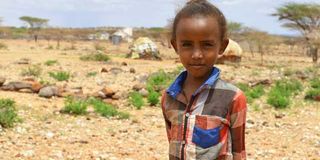
In some parts of the country, some families are marrying off their young girls in exchange for food. PHOTO| SHUTTERSTOCK

What you need to know:

  • More families are pulling their daughters out of school and marrying them off early, exchanging childhood for dowries typically paid in new clothes, drums of fresh milk and several camels or cows to keep the rest of the family alive.

The sun is unforgiving in North Horr, Marsabit County. Rivers that once sustained entire communities now lie buried beneath layers of dust. As drought tightens its grip, a vanished lifeline has given way to hunger, loss and choices no family should have to make.


Livestock is increasingly scarce. Many animals have succumbed to the drought, while the few that remain are driven for miles in search of pasture. The most common sight now is donkeys with yellow jerricans strapped to their backs, ferrying what little water can still be found. But even that is running out. Wells have dried up, and hunger is setting in.


To survive, desperation is reshaping lives. More families are pulling their daughters out of school and marrying them off early, exchanging childhood for dowries typically paid in new clothes, drums of fresh milk and several camels or cows to keep the rest of the family alive.


Among those bearing the brunt of the drought is Wato, a name we give her to protect her identity. She is just 13 years old. Her parents withdrew her from school while she was in Grade four, sending her home to herd livestock in Folore as the drought crisis deepened.
“I had already joined school, but I was taken out.


My older brother told me to go and herd goats while the drought continued, promising that I would return to school once classes reopened. Later, he told me to stay at home until my older sister got married before I could go back to school,” said Wato.


Little did she know her parents had planned to marry her off. In March 2025, she was forced into marriage. She lived with her husband for eight months before fleeing.
“I wanted to finish school, but my parents forced me to get married. I was married and sent to live with an older man, but he mistreated me. I eventually ran away."


She added, “My parents were given seven camels in exchange for the marriage. When I ran away, the man went to my parents’ home to try and bring me back.”


Wato was rescued by the local authorities and is now in a rescue centre, holding onto the hope of returning to school. She is not alone there; other girls are also fighting to reclaim their rights.


“My parents want to take the old man’s camels, but I don’t want that. I tell them I want to go to school, but they say there is no way I am going back to school," said "Kame".


Kame, not her real name, is just 15 years old. Her parents have arranged for her to marry an older man in the hope of getting camels they can use to restock their herd and survive the drought, leaving her fearfully caught between her family’s desperation and her own longing for school and a future.


“I ran away and went to the chief’s office, and he brought me to this rescue centre last week. I want to go back to school.”


As the drought intensified in 2017, Halima also not her real name, was persuaded by her parents to be married. Their livestock, the family’s only means of survival, had been wiped out, leaving them with no way to recover. With few options left, they turned to her. At just 17 years old, Halima became a wife.


“When I was in class seven, my parents told me they wanted to marry me off. At first, I refused. Later, I accepted because I saw how poor they were and felt that even if I continued with school, I might not gain anything," said Halima.


The bride price brought relief to her parents and a chance to restock. For Halima, it brought pain. The marriage collapsed, leaving her caught between survival and loss.


"They only gave clothes and some livestock as the bride price. After we had two children, the man abandoned me. I started doing casual jobs, washing clothes and working at construction sites. Later, I regretted it and wished I had continued with my education, because I would not have gone through all this suffering, " she said.


Halima is now 25, but the shadows of drought and loss still hang over her life.


“I am the one suffering, struggling every day to care for these children,” she says.
These cases spike during long school holidays, when many girls are pulled out of class, and most don't return. For households with no livestock left, girls have become the last hope for survival.


“During droughts, pastoralists face extreme hardship. When they run out of livestock and have no other means to survive, they marry off their daughters in exchange for livestock so they can rebuild their herds. A girl can be exchanged for seven camels, so when someone marries a girl, they receive seven camels, which helps them restock, ”said Nuria Gollo, a human rights defender in Marsabit.


The practice highlights how extreme poverty and drought are driving families to make heartbreaking choices, with young girls paying the highest price.


“Animals are everything to these families. When drought strikes, some parents feel they have no choice but to give away their daughters in exchange for camels, goats, or sheep, trading their children’s childhood for survival," said Leackey Mukanzi, Marsabit Central Sub-County Children’s Officer.


In 2006, Sasin Jalesa was married off by her parents when she was just 10 years old. She was sent far from home, from North Horr to Kargi, cut off from her family, her community, and her childhood. The marriage ended her education and placed her in an unfamiliar environment, where her voice carried little weight and her options were limited.


“When I was married off, the man already had a lot of livestock; camels and goats and he was much older. He brought me to his home, but he did nothing to care for me. He would spend the whole night waiting for food, and I didn’t even know how to cook, said Jalesa.
She was married to an older man who already had several wives. He paid eight camels as bride price, livestock that helped sustain her parents through the drought. But the cost to her was immense, leaving her life permanently altered.


“He also mistreated me in every way, even sexually. I was very young. Even before I could have a child, he died. I was left here all alone. Then the drought took all the livestock. Now I live here like a poor person.”


She is now 29 years old and a mother of four. In her community, women are not allowed to remarry. Today, she is focused on raising and educating her children, determined to give them opportunities she never had.


“You even find that some religious leaders preside over these early marriages, effectively encouraging the practice. These are the very people who should be at the forefront of efforts to end child marriage," said Leackey Mukanzi, Marsabit central sub-county children’s officer.


Mukanzi said that such involvement by religious leaders has made it difficult for his office to end the practice, as community attitudes and traditions often override legal protections for children.


Nuria Gollo, the Executive Director of the Marsabit Women Advocacy and Development Organisation, is working closely with local administrators to push for an end to child marriage. She says cases have declined in Marsabit’s urban centres but remain widespread in remote villages. Having survived child marriage and female genital mutilation herself, she now uses her experience to advocate for the protection of girls and stronger community action.


"Two months ago, we stopped two girls, aged nine and eleven, from being married off. But many cases happen in remote areas, hidden from view, where girls’ voices are silenced," she said.


Nuria said they have human rights defenders on the ground, monitoring communities and protecting the children.


“It is a constant, gruelling fight to keep these children safe,” she added.


According to the 2020 State of Kenya Population Report, around 31.8 per cent of women in Marsabit County were married before the age of 18, significantly higher than the national average of 23 per cent. More alarming are recent estimates by the Demographic and Health Surveys showing that approximately 6.6 per cent of girls aged 12-15 in Marsabit are married by age 15. Teenage pregnancy remains a related concern. Around 29.4 per cent of girls aged 15-19 in Marsabit are either pregnant or already mothers. While not a direct measure of child marriage, teenage pregnancy is a closely linked indicator, especially in cases where marriage follows pregnancy or vice versa.


“The Children Act 2022 is very clear about child marriage. When a case comes to our attention, we rescue the girl so she can receive care and feel safe, while the perpetrator is taken through the full criminal justice process, " added Mukanzi.


The children’s office, in partnership with various stakeholders, has rescued 20 girls from child marriage this year. Many of these girls face severe physical and mental abuse. One of them is Naima, not her real name, married at 17.


“The reason I left the marriage was that he was mistreating me. He wouldn’t give me anything to buy food. When I went to work doing casual jobs, he would stop me. If I cooked for myself, he would ask me where I got the money. There was even a day I had to be hospitalised, and people there told me I could have died if I had stayed in that marriage," said Naima.


She added, “I regret leaving school. I would have loved to join Form 1 next year and continue with my studies.”


With their futures disrupted and childhoods cut short, these girls face a cruel choice: Endure abuse or watch their families perish under the ravages of drought. Their struggle for a future remains bleak and unpredictable, just like the spates of drought that wipe out their flocks and herds without warning. The ultimate clash of culture and the law was exacerbated by drought.
[email protected]