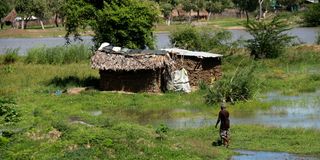
Kenya’s economic and social landscape is highly susceptible to a diverse range of natural and human-induced hazards such as droughts, floods, epidemics, landslides, mudslides, pest infestation and fires.
Disasters from many of these hazards have increased in frequency, severity and complexity in recent years.
Exacerbated by climate change, rapid urbanisation, environmental degradation and population growth, the country faces billions of annual losses as climate risks rise.
These disasters have negatively impacted the economy and placed considerable pressure on public finances, diverting resources from long-term development priorities and slowing progress toward national and county development goals.
Additionally, disasters weaken private sector finances, disrupt business operations, damage assets, affect supply chains, and undermine economic stability. At the community level, disasters cause loss of lives and erode livelihoods.
The impacts of disasters differ among various demographic groups, disproportionately affecting vulnerable people such as women, girls, people with disabilities, youth and elderly people.
Moreover, during disasters, vulnerable people such as persons with disabilities, elderly persons, and marginalised communities face systemic barriers in accessing early warning systems (EWS), evacuation services and recovery support.
Men and youth are also affected, mainly through livelihood disruption and displacement. Despite differences in the impacts of disasters among various demographic groups, existing disaster risk financing instruments do not consistently incorporate differentiated risk profiles, resulting in unequal access to and outcomes from disaster financing interventions
The National Treasury’s Disaster Risk Financing Strategy 2026-2030 shows that more than 80 per cent of Kenya’s landmass is classified as arid and semi-arid lands (ASALs), making drought the leading threat to the country’s economic and fiscal stability.
The 2021-2023 drought which left 4.4 million people in need of emergency support and killed 2.1 million livestock was ranked as the worst the country has experienced in 40 years.
Recurrent droughts disrupt local markets, agricultural output, and food supply chains, contributing to higher food prices, economic stress and reduced incomes.
The report shows that drought disproportionately affects women, persons with disabilities and children and pastoralist communities through increased unpaid care burdens, heightened protection risks and reduced access to services
It further says drought frequently overlaps with conflict and insecurity in (agro-)pastoral areas, exacerbating competition over water and pasture, triggering displacement, restricting access to assistance, and amplifying humanitarian needs and fiscal pressures.
According to Treasury, between 1990-2020, riverine floods, flash floods and urban flooding combined affected over 2.5 million people and caused 1,400 deaths.
“Severe floods in 2018 and 2023/2024 killed hundreds of people, affected and displaced hundreds of thousands and interrupted the delivery of critical services,” read part of the Disaster Risk Financing Strategy 2026-2030 report.
It shows that common flood impacts in Kenya include cholera outbreaks and a rise in mosquito borne diseases, destruction of homes and livelihoods, interruptions in the provision of services like education, health and water and prolonged displacement.
“Flood-related displacement often deepens exclusion, disproportionately impacting persons with disabilities because of inaccessible shelters and women and girls, including heightened exposure to gender-based violence,” reads part of the document.
It affected over 300,000 people across 32 counties and damaged critical infrastructure including roads, schools and agricultural land, disrupted market access, service delivery and labour participation, particularly in flood-prone and low-income areas.
Meanwhile, the March to May 2024 rains produced one of the most severe, widespread flood events with up to 278,380 people displaced, more than 250 deaths reported and at least 412,763 people affected across 38 of 47 counties.
Up to 178 active displacement sites and widespread infrastructure damage (roads, schools, health, water, sanitation and hygiene (WASH) was reported during the period.
The disaster risk financing strategy also listed heat stress as an emerging challenge for Kenya as climate projections estimate a rise in temperature of 1.7 degrees celsius by the 2050s and 3.5 degrees celsius by 2100, globally.
The reports warns that increasing temperatures and extreme heat conditions will affect human and animal health, ecosystems, and agriculture.
“Heat stress disproportionately affects women, older persons, outdoor and informal workers, and persons with disabilities, particularly those with mobility, cardiovascular or respiratory conditions, increasing health risks, care burdens and productivity losses,” reads the report.
At the coastal region, rising waters are increasing the frequency of coastal flooding, storm surges, tidal inundation and shoreline erosion, placing communities, infrastructure and ecosystems at risk.
Average erosion is 3.6 metres per year, resulting in the loss of beaches, coastal land, and natural buffers like mangroves and reefs.
Meanwhile in the lake region, rising waters in Lake Victoria have increased shoreline inundation and erosion, damaging lakeshore infrastructure, disrupting transport and market access routes and displacing fishing and farming communities.
“Both sea level rise and lake level rise disrupt local economies and livelihoods, particularly in fisheries, tourism, and agriculture, leading to loss of income, reduced market activity, and increased economic hardship for vulnerable communities,” reads the report.
It continues “Coastal flooding and erosion disproportionately affect low-income households, women engaged in informal coastal livelihoods, and persons with disabilities, due to insecure housing, limited mobility, and barriers to evacuation, shelter access, and assistance.”
The document warn that economic impacts from disasters are likely to increase further in the future as a result of climate change.
The most recent probabilistic risk assessments estimate average annual agricultural losses from droughts in Kenya at 80-150 million US dollars under the current climate, rising by about 45 per cent by mid-century (2050) under a high emission scenario.
Flood losses are estimated to cost the economy around Sh130 million under current conditions, with up to a 15 per cent increase under the future climate scenario (2050) when the agriculture sub- sector, productive assets, service sub- sector, housing subsector, transportation systems and other critical infrastructures are considered.
The goal of the strategy is to enhance the financial capacity of national and county governments to effectively manage disaster risks to protect the most vulnerable, safeguard development goals, build resilience and ensure fiscal stability.
It lists strategies such as enhanced coordination in disaster risk reduction, retention and transfer across national and county government institutions managing various mechanisms to finance disaster risks. Also, Increased risk-based Public Financial Management, transparency and accountability in Disaster Risk Financing as well as improved financing capacity through strengthened and expanded government portfolio of risk retention and transfer instruments as means of overcoming climate related challenges.
Treasury also calls for increased financing for disaster risk prevention and preparedness to reduce future disaster risk. Further, strengthening key prearranged programmes to protect the most vulnerable populations from the impacts of disasters and contribute to building resilience including scaling up the Kenya Agricultural Insurance Programme (KAIP).