Kenya is preparing to host the Seventh Session of the United Nations Environment Assembly starting December 8, seeking to convert climate diplomacy into concrete environmental action as the world grapples with accelerating environmental crises.
The recent COP30 talks in Belém exposed growing divisions between developed and developing nations over climate finance and ambition. Now attention turns to Nairobi, where UNEA-7 will confront climate issues alongside plastics, chemicals, biodiversity, artificial intelligence, land restoration, water security and pollution.
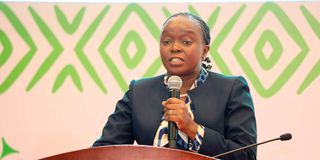
Cabinet Secretary for Environment, Climate Change and Forestry Dr Deborah Barasa, described the Assembly as arriving at a pivotal moment when the world faces complex and interconnected environmental challenges.
"Kenya approaches UNEA 7 not just as the host country but as a global leader and bridge builder, taking lessons from our domestic environmental achievements, to champion ambitious, inclusive and solutions-oriented outcomes that benefit both people and the planet," Barasa said.
UNEP Executive Director Inger Andersen outlined the scale of environmental challenges facing delegates. She cited the agency's Adaptation Gap Report showing that while nations committed to mobilising 40 billion dollars annually for climate adaptation by 2025, only 23 billion dollars have been delivered so far.
The cost of adaptation continues to rise due to delayed mitigation efforts over the past 13 years, Andersen said. Recent UNEP data show that environmental and climate impacts are accelerating faster than international responses.
"Rising emissions are fueling record heatwaves," Andersen said. "Nature and ecosystems are vanishing. Toxins are polluting our air, water, and soil."
For African nations, the funding shortfall underscores longstanding inequities. Barasa emphasised that the continent requires equitable solutions, increased finance and fair partnerships.
"As a continent rich in natural capital yet highly vulnerable to Climate Change and Environmental Degradation, Africa requires equitable solutions, increased finance and fair partnerships," Barasa said.
Kenya's delegation positioned the meeting as a chance to ensure vulnerable regions have a voice in global discussions.
Renewable energy advances
Progress in renewable energy costs offers some optimism. Global utility-scale wind and solar now average between $0.03 and $0.04 per kilowatt-hour, compared to $0.10 for hydrocarbon-based electricity.
Kenya invested early in renewable capacity and has been cited as a success case. Andersen highlighted broader renewable commitments, pointing to China's plan to expand 3,600 gigawatts of renewable capacity by 2030.
"China's production scale has driven down global renewable energy costs and fostered electric vehicle markets worldwide, creating jobs while reducing emissions and air pollution," Andersen said.
However, the phase-out of fossil fuels remains contested. While over 80 countries supported stronger measures at COP26, full consensus was not reached. UNEP continues advocating for gradual transitions while holding nations accountable for climate commitments.
Kenya's three resolutions
Kenya is sponsoring three resolutions at UNEA-7. The first addresses the environmental dimension of antimicrobial resistance through the pollution caused by improper disposal of medicines, antibiotics and vaccines.
"These resolutions call for concrete actions to clean our environment from pollution arising from unsafe disposal of medicines and vaccines," Principal Secretary for Foreign Affairs Dr Korir Sing'oei said.
Dr Korir Sing'oei, the Principal Secretary, State Department for Foreign Affairs.
Photo credit: File | Nation
The second resolution focuses on the environmental sustainability of artificial intelligence systems. As AI accelerates, so does its energy footprint through computing and data storage.
The third promotes sustainable solutions through sport, leveraging Kenya's global sporting reputation to shape public behavior and environmental practices.
Together, the resolutions reflect Kenya's effort to advance Africa's voice on climate action, biodiversity and equitable resource management.
One of UNEA-7's most contentious negotiations will centre on a global treaty to address plastic pollution. Kenya, recognised for its strict anti-plastic policies including the 2017 ban on plastic bags, is pushing for ambitious measures.
In urban centres across the country, plastic pollution clogs drainage systems, fuels flooding, and contaminates soil. Along Kenya's coast, marine ecosystems face damage from plastic waste.
"Kenya will not support a treaty that merely manages waste. The treaty must address the full life cycle of plastics, from production to disposal," Barasa said.
Kenya will host a high-level side event on plastics during UNEA-7 to advance negotiations toward an ambitious accord.
UNEA-7 will examine 19 draft resolutions covering mining and metals, artificial intelligence, wildfires, the hydrological cycle, chemicals and waste, and land restoration.
The Assembly will also launch the Global Environmental Outlook (GEO-7), UNEP's flagship science report produced by 287 multidisciplinary scientists from 82 countries. The report will highlight solutions across economics and finance, circularity and waste, environment, energy and food systems.
Andersen acknowledged slow progress on environmental action. "We are still not on track," she said. She emphasised that progress comes through ongoing multilateral engagement.
"It is ongoing multilateral engagement when countries continue to show up, sitting side-by-side that keeps us moving forward," she said.
More than more than 4,000 delegates, including ministers, heads of state, civil society leaders are expected to attend the assembly.