Kenyan firms earn continental recognition for nature conservation
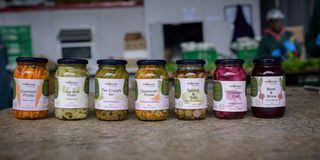
ForestFoods packaged products.

Two Kenyan enterprises using different approaches to turn environmental conservation into commercially viable businesses have earned continental recognition, joining an inaugural group of five African companies selected for a programme seeking to mobilise about $10 million (Sh1.29 billion) in investment.
Acacia EPZ, which exports gum arabic harvested from acacia trees in Kenya's drylands, and ForestFoods, which integrates trees, crops and livestock through regenerative agroforestry, have been selected for the first cohort of the Nature-First Innovation Lab (NFIL).
The two businesses have built their operations around the sustainable use and restoration of natural resources, linking environmental protection with income generation, food production and access to international markets.


Acacia EPZ works with more than 12,000 gum arabic collectors across Kenya's northern dryland counties, over 70 per cent of whom are women, while ForestFoods operates regenerative farms across approximately seven hectares in Limuru, Naivasha, Naro Moru and Timau, with plans to expand to Shimba Hills.
Their selection recognises business models where protecting healthy ecosystems is central to generating revenue, at a time when climate change, land degradation, and pressure on natural resources threaten agricultural production and rural livelihoods across Africa.
Founded in 2015 by Sam Ombogo Nyamboga, Acacia EPZ collects, processes and exports gum arabic, a natural ingredient used in soft drinks, confectionery, pharmaceuticals and cosmetics. Its operations have created a structured market for rural collectors, turning what was previously an informal, largely unpaid harvest into an income-generating activity for thousands of households.
The business is anchored on the conservation of acacia woodlands because the gum is obtained from healthy trees. This creates an economic incentive for communities to maintain the trees rather than clear them for other uses.
Its model is particularly relevant to Kenya's arid and semi-arid lands (ASAL), where communities face prolonged dry spells, unreliable rainfall, land degradation and declining natural resources. Maintaining tree cover can support soil protection, biodiversity and the ecological systems on which pastoral and farming communities depend.
Acacia EPZ has also positioned itself as an alternative supplier in the international gum arabic market following disruptions to supplies from Sudan, a major global producer, because of conflict.
The company uses its proprietary Dukawala digital platform to trace gum arabic from individual collectors to export shipments, providing international buyers with information on the origin of their supplies.
It is also establishing a new sourcing corridor in Abyei, South Sudan, in partnership with local authorities and a cross-border consortium seeking to develop climate-resilient and conflict-free supply chains.
With revenues growing by 56 per cent over the past two years and more than 300 metric tonnes exported to date, the enterprise says it is already selling profitably to international buyers.
Its founder and chief executive, Mr Nyamboga, said the continental recognition acknowledges the connection between protecting natural resources and improving the livelihoods of communities that depend on them.
“Being selected for the Nature-First Innovation Lab is a real milestone for us. It recognises what we have believed since day one: that keeping Kenya's acacia woodlands standing and building genuine incomes for the families who harvest from them are the same task, not competing ones,” he said.
“The world needs a source of gum arabic it can trust, one that isn't tied to conflict, and that is exactly what we are building.”
The second Kenyan enterprise, ForestFoods, is applying a different approach to environmental conservation through syntropic agroforestry, a Brazilian farming method that integrates trees, crops, livestock and soil biology to regenerate agricultural land while producing food.
Founded in 2022 by Sven Verwiel, Michelle Verwiel, Tim Vinopal and Gui Sobral, the company combines agroforestry production with plant-nutrition science, technology, value addition, training and consultancy.
It currently operates across about seven hectares in three distinct agroecological zones, including the Kenyan highlands around Limuru, the Rift Valley around Naivasha and the drier Mount Kenya region around Naro Moru and Timau.
Unlike conventional farming systems that often separate crop production from trees and other ecological processes, syntropic agroforestry integrates different plant species and agricultural activities to improve soil health, support biodiversity and maintain productive landscapes.
ForestFoods produces vegetables, herbs, spices, fruits, eggs and timber, alongside value-added products such as teas, powders, essential oils, dehydrated foods and preserves.
Its farms also serve as training and production centres, supporting an expanding network of outgrowers through agronomic advice, quality control, farm-management technology, logistics, processing and market access.
The company generates additional revenue through farm visits, training courses and consultancy, allowing it to transfer its farming techniques to other producers and landscapes.
It is now expanding to Shimba Hills, where it plans to establish a coastal production, processing and training platform focusing on cocoa and high-value horticultural crops, including vanilla, cinnamon and other spices, alongside fruits, nuts and timber.
The expansion is intended to connect farmers and growers with processing facilities, skills development and reliable markets, strengthening the commercial viability of regenerative agriculture along the Kenyan coast and in the wider region.
ForestFoods Co-Founder and Chief Executive Officer Sven Verwiel said the recognition would help the enterprise strengthen its business model as it expands its operations.
“Our ambition is to show that producing good food, restoring landscapes and creating meaningful livelihoods can go hand in hand with building a commercially successful business,” he said.
“As we expand to Shimba Hills, NFIL will help us strengthen the business model that connects our farms and growers with processing, training and reliable markets. We hope the programme will unlock the investment and partnerships we need to grow, working with people who share our long-term vision for regenerative food systems.”
The continental recognition comes through the Nature-First Innovation Lab, a 12-month accelerator implemented by FSD Africa in partnership with Systemiq and the African Natural Capital Alliance (ANCA), with financial backing from UK International Development and the Norwegian Agency for Development Cooperation (Norad), affiliated with UK and Norwegian governments.
The two Kenyan enterprises were selected alongside Forested, which works with smallholder farmers in Ethiopia, Kenya and Uganda to supply regenerative honey, beeswax, shea butter and oils to international beauty brands, Tanzania's NovFeed, which converts organic waste into fish feed and fertiliser, and Ghana's Savanna Agri Chains, which sources and exports shea butter and baobab through a network of more than 1,000 women harvesters across 22 districts in northern Ghana.
The five businesses form the programme's inaugural cohort, which focuses on regenerative supply chains and enterprises whose commercial activities depend on maintaining or restoring healthy land, forests and soils.
The programme will provide the selected businesses with grants and specialised training in financial planning, financial structuring, corporate governance, measuring environmental impact and investment readiness. They will also receive transaction support to strengthen their business models, improve documentation and prepare for investor scrutiny.
The accelerator will further facilitate introductions to potential investors and provide capacity-building support to help financiers assess nature-positive businesses and their commercial prospects.
The five enterprises have a collective fundraising target of approximately $10 million (Sh1.29 billion), although the amount is a target for investment mobilisation rather than money already awarded to the businesses.
NFIL does not take equity in the selected enterprises. Instead, it provides grants and advisory support to help them reach a stage where commercial investors can assess their financial viability, risks and environmental outcomes before making investment decisions.
The programme is supported by UK International Development, the UK Department for Environment, Food and Rural Affairs and Norad, a directorate under Norway's Ministry of Foreign Affairs responsible for managing international development assistance.
Commercial capital
Dorothy Maseke, Head of the ANCA Secretariat and Lead for Nature Finance and the Taskforce on Nature-related Financial Disclosures at FSD Africa, said many African enterprises with viable products and established revenues struggle to attract commercial capital because of weaknesses in their financial structures, governance and investment documentation.
“A growing number of African enterprises reach technical feasibility and then stall because revenues aren't sufficiently anchored, governance is not investment-grade, and documentation is incomplete,” she stated.
“It's that gap between what grants and philanthropy will fund and where commercial capital begins that NFIL is designed to fill. These five enterprises are already established and generating revenue. What they need now is support to get investment-ready.”
The programme comes against the backdrop of growing recognition of Africa's economic dependence on natural resources. Research by FSD Africa and McKinsey Sustainability estimates that 62 per cent of the continent's gross domestic product depends on nature, making the protection of ecosystems an important economic and development priority.
A 2025 estimate by Boston Consulting Group also placed the commercial investment opportunity associated with regenerating the world's 30 most valuable landscapes at $310 billion.
NFIL complements FSD Africa's Carbon Accelerator Programme for the Environment, which supports nature-based projects where carbon revenues provide the main basis for investment. Unlike the carbon-focused initiative, NFIL targets businesses whose investment cases are anchored in their products, customers and growth potential, with environmental conservation integrated into their operations.
Follow our WhatsApp channel for breaking news updates and more stories like this.