The wildlife champions turning former lion hunters into protectors
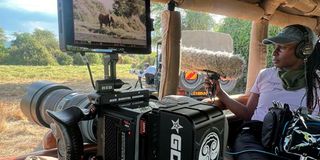
Peter Ndung'u, an explorer and producer of the Pride of Samburu, a film that lay emphasis on protection of lions

At the National Museums of Kenya, there’s a corner room with taxidermy mounts and fossil collections. Walking through it feels like stepping into another time, surrounded by animals that once inhabited the country including species that are now extinct or threatened with extinction.
Often, we hardly notice when a species disappears from our surroundings. Think of the lion. Today, spotting one in the wild is something many people travel long distances for, even as their populations continue to plummet in Africa.
Figures from various datasets including the IUCN SSC cat specialist group African lion database show that Africa has only about 25,000 lions left down from a historic figure of about 200,000. In Kenya, the number of Northern Kenya lions is around 2,500.


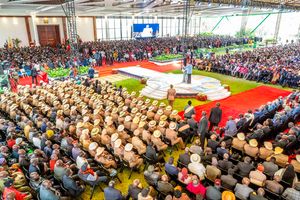
The scale of this crisis, that is the loss of the wildlife and biodiversity, and the urgency of reversing it, came into sharp focus at the 17th Conference of the Parties to the Convention on Biological Diversity (COP17), held recently in Yerevan, Armenia. The conference marked the first global assessment of progress towards the Kunming-Montreal Global Biodiversity Framework, with findings showing that the world is not on track to meet its 2030 biodiversity targets.
But perhaps the scale of this loss is best understood by those who have witnessed it first-hand. As a child, Jeneria Lekilelei, now in his 40s, hated the lions.
“I grew up in Samburu and it’s a free land where lions roam in areas that overlap with human settlements and livestock grazing areas. As a boy, the first challenge you are given is to kill a lion. If the lions kill part of the livestock, it would be embarrassing and a failure of a boy who’s hoping to be a moran to not kill it,” he says.
He speaks about this past with a familiarity that suggests just how deeply it is woven into his upbringing. It is also a story he tells in Pride of Samburu, a film that tells the story of how Samburu warriors, traditionally celebrated for hunting lions to show their strength, have now become some of their fiercest protectors, and in which he is the central character.
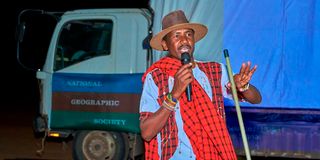
Jeneria Lekilelei, a wildlife conservationist and Wildwatch founder.
The film opens with him reflecting on a time when killing a lion was seen as a display of courage and strength among Samburu boys. And as his story unfolds, you begin to understand why.
“Livestock are our wealth. They are everything to us. It’s like our bank. We didn’t have many threats besides lions and if we wanted to take cows to a place with good pasture, the question was, ‘ can you attack a lion? My father was among the first people to get rivals and I saw him kill lions. I saw other people kill too,” he offers.
He, too, was waiting for his turn to retaliate against the predators. But something happened that would change how he saw lions. Until then, he had never stopped to think about their dwindling numbers. For him and his community, killing lions meant protecting their livestock. The more lions they killed, the safer their wealth seemed.
“Around 2008, when I was 19, Shivani Bhalla, who leads Ewaso Lions, came to our village looking for young men to help collect data on how the community viewed lions,” he recalls. “I was among those selected. I needed the money but I was confused. I thought, ‘Oh my God, is this really a good thing for me to do?’ I wondered whether I was being crazy, following this young woman from Nairobi who didn't understand how dangerous lions were. Was I going against my community's norms and beliefs? What would happen if I was killed?
“There were so many questions running through my mind. I wondered how lions could possibly live alongside people and how I could tolerate them when they killed our cows. What would I tell someone who had lost a cow to a lion?”
But as they continued working together, he began to see lions differently. He started to understand why the animals needed protection and why living alongside them was possible.
Today, he works as an explorer and a defender for the lion to the same community that largely views it as a threat. He is also the founder of warrior watch, which helps reduce cases of human-wildlife conflict.
“My main role is to work with the community. It is about exploring different ways of helping people understand the situation facing lions and the importance of protecting their land. I also work with young people and children, grooming them so that when they become warriors, they do not grow up wanting to kill lions.
In his telling, he wants them to use the same knowledge and skills they would have used to kill lions to protect them. “That could mean alerting the community to avoid certain areas where lions are roaming. That is the bigger role I play as an explorer,” he says.
Photography and videography are also part of his daily work. He photographs individual lions to help identify and monitor them, using their unique spot patterns, which he likens to human fingerprints.
“I know lions better than my cows because of my camera,” he says.
Human wildlife conflict
But these conservation efforts are unfolding against a backdrop of persistent human-wildlife conflict, driven by lions preying on livestock and competition for grazing land and water, often putting communities and wildlife at odds.
“So I actually just go to someone and say, I'm very sorry because every now and then, I also lose my livestock to the lions. I start by sympathising with them then explain to them as to why we shouldn’t kill them and give them reasons to see the animals as more than a threat to their livestock.
For Peter Ndung’u, the story of Samburu’s lions is about much more than wildlife. It is about people, identity and what becomes possible when communities take charge of protecting their natural heritage.
As a National Geographic Explorer and co-producer and cinematographer of the film, he has spent years documenting the relationship between the Samburu community and the lions that share their landscape.
The film celebrates a conservation milestone that has seen the lion population in Samburu grow from 20 to 60, but Ndung’u says its significance goes beyond the numbers.“
In the film, women gather to discuss the future of their wildlife, warriors participate in conservation conversations, while elders reflect on their experiences under a tree. It is a process that brings together different generations and genders. For Ndung’u, this collective ownership is what makes the conservation gains particularly significant.
“It’s not all rosy because some people will lose livestock here and there. And you know what that means, especially to Samburu and pastoralist communities, to lose their livestock,” he says.
A storyteller’s journey
Ndung’u’s own journey into conservation storytelling was not straightforward. He studied law between 2010 and 2013, despite having always wanted to tell stories.
After graduating, he turned to photography, travelling across Kenya and documenting people, places and experiences.
“I just loved telling stories. I loved the access that the camera gave me,” he says. His growing interest in nature and wildlife eventually shifted his photography towards conservation.
A turning point came in 2021, when he joined the African Conservation Voices filmmaking programme, which exposed him to a different dimension of storytelling, particularly the role of film in advancing conversations about people, the planet and wildlife.
But his interest in conservation was also shaped by a question that had troubled him for years: why were so few Africans telling their own wildlife stories? Whenever he watched wildlife documentaries, he rarely saw Kenyans represented among the filmmakers and storytellers.
“I would look at the credits and wonder, why am I not seeing people who look like me? I didn’t recognise the names. They weren’t familiar,” he says.
He began visiting natural spaces more intentionally, eventually directing his photography towards inspiring Kenyans and Africans to appreciate their own wildlife and landscapes. He also wanted to bring local conservation heroes into the spotlight.
That appreciation for local voices and ownership also shaped how Pride of Samburu was made and eventually presented.
The explorer spent about a year researching the story before production began, conducting interviews and spending time in the landscape to understand the people and the issues.
“Pride of Samburu is a play on two things. You have the pride of lions, yes, but then you also have the pride of Samburu itself,” he says.
He describes Samburu as one of the best examples of community-led conservation, where decisions about wildlife are made by the people who live alongside it.
“I would love to see more local conservation storytelling. I hope Pride of Samburu can be a fuel to making sure we have as many people speaking for nature and for wild spaces as possible,” he says.
Follow our WhatsApp channel for breaking news updates and more stories like this.