Security chaos mars opening of COP31 summit in Antalya, Turkey
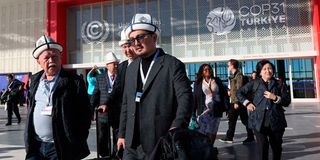
Participants from Kyrgyzstan arrive at the venue on the opening day of the UN Climate Change Conference (COP31) in Antalya, Turkey, November 9, 2026.


IN ANTALYA, TURKEY
The most interesting thing about climate summits is that you can never quite tell what to expect. If climate summits are supposed to offer a clear path forward for a warming planet, Day One in Türkiye started with delegates standing hopelessly still.
As the 31st Conference of the Parties (COP31) officially opened its doors in Antalya, thousands of attendees were met with an immediate bottleneck: a security clearance gridlock that left frustrated delegates stranded outside for hours. From figuring out how to get to the COP venue to spending more than two hours in a queue just to get inside, some reported waiting up to four hours just to pass through the gates, turning the morning of the world premier climate gathering into a frantic scramble.


"It is a logistical nightmare!" one delegate vented, while others muttered it was the most chaotic opening routine they had witnessed at any international climate summit.
After the chaos and uproar, the United Nations Framework Convention on Climate Change had to address the frustrations.
"The exceptionally high level of interest in COP31 has resulted in long queues for registration badges on the opening day," the secretariat said in a statement. "To help ease congestion, those who do not have essential business onsite are kindly encouraged to defer their badge collection. We appreciate your patience and understanding as the registration teams work to accommodate the high volume of participants and facilitate the process as efficiently as possible."
Yet once delegates finally cleared the gates and made it inside, the sounds of modern Turkish music offered a rather unexpected moment of calm. A little reminder that even in the middle of COP chaos, there is room to soak in the local culture. This is COP 31 in the city of Antalya, Turkiye. The first COP was held in 1995 and since then, countries have been meeting every year to chart the way forward out of the climate crisis. More than 100,000 delegates are expected from different regional blocs.
As thousands throng Antalya, it is hard not to look back at the achievements, the missed opportunities and the frustrations that has shaped the journey of these summits. Consider the past few COPs. Even before the end of week one, there were calls for reforms. Some critics called it a circus. A game. Partly because 31 years later, many of the warnings by the scientists have come true, especially in Africa. Many countries are dealing with extreme weather events fuelled by human-induced climate change, and poor countries continue to bear the burden of historical polluters.
Opening the summit, COP31 President Murat Kurum wasted no time setting the tone, declaring this gathering the "Implementation COP." Reminding the room of the stakes, Kurum stressed that each crisis makes the others worse.
"A drought in one part of the world is felt at the dinner table in another," he said in his opening statement.
After decades of grand speeches, historic treaties, and big emissions pledges signed in air-conditioned rooms, Kurum warned that the world has run out of runway for empty promises.
"Now our promises must be backed by capital. That capital must fund investment. And that investment must deliver results," he added.
In the opening plenary, to set the scene for discussions that will go on for the next 12 days, Simon Stiell, UN Climate Change Executive Secretary, emphasised that no COP is a silver bullet.
"No single conference can bridge the chasm between science and reality. We must deal with the world as it is, not as we might wish it to be," he remarked. "COPs have traditionally sent signals. Setting global targets. Deciding the direction of travel. Building momentum and resolve. Since forging the Paris Agreement together, we’ve sent signal after signal to political systems and global markets. That has changed our world," Stiel said.
He also noted the severe economic toll of inaction, pointing out that this year's fossil fuel cost chaos delivered a global shockwave, hitting households hard and spreading inflation like a cancer.
Backing up that urgency, Celeste Saulo, Weather Meteorological Organisation (WMO) Secretary General, releasing the State of the Climate report said that the past four years have been the warmest in the 177-year observational record, and the heat in the oceans is breaking records for the tenth year in a row.
"Behind the headlines and statistics in this report are people who suffered the loss of loved ones, threats to their health and safety, flooded homes, failed harvests, empty shelves, lack of water and choking air," she said.
Already, WMO forecasts that the ongoing El Nino is forecast to be the strongest on record and could impact thousands of people globally as the ocean continues to fuel high temperatures and extreme weather in 2017. The Kenya Met has also echoed this El Nino warning.
More than 150 million people experienced daily maximum temperatures above 35 degrees Celcius, WMO said. Bringing this home, Kenya does not have thresholds for what constitutes heat stress beyond Nairobi, Kisumu and Mombasa, even as some stations recorded daily maximum temperatures of 40 degrees celsius. According to WMO, this year is on track to be the warmest on record globally, which would make 2023 to 2026 the four warmest years on record. The launch of State of Climate report on day one of COP was intentional as the theme of the day centred on food, health, and agriculture. Experts say that climate change is impacting all these sectors.
For developing nations bearing the brunt of these extremes, and particularly for countries across Africa, the central question at COP31 is regarding where the money is. But the undertone of this summit is nothing like people gathering to fight for climate action. In the rooms, there are negotiators, each arriving with a list of priorities and an agenda from their regional blocs. The Africa group of negotiators, chaired by Nana Dr Antwi-Boasiako Amoah of Ghana, has set priorities in three clusters– finance, adaptation and climate and development.
Global adaptation
Highlighting the continent's climate-battered background, AGN leadership emphasised that Africa has considerable experience in developing adaptation plans, assessing climate risks and working with communities to strengthen resilience, and that experience must inform how delegates understand and measure global adaptation process.
For Kenya and the broader African continent, the stakes at Antalya are intensely practical. Amos Wemanya, Senior Climate Advisor at the Nairobi-based climate and energy think tank Power Shift Africa, emphasised that the continent is heading into negotiations fiercely protective of its priorities. Addressing concerns over whether African proposals had been sidelined, Wemanya clarified that regional priorities successfully secured their footing on the agenda following intensive late-night consultations.
"It isn’t accurate to say Africa’s items were rejected. Our proposals were the subject of intensive consultations with Heads of Delegation overnight, and every one of them has found a place in this session’s work. Our top priority, the Climate Finance Work Programme, will be adopted exactly as presented in the provisional agenda. The question of what the Green Climate Fund actually needs, which the COP has not assessed since 2013, will be taken up under the GCF guidance discussions. On trade, we have closed a procedural gap: progress from the trade dialogues will now be captured in the SBI reports and will inform the ministerial consultations. Which was the point of dispute in Bonn," he said
For Kenya, where communities swing violently between severe drought and devastating floods, implementation is crucial because it translates directly into securing predictable, grant-based adaptation finance rather than more debt-inducing loans to help smallholder farmers adapt to shifting rains. Furthermore, with Day One centering heavily on food, agriculture, and health, alongside warnings from agencies that climate extremes threaten acute hunger for millions, Kenyan policymakers are pushing for tangible support for local agricultural systems, youth-led agritech, and climate-resilient water management. Kenya has a delegation led by Cabinet Secretary for Environment, Forestry and Climate Change, Dr Deborah Barasa, who is expected in Antalya later this week.
Follow our WhatsApp channel for breaking news updates and more stories like this.