Late-night talks, trimmed promises and high-stakes push for cash at COP31

Antalya, Türkiye
In UN climate diplomacy, late-night sessions rarely happen by accident. When the clock ticks long past sunset in the negotiation halls, it usually means countries are fighting over money, power, and wording that could shape policies, and budgets, for years.
At COP31 in Antalya, that pressure is now at full stretch. Negotiators are working off a slimmed-down second draft of the summit’s main political text, known as a "cover decision," which cuts the document from 144 paragraphs to 80 and drops explicit language on transitioning away from fossil fuels while spotlighting clean energy, a 35 per cent global electricity share target by 2035, and a call to at least triple adaptation finance by 2035. Almost immediately, critics and vulnerable nations pushed back.


Andreas Sieber, 350.org's Head of Political Strategy said: “We are on the brink of an outrageous and utterly embarrassing lack of leadership by the COP31 presidencies. They have reduced one of the defining challenges of our time to an inconvenient paragraph they would rather delete, while leaving the door open for fossil fuels to masquerade as clean electrification."
Others accused the West of engaging in delay tactics and showing complete disregard for the impacts of climate change on the world's most vulnerable populations.
"Rich countries’ failure on finance is a historic disgrace. They expect developing countries to shoulder the costs of a global transition while refusing to provide the means to deliver it. This is not a failure of technical negotiations. It is a shameless abdication of political responsibility. If this is where COP31 lands, history will remember it as a summit where those entrusted with leadership chose the comfort of inaction over the courage to confront reality, " Andrea added.
"Our red lines are clear," the African Group said.
"Of course we are still engaging on the matter of finance but as the Africa Group, we have been clear that we want grant based financing. Not loans that will continue to burden our people. That the message we came to COP with and we are sticking to it," Debra-Lee Swanepoel, the lead negotiator on climate finance on behalf of Africa, said.
"This is a COP without ambition. The finance has been taken out of the negotiated texts and parked in a cover decision. There it reads as nice words that nobody can be held to. We are not falling for an ‘implementation COP’ that shines things in our faces while it fails to protect people," said Amos Wemanya, senior climate advisor at Power Shift Africa.
Why Ministers met late in the "Divan"
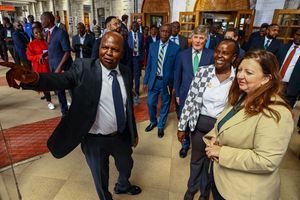
With talks stalling over competing national red lines ahead of Friday’s scheduled wrap, the COP31 presidency convened a "Divan", a high-level ministerial roundtable drawing on an Ottoman-era council tradition, on Wednesday evening from 5pm to 7pm in Antalya’s Blue Zone. More than 100 ministers joined the four-hour session alongside delegations and observers from over 190 countries to test where compromise was possible.
COP31 President Murat Kurum, Türkiye’s environment, urbanisation and climate change minister, said the Divan was needed to bring countries together around implementation despite global political friction and differing national priorities.
"The aim of all of us is to accelerate implementation while staying loyal to the Paris Agreement’s 1.5-degree target, to bring implementation more to the fore," Kurum said. "Here, both developed countries and developing countries are actually in agreement. What is the problem? The problem is priorities—the problem is countries’ development priorities. Within this framework, I believe we can reach consensus, and as the COP31 Presidency, I am expressing that we expect you to achieve this consensus, " he told the ministers.
Kurum also underlined that the presidency wanted frank exchange on what countries could actually deliver and support. Still, the outcome of the Divan left divisions visible. while some described the exchange as constructive, ministers from vulnerable countries said little real progress had been made, and negotiations chair Chris Bowen of Australia warned consultations would run through the night in search of consensus.
Kenya’s priorities on the table
In the Divan consultations, Kenya’s Environment, Climate Change and Forestry Cabinet Secretary Deborah Barasa backed the African Group of Negotiators and urged countries to turn pledges into tangible backing.
"COP31 must send a clear signal that we will deliver on our commitments, with the support and international cooperation needed to turn them into concrete results," Barasa said. "We need a focused outcome that accelerates ambition and implementation, respects national circumstances and safeguards developing countries’ space to pursue sustainable development in line with the principles and provisions of the Convention and its Paris Agreement."
Barasa pressed for action on the risk of overshooting 1.5°C, clean power connected to energy access, clean cooking, and jobs, and credible adaptation funding.
"We are particularly concerned about the lack of resources for the Adaptation Fund," she said. "Its support for concrete adaptation and direct access makes it essential to the implementation agenda we are discussing. Yet pledges at this COP stand at only around USD 51 million against its target of USD 300M per year. This is deeply disappointing."
What it means for Kenya
For Kenyans, the standoff in Antalya is not just diplomatic jargon. It shapes how much external support reaches local priorities without piling on more debt. Kenya relies heavily on climate-sensitive sectors like agriculture and faces recurring climate shocks, making grant-based adaptation funding, early warning systems, and affordable financing for grids and clean cooking vital to household budgets and economic stability.
"We need structured solutions that provide additional resources without deepening the debt burdens of vulnerable countries," CS Barasa said.
With talks nearing their scheduled close, and whispers in the corridors of overtime into the weekend or a possible walkout if core demands are sidelined, ministers are under pressure to deliver an outcome that is accep to all participating countries.
Follow our WhatsApp channel for breaking news updates and more stories like this.