Africa wants the money but wealthy nations are playing hide and seek at COP31
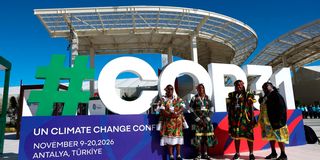
Participants from Vanuatu pose for a souvenir photo at the venue ahead of the United Nations climate change conference, known as COP31, in Antalya, Turkey, November 8, 2026.

In Antalya, Turkiye
The climate negotiations at COP31 in Türkiye are centred on money, targets and commitments. Journalists are tracking the sticking points and final proposals.
The summit is scheduled to end today. However, a source familiar with the negotiations told the Nation that talks could extend into the weekend.


At a media briefing, Sierra Leone Environment Minister Jiwoh Abdulai cited deadly floods in Freetown and a landslide in Kenya as examples of the climate crisis.
“There are those who have historically been polluters, who have been the main drivers of this phenomenon, and then there are those who have historically not been the high polluters who are at the forefront,” he said.
He was referring to developing countries, which bear the brunt of climate impacts despite contributing less to global emissions.
He called for historical polluters to help vulnerable countries adapt.
For Africa, adaptation means preparing communities for a less predictable climate. Abdulai warned that some current responses were damaging the environment.
“The adaptation that they’re doing right now is destructive and it makes the problem worse,” he said.
African representatives argue that adaptation requires adequate financing. Yet, 11 days into the summit, new commitments to the Adaptation Fund stood at just $50.2 million.
The United States, United Kingdom, Canada, France and Italy have made no new funding commitments. Australia, which is co-hosting the summit with Türkiye, has also made no additional pledge.
As of Thursday afternoon, Spain had pledged $27.8 million, followed by Germany with $11.1 million and Ireland with $6.7 million. Belgium pledged $3.2 million, Portugal $1.1 million and Estonia $334,000.
The amount raised represents about one-sixth of the $300 million annual target and falls short of the goal of mobilising $1.2 billion between 2026 and 2029.
The Adaptation Fund is the only international climate fund dedicated solely to developing countries’ adaptation projects, providing grants that cover their full costs.
Frustration is spilling into ministerial discussions. The Nation has learnt that some delegates are considering a walkout to protest the lack of progress.
“It seems developed countries came to COP with no desired outcomes, which leads them to a strategy of backsliding on agreed decisions. This leaves developing countries fighting alone and building consensus among themselves with no real engagement from the other side, effectively undermining international cooperation and climate multilateralism,” a source familiar with the negotiations said.
Civil society groups have described the pledges as “shamefully inadequate”, warning that COP31 could fail to deliver meaningful progress on adaptation finance.
“Adaptation is about survival. We didn’t come to Antalya with sky-high ambitions, but what has been put on the table is pure injustice,” said Pooja Dave, Global Policy Lead at Climate Action Network International. She said last year’s $135 million pledge had fallen to about $50 million this year, calling the shortfall a failure of political will.
Civil society groups fear Africa could be left carrying the burden of securing an outcome at next year’s summit in Addis Ababa.
“But must Africa pay with its life for a multilateral process that is not benefiting the African continent? Those are questions we have to ask ourselves,” said Dr Augustine Njamnshi, co-founder of the Pan African Climate Justice Alliance (PACJA).
Environment Cabinet Secretary Deborah Barasa said the fund’s ability to finance practical adaptation projects and provide developing countries with direct access to funding made it important to COP31’s implementation agenda.
Follow ourWhatsApp channel for breaking news updates and more stories like this.