Nairobi’s El Niño flood dilemma: Warnings to move, but nowhere to go
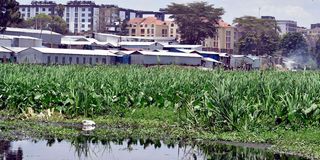
Some of the temporary structures built near Nairobi Dam on September 24, 2026. Residents in the area risk flooding as El Niño rains approach.

At about 7pm on a rainy evening in March, Esther Makhokha was preparing supper with her two sisters in Mukuru Kayaba when the water began rising.
They had children to protect and little time to decide what to do.
They gathered the children and rushed them across to a bar opposite their home, one of the few places that had not yet been heavily flooded.


Ms Makhokha and one of her sisters then moved to a neighbour’s room, where they waited for the water to recede.
In an interview with Nation, Esther said the night left her with a memory she does not want to repeat.
“Last time, we had to run with the children and sleep on the floor at a neighbour’s house,” she said.
The sisters had lived in Mukuru Kayaba since childhood.
Now, as the country prepares for another period of El Niño rainfall during the October-November-December (OND) season, she is again thinking about what will happen to her family if the water rises.
“If the water rises again, I do not know where we will go,” she said.
During the March floods, Ms Makhokha said that neither she nor her sisters received assistance from the county government.
“When the floods came, we did not get any help from the county government.”
Instead, journalists who covered the flooding story helped the family with food, clothes, a mattress and diapers for the children.
“The journalists who came to cover what had happened are the ones who helped us with food, clothes, a mattress and diapers for the children.”
The authorities have been warning residents in flood-prone areas to prepare and, where necessary, move to safer ground.
This time, she has heard that residents are being warned to relocate before the rains intensify.
But the warning has not solved the problem of where she will take her family.
“Even if they tell me to relocate, I do not have anywhere to go,” she explained. “I do not know where I can go. I do not have the money to go. I am just here. So even if the rains come, I do not have an alternative.”
“This has been my home. I have lived here since I was a child. So where am I moving to?”
Ms Makhokha is among thousands of Nairobi residents living in areas that have repeatedly experienced flooding and who are now preparing for another season of heavy rains.
Immaculate Wavinya is also a resident of Mukuru Kayaba facing a similar dilemma.
The single mother has lived in Mukuru Kayaba since 2015. Over the years, she has built a business and raised her child there.
She says residents have attended several meetings where they have been advised to move from areas considered vulnerable to flooding.
“We have been called to several meetings and our leaders are constantly telling us that we need to move.”
However, like Ms Makhokha, the problem is what happens after leaving.
She said: “My family is here. I have built my business here and I have raised my child here. I mean, I have been here since technically 2015. Even if you tell me that I don’t have to be here, where am I going? And I do not have money. Where am I going to get the money to relocate?”
According to Wavinya, residents have not seen sufficient government support on the ground to make relocation possible.
“The government is not helping us on the ground,” she said. “We have not seen them.”
Her concern comes at a time when Nairobi County and other government agencies are intensifying preparations for the expected El Niño rains.
The county says it has identified vulnerable areas, increased drainage works and established evacuation points for residents who may need to leave their homes.
But in Mukuru Kayaba, the experience of the previous floods continues to shape residents’ fears.
Francis Kaviti, an elder and resident of the area, says that the situation became particularly difficult after structures near the river were demolished.
He recalls that during earlier rains, water would rise but did not spread as widely.
According to him, the flooding became more extensive after houses and other structures were removed.
“When the government took the houses down, immediately when the rains came,” Mr Kaviti said, “it flooded, and the water kind of filled the whole area up to the walls of Hazina Estate.”
Mr Kaviti further added that residents understand the need to keep waterways open, but they want an alternative place to live.
“The question is, even if you do that, where are we going to stay? Where are we going to live?” he asked. “We want to see the government coming here and helping us, offering an alternative to us.”
At around Nairobi Dam, opposite the Highrise apartments, Ruth Mwikali is also watching the weather closely.
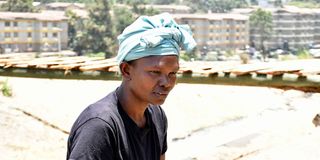
Ruth Mwikali, a Nairobi Dam resident, speaks about her fears over the coming El Niño rains on September 24, 2026.
She has lived in the area for more than three years with her family of five.
She has heard the warnings about El Niño and knows that the area is vulnerable when the rains become heavy.
What she says she has not received is clear information about where her family should go if the water reaches their home.
“I have heard it very well. However, no one has come to the ground to tell us where we are supposed to move to when the rains come,” Ms Mwikali explained, “since when rains start, the waters will move and come to where we live.”
The concerns of residents come as Nairobi County increases its preparations ahead of the expected rains.
For them, the forecast is not simply about the amount of rainfall expected.
It is about homes, children, businesses and livelihoods that could once again be exposed to floodwater.
Nairobi’s flood vulnerability is not confined to one settlement.
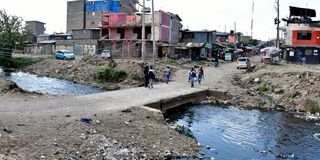
Mukuru Kayaba residents cross a bridge over the Nairobi River on September 24, 2026. Residents hope the coming El Niño rains will not leave them homeless or flood their homes.
Low-lying areas and communities located close to rivers and drainage channels have repeatedly borne the brunt of heavy rainfall.
According to Governor Johnson Sakaja, many of the city’s vulnerable settlements developed around areas that were historically designated as green buffer zones near rivers.
“Many of these settlements came up in areas that were historically designated as green buffer zones along the rivers,” he explained.
However, today, some of these areas are densely populated.
Sakaja cited areas such as Kibra, Mukuru, Mathare and parts of Ruaraka among areas that are frequently affected when heavy rainfall overwhelms drainage systems.
The challenge becomes more severe when large volumes of rain fall within a short period.
“Heavy rains can overwhelm infrastructure within a short time,” he explained. “We saw this in March when about 160mm of rain fell in a single night, triggering flooding and creating an emergency.”
Because of such incidents, the county is saying that it is trying to complete mitigation works before the rains intensify.
According to Nairobi County, it has been coordinating with the Kenya Urban Roads Authority (KURA), Kenya National Highways Authority (KeNHA), Kenya Rural Roads Authority (KeRRA), Kenya Power, the Nairobi Rivers Commission and representatives of the State departments responsible for energy, roads and urban development.
“You can’t tell people just to move and not tell them where to move. It has happened before,” Sakaja said. “That is the work that is happening through our multi-agency team.”
In the Mwiki area of Nairobi, Sakaja says that the county is working on one of the drainage channels serving a low-lying section of the city.
The area, according to Mr Sakaja, has experienced perennial flooding because of its topography and the volume of traffic and development around it.
“This is possibly one of the lowest points of the city as you move towards Ruiru,” he said. “And this area has experienced perennial flooding due to the low nature.”
The county is said to be widening and deepening the channel and clearing it towards the bridge.
Sakaja says that more than 36 sites across Nairobi are undergoing similar interventions.
“The work includes clearing, widening, deepening and desilting drainage channels at identified flood hotspots,” he explained.
At Bunyala Road, Engineer Hesbon Kyalo, an engineer working in Starehe, points to a drainage channel that has repeatedly struggled to cope with heavy rainfall.

Starehe Sub-County Engineer Hesbon Kyalo, speaks about Nairobi County’s efforts to unclog drainage systems and clear buildings from riparian land ahead of the El Niño rains on September 24, 2026.
“The stream becomes overwhelmed during intense rains, causing water to spill onto the road,” he said.
Vehicles have previously been swept towards South B when the water rises.
“That is why the drainage channel is being deepened and opened up,” he emphasised.
The works began on Monday, starting from the Upper Hill and Uhuru Park areas before moving towards Bunyala Road.
Businesses along the road have been affected by flooding in previous rainy seasons.
“A lot of businesses usually get affected around these areas,” he said. “However, this time around we can promise you that that will not happen.”
Kyalo says the ongoing works are intended to increase the drainage capacity before the rains become intense.
In addition, Nairobi County is also asking residents to undertake minor repairs to their homes ahead of the rains.
With that, it has waived approval requirements for minor repairs, allowing residents to strengthen their homes, repair roofs, install gutters and undertake waterproofing without going through the normal approval process.
“We have told our planning officers to exercise discretion because some people might abuse that and now build a whole house,” he explained. “You should not build a whole house. But just use that opportunity to strengthen, fortify your place.”
He says the waiver is intended to help residents prepare early but does not allow the construction of new houses.
Alongside drainage capacity, the county is also dealing with illegal dumping, one of the major problems that has repeatedly contributed to blocked waterways.
“County workers have found clothes, diapers, blankets, mattresses and other waste inside drainage channels,” he noted. “Some of the waste has become compacted or trapped in the drainage system, making it difficult for water to flow.”
The county has more than 4,000 Green Army workers involved in waste collection. However, the governor says illegal dumping continues to undermine the clean-up efforts.
He has warned private waste collectors found dumping illegally that they risk losing their licences.
“I am warning private waste collectors that anyone found dumping waste illegally will risk losing their licence,” Sakaja warned.
The county is also planning stronger enforcement against businesses and individuals found disposing of waste in waterways and open spaces.
“The problem is particularly serious during heavy rainfall because blocked drains reduce the capacity of the city’s drainage network,” he emphasised.
Governor Johnson Sakaja says the county has also established an Emergency Operations Centre and emergency hotlines that affected Nairobi residents can contact.
In addition, 27 evacuation points and shelters have been identified across the city.
The Government says it is also preparing for a multi-agency simulation exercise to test emergency response systems.
“The exercise is expected to assess how agencies would respond to flooding, evacuation and other emergencies,” Deputy President Kithure Kindiki said.
The agencies have agreed to accelerate ongoing dredging, drainage opening and inspection of power transmission lines, among other measures.
In addition, food, non-food items and medical assistance will be provided to people affected by flooding, while residents who need to leave vulnerable areas will be relocated to safer ground.
Follow our WhatsApp channel for breaking news updates and more stories like this