Electronic-waste crisis: Pollutants put environment and public health at risk
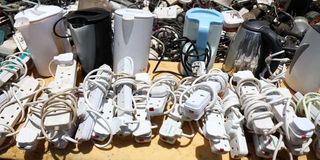
Used electronics and household items put up for sale at a market in Korogocho, Nairobi, on April 3, 2026.


Only about one per cent of e-waste in Kenya is formally recycled, leaving the rest to be handled in unsafe conditions.
Kenya generates 51,000 metric tonnes of electronic waste every year, a staggering volume that contributes about 70 per cent of hazardous materials in the environment.
While many people associate e-waste with high-tech gadgets, much of it actually comes from small household appliances like toasters and vacuum cleaners, which account for nearly 37 per cent of the total.


According to a March 2026 Greenpeace Africa report, these everyday appliances generate 19,737 metric tonnes of e-waste in Kenya
In an interview with Climate Action, Hellen Kahaso Dena – Project Lead for the Pan-African Plastics Project at Greenpeace Africa – said electronic equipment is a complex mix of materials which often become hazardous at the end of their lifecycle.
“These metals are extremely dangerous, and what we see at e-waste sites are high levels of exposure,” Kahaso said.
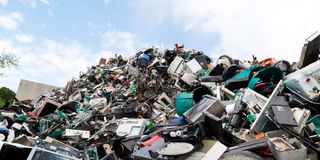
The surge in electronic device consumption such as mobile phones, refrigerators and televisions has resulted in a mounting e-waste problem.
She added that metals make up about 50 per cent of the components in most devices while plastics account for roughly 30 per cent. The remaining 20 per cent is composed of glass, ceramics and hazardous substances that can pose environmental and health risks if not properly managed.
“There are extremely high levels of metals such as lead, cadmium, antimony and mercury, especially at e-waste sites or corridors,” she said.
These substances are highly carcinogenic, posing long-term cancer risks to those exposed.
Others can lead to serious complications such as neurological damage, hormone disruption and cardiovascular and renal dysfunction.
Prolonged or repeated exposure, common among informal waste handlers, has cumulative effects, increasing the likelihood of chronic illness and irreversible damage to vital body systems.
Much of Nairobi’s e-waste ends up in Korogocho, where Kahaso says the human toll is already evident.
The report found that 61 per cent of respondents reported experiencing health problems, with 47 per cent suffering respiratory complications like chest pain and breathing difficulties, and 35 per cent reporting skin infections.
“These people are constantly exposed to toxic fumes and hazardous materials,” Kahaso explained.
“They may not always know the exact cause of their illness, but they consistently report health issues linked to their work.”
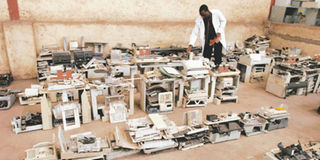
An e-waste recycling centre.
The risks are compounded by the nature of informal recycling. Workers dismantle electronics by hand, often burning cables and components to extract copper and other valuable materials.
This process releases toxic fumes, which are inhaled by the workers and locals.
“Most of the e-waste pickers do not have protective equipment,” Kahaso said.
“They are also exposed to fumes, cuts, burns and heavy lifting without any form of social protection or medical insurance.”
According to Greenpeace, the average age of an e-waste worker is just 21, with children as young as six involved in collecting and sorting.
These young workers face prolonged exposure to toxins during critical stages of development, increasing the risk of long-term health complications.
In addition to direct health impacts, the report warns of an environmental crisis driven by poor e-waste disposal.
“Plastic has about 16,000 chemicals and around 4,200 of these have been proved to be hazardous,” Kahaso said.
“When these plastics disintegrate into micro-plastics, they also end up in water and soil, further compounding the problem.”
Heavy metals from discarded electronics do not degrade over time. They infiltrate water sources and soil, making their way into ecosystems and the food chain.
“When it rains, these pollutants are washed into water bodies and land,” Kahaso said.
“Over time, they contaminate soil and water, and eventually enter the food chain.”
In Nairobi, where urban farming is common, polluted water from rivers is often used to irrigate crops.
“This means toxic chemicals end up in the vegetables consumed and in the animals and fish that rely on these water sources,” she said.
“It is an environmental and human health crisis.”
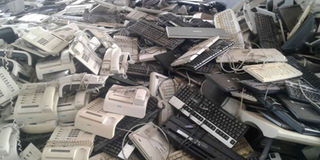
Kenya generates more than 44,000 tonnes of electronic waste (e-waste) each year contributing majorly to environmental degradation.
Unlike organic materials, plastics can take hundreds of years to decompose, while heavy metals remain in the environment indefinitely, continually posing risks to ecosystems and health.
The Greenpeace report situates Kenya’s e-waste crisis within a global context, describing it as part of a broader pattern of “waste colonialism,” where developed countries export near-end-of-life electronics to developing nations.
“For Kenya, about 70 per cent of electronics are imported. Many of them are already close to the end of their lifespan. This means they quickly become waste, adding to the burden on our already limited recycling systems,” Kahaso said.
International agreements like the Basel Convention and the Bamako Convention were established to regulate the movement of hazardous waste and prevent dumping.
Kahaso argues that loopholes and weak enforcement continue to allow e-waste to flow into countries like Kenya.
“Even with these conventions, we still witness dumping,” she said.
“When products are exported at the end of their life, that is waste being transferred to countries that are less equipped to manage it.”
Despite the risks, e-waste remains a critical source of income for many households.
Kevin Otieno, a young man living in Korogocho, Nairobi County, earns a living by collecting waste from homes.
“The first motivation for me to deal with waste picking from homes, where we get Sh20 per house every week, was to make ends meet,” Otieno said.
“I learnt from an organisation called WEEE Centre that e-waste was harmful and if left unattended could destroy the environment. I make extra money selling phone and TV motherboards and any other electronics I get after collecting waste.”
Within this ecosystem, the community plays a huge role in dealing with waste that, according to the Greenpeace report, comes largely from middle-class or affluent estates in Nairobi such as Karen and Lang’ata.
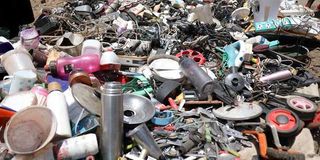
A visit to Korogocho reveals the way the phenomenon plays out. Residents buy sockets, extensions, hot water jugs, shower heads and many other discarded electronics with minor defects that can be fixed.
This provides income for waste pickers and electricians, acting as a lifeline for the community by providing affordable accessories. However, once these repaired items finally fail, they end up in the environment as waste.
Organisations like WEEE Centre in Utawala have set up collection and drop-off points across the country to manage e-waste.
WEEE Centre CEO Boni Mbithi says the company was established to ensure the elements in e-waste do not end up harming the environment and people.
“We collect the waste from companies, schools, homes and government offices,” Mbithi said.
“As long as you are a consumer of electronic products, you are our target because they eventually become obsolete.”
The organisation has handled more than 10,000 tonnes of e-waste, ensuring it was safely disposed of.
“We have done, and continue to do, the safe disposal of e-waste,” Mbithi said.
“This has created at least 5,000 jobs, reduced a huge amount of CO₂ released into the environment, and we are partnering with other companies to do more.”
The company operates several trucks and pick-ups that transport e-waste from corporations and homes. Once items arrive at the WEEE Centre, their data is captured and serial numbers recorded, information that is then used to generate a disposal certificate.
Some components go on for further repurposing, such as at the battery recycling centre, where lithium-ion and lead-acid batteries are processed.
They then move to the testing chain, where viable cells are selected for reuse and returned to society.
The company is working to recover and recycle disposed batteries, preventing them from ending up in the environment and saving up to 70 per cent of waste that would have been discarded.
It helps rebuild batteries for solar systems and electric mobility platforms such as boats, motorcycles and cars.
Discarded batteries are taken apart into single cells and tested to determine their remaining lifecycle. Good cells are kept, while unusable ones are sent back to the WEEE Centre along with other materials that cannot be reused.
The Greenpeace report notes that the main challenges in dealing with e-waste include high import dependency and limited electronic quality standards and checks.
While the informal sector in places like Korogocho dominates collection because of its agility, workers remain at risk without formal protection.
By providing safety training and gear, and establishing fair buy-back models, informal collectors can be safely integrated with licensed recyclers like the WEEE Centre.
Ultimately, the goal is to move towards a circular economy where electronic companies treat e-waste management as a core operation rather than a side project.
This includes enforcing regulations like Extended Producer Responsibility to ensure importers and producers take ownership of a product’s entire lifecycle.
Proper recycling infrastructure would allow the safe recovery of valuable materials, reduce pollution and create safe jobs.
Kahaso emphasised the need for upstream solutions, including designing electronics with long lifespans.
“If manufacturers can prolong the lifespan of devices, we can significantly reduce the amount of waste generated,” she said.
“If a phone can last five years instead of two, that is less waste in the system.”
Follow our WhatsApp channel for breaking news updates and more stories like this.