Failure by the majority of political parties to adhere to the two-thirds gender rule in the composition of their nomination committees is among the reasons the Independent Electoral and Boundaries Commission (IEBC) rejected nomination rules for 94 political parties.
It has also emerged that some of the 94 political parties totally failed to provide names of the committee members of their nomination committees.
According to a source at the commission who was involved in the scrutiny of the rules, the source told the Nation that other parties never had nomination rules leading to rejection by the commission.
The source also revealed that some parties also failed to provide a clear pathway on how they are going to resolve disputes arising from any fallout that would emerge from their nomination exercise.
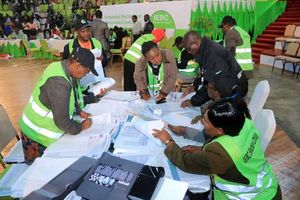
“Some parties just told us that they have put up a nomination committee, but a closer look at their documents did not lead us to any committee. It means those committees only exist on paper,” the source said.
“We are not going to allow any nomination committee that is not constitutionally constituted, the two-thirds gender rule must be adhered to by all committees,” added the source.
According to the source, the commission is determined to ensure that internal political parties’ structures are strengthened in order to conduct a free and fair nomination ahead of the elections.
Parties with a countrywide support base were found to be lacking a clear mechanism and method on how they are going to conduct nominations across the country.
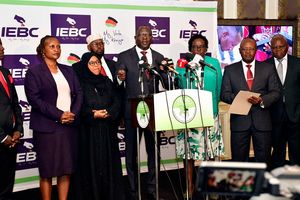
Chairperson of IEBC Erastus Ethekon in a statement said they have communicated the outcome of the first review to the respective political parties and provided the parties found non-compliant with the specific areas requiring amendment.
He noted that the affected parties are required to address the identified deficiencies and resubmit their amended nomination rules within the applicable timelines.
“Non-compliant political parties will be required to rectify and resubmit their nomination rules to the Commission by December 7, 2026,” he said.
Nonetheless, Mr Ethekon clarified that a finding of non-compliance at the first review does not, in itself, constitute a determination that a political party is excluded from participating in the 2027 General Election.
He pointed out that the statutory framework provides for the review of nomination rules and, where deficiencies are identified, requires the Commission to communicate the areas requiring amendment.
Independent Electoral and Boundaries Commission (IEBC) Chairperson Erastus Edung Ethekon.
Photo credit: Dennis Onsongo | Nation
“The Commission’s approach is therefore intended to ensure that political parties are afforded an opportunity to align their nomination rules with the applicable legal requirements while maintaining the integrity of the nomination process and adherence to the statutory timelines,” he said.
Mr Ethekon urged the non-compliant political parties to promptly address the identified areas of non-compliance and to ensure their nomination rules are fully aligned with the law ahead of the commencement of party nomination activities.
On August 25, the IEBC announced key constitutional timelines for the coming elections starting with October 15, 2026 being the deadline for political parties to submit their authorised person(s) and their specimen signatures.
This was to be followed by the political parties having their nomination rules certified by the Registrar of Political Parties on October 30, 2026 before submitting the same to the Commission by November 6, 2026.
However, following the first review of the nomination rules submitted by the political parties for the 2027 General Election, 94 parties were flagged for non-compliance.
IEBC Chairperson Erastus Ethekon said the affected parties now have up to December 7, 2026 to make the necessary amendments to their nomination rules as the clock ticks towards the August 10 elections.
He explained that the review of the nomination rules was to ensure that they comply with the Constitution, the Elections Act and the applicable regulations with the aim of providing for transparent, fair, inclusive and lawful nomination processes.
Consequently, the review assessed, among other matters, the adequacy of provisions relating to the structure and mandate of party election boards, procedures for identifying and nominating aspiring candidates, eligibility requirements for aspiring candidates, procedures for conducting party nominations and procedures for nomination of party lists.
Justin Muturi to IEBC: Be independent and transparent
The other areas the review looked at were mechanisms for ensuring compliance with the law, in particular, provisions on the Electoral Code of Conduct and electoral malpractices, as well as internal party dispute resolution mechanisms.
“Following the first review of the nomination rules submitted by political parties for the 2027 General Election, the Commission found 11 political parties compliant with the applicable legal requirements, while 94 political parties were found to require amendments to their nomination rules,” said Mr Ethekon.