Shifting weather exposes Kenyans to multiple health risks
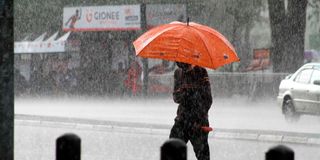
A pedestrian shields himself from rain with an umbrella along Kenyatta Avenue in Nairobi. The Kenya Meteorological Department says 13 counties will experience heavy rainfall this week.

A week of shifting weather conditions could expose Kenyans to a cocktail of health risks, from mosquito-borne and waterborne diseases to heat stress, respiratory illnesses, and injuries if heavy rains result in flooding.
The latest forecast by the Kenya Meteorological Service Authority (KMSA) shows showers and thunderstorms across most parts of the country, creating favourable conditions for malaria, chikungunya and dengue, while flooding could contaminate water sources, increase the risk of drowning and disrupt access to health facilities.
The health risks are not confined to areas expecting heavy rain.


Temperatures above 30 degrees Celsius are forecast in parts of northern Kenya, increasing the risk of heat-related illnesses, dehydration and sunburn, while colder-than-normal conditions in the highlands could worsen respiratory and cardiovascular complications.
Strong winds exceeding 25 knots in parts of Marsabit, Meru, Garissa, Isiolo, northern Turkana, Taita Taveta and Tana River could also carry dust, aggravating asthma and other respiratory conditions and increasing eye irritation.
KMSA expects weekly rainfall totals of more than 50mm in Kakamega, Bungoma, Nandi, Vihiga, Kericho, Mombasa, Kilifi, Lamu, Nyeri and Nakuru.
“Total weekly rainfall exceeding 50 mm is expected in Kakamega, Bungoma, Nandi, Vihiga, Kericho, Mombasa, Kilifi, Lamu, Nyeri and Nakuru Counties,” KMSA reported.
Rain exceeding 50mm is considered very heavy rainfall.
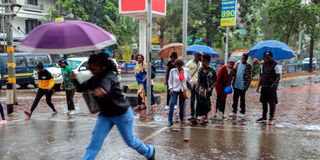
City residents shield themselves from the rain in Nairobi on Sunday, February 22, 2026.
The agency has placed these areas at moderate risk of flooding during the forecast period.
Other counties expected to receive showers and thunderstorms include Kisumu, Homa Bay, Kisii, Nyamira, Migori, Siaya, Busia, Trans Nzoia, Uasin Gishu, Narok, Baringo, Elgeiyo Marakwet and Bomet.
Several places in Kilifi, Mombasa, Kwale, Lamu, Garissa and Tana River are also expected to receive showers, while parts of Wajir and Mandera could record rainfall.
For the health system, the concern is what happens when the rain overwhelms drainage systems, floods homes and cuts off roads.
The Ministry of Health has issued a warning that floodwater can carry human waste and other contaminants into water sources, creating conditions for cholera, typhoid and other diarrhoeal infections.
Standing water can also provide breeding grounds for mosquitoes, increasing exposure to malaria, dengue and other vector-borne diseases.
“Heavy rainfall and flooding can contaminate water sources and increase mosquito breeding,” Principal Secretary for the State Department for Public Health and Professional Standards Mary Muriuki warned. “The health consequences can continue after floodwaters recede.”
The risks extend beyond disease outbreaks. KMSA warns that flooding could disrupt health services, particularly in coastal areas, while injuries and drowning remain concerns in affected communities.
The experience of the last El Niño-influenced rainfall offers an indication of how quickly weather conditions can overwhelm communities and the health system.
According to the Ministry of Health, 43 of Kenya’s 47 counties were affected between September 2023 and February 2024. The country recorded 175 deaths, 40 missing people and 242 injuries, while 384,216 people were displaced into 170 camps. Of the 1,434 health facilities assessed across 11 counties, 64 became inaccessible.
“Increased cases of cholera, Rift Valley fever and malaria were also reported,” Public Health CS Mary Muthoni explained. “Lessons from this period have informed earlier and better-coordinated preparedness measures.”
For a health system, such an emergency creates competing demands, including treating people injured in floods while continuing routine services, responding to disease outbreaks while ensuring medicines reach facilities, and maintaining care for patients who cannot travel because roads have been cut off.
KMSA has forecast a 99 per cent probability of above-normal rainfall between October and December 2026, with the rains expected to continue into February 2027.
“We are acting early and together. We have learnt from previous El Niño emergencies,” PS Muthoni said. “And our goal is to prevent avoidable deaths, disease outbreaks and disruption of health services.”
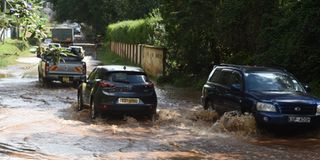
Flooding on the Elgon View State Lodge road in Eldoret City, Uasin Gishu County, after the River Sosiani burst its banks following heavy rainfall on March 23, 2026.
However, rainfall is only one side of the health picture.
While western, Rift Valley and coastal counties prepare for increased rainfall, parts of northern Kenya are expected to contend with intense heat.
KMSA expects maximum temperatures above 30°C in Wajir, Garissa, Mandera, West Pokot, Turkana, Isiolo and Samburu. The warmer-than-normal conditions could increase the risk of heat-related illnesses and dehydration, particularly among people working outdoors.
Children, older people and people living with chronic illnesses may be more vulnerable to the effects of prolonged heat. KMSA also links warmer, sunny and dry conditions, particularly in arid areas, with respiratory illnesses, sunburn, malnutrition and visceral leishmaniasis.
At the other end of the temperature scale, parts of central Kenya and the highlands are expected to experience colder-than-normal nights.
Minimum temperatures are expected to fall in Tharaka Nithi, Meru, Kericho, Laikipia, Nairobi, Kirinyaga, Kiambu, Machakos, Bomet, Nyeri, Kajiado and Narok, with Nyandarua expected to record temperatures below 10°C.
“Minimum temperatures are expected to be lower than normal in Tharaka Nithi, Meru, Kericho, Laikipia, Nairobi, Kirinyaga, Kiambu, Machakos, Bomet, Nyeri, Kajiado and Narok,” KMSA warned. “Temperatures less than 10°C [are] expected over Nyandarua County during the forecast period.”
The colder conditions could increase respiratory illnesses and cardiovascular complications, with children, older people and those with chronic illnesses particularly vulnerable.
Strong winds present another layer of risk.
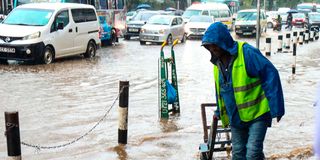
A man wades through a flooded section of Moi Avenue in Nairobi on March 20, 2026, following heavy rainfall.
Southerly to south-easterly winds exceeding 25 knots are expected over parts of Marsabit, Meru, Garissa, Isiolo, northern Turkana, Taita Taveta and Tana River. Besides the potential for property damage, the winds could carry dust and disrupt health services.
“There is a high risk of increased respiratory illnesses and asthma due to dust carried by strong winds,” KMSA stated. “Increased eye sensitivity, especially among older people and possible property destruction as well as disruption of health care services in some areas.”
MOH has consequently urged counties to strengthen disease surveillance, monitor drinking water, prepare emergency response teams and ensure essential medicines and other supplies are available.
At household level, KMSA advises communities to sleep under treated mosquito nets, eliminate stagnant water and use safe drinking water, while residents in wet areas should wear gumboots and avoid walking barefoot.
“Vaccinate livestock against anthrax and Rift Valley fever, avoid consuming meat from animals that die suddenly and buy inspected meat from licensed butchers,” KMSA advised. “Avoid flooded and landslide-prone areas and do not shelter under trees during rainfall.”
The agency has also issued precautions for the temperature extremes expected in different parts of the country.
“Drink water regularly, wear light clothes, avoid alcohol and too much caffeine, wear a cap and sunglasses,” KMSA advised. “Dress warmly and limit exposure to cold, especially for the vulnerable populations.”
MOH is also urging households to boil or treat water when its safety is uncertain and keep it in clean, covered containers.
Residents of the areas at risk are being asked to avoid walking through floodwater and keep children away from it.
Families are further advised to keep essential medicines, first-aid supplies, oral rehydration salts, soap and water-treatment products available.
“Anyone experiencing sudden watery diarrhoea, repeated vomiting, severe weakness, difficulty drinking, reduced urination, bloody diarrhoea or persistent fever,” PS Muthoni explained, “should seek medical care immediately.”
MOH says that oral rehydration solution should be given to an affected person who is awake and able to drink while arrangements are made to access care, while breastfeeding should continue for babies and young children.
“While arranging care, give oral rehydration solution if the person is awake and able to drink,” PS Muriuki said. “Continue breastfeeding babies and young children.”
With the forecast extending beyond the current week, the Ministry says preparedness cannot wait until the rains arrive.
“I call upon every county to prioritize these measures and every family to prepare before the rains begin,” she said.
Follow our WhatsApp channel for breaking news updates and more stories like this.