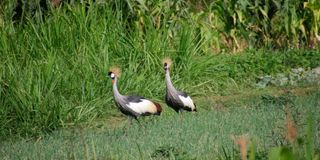
Across Kenya's wetlands, the disappearance of a familiar sound; the call of cranes, is becoming an ecological warning.
According to conservationists, the decline of the grey crowned crane, once a common sight in marshes and floodplains, reflects a wider environmental crisis driven by habitat destruction, climate change, and expanding land use.
Wetlands from western Kenya to the coast are shrinking or degrading under pressure from farming, settlement, and infrastructure development. These ecosystems regulate water flows, filter pollutants, and sustain livelihoods. But as wetlands disappear, biodiversity is declining with them, and the grey crowned crane has become one of the clearest indicators of that loss.
"Cranes are an indicator of a healthy ecosystem," Environment Cabinet Secretary Deborah Barasa said during the launch of the International Crane Foundation (ICF) in Nairobi. "The lack of the voice means that the species is endangered and our ecosystem, our biodiversity is endangered."
A wetland-dependent bird, the grey crowned crane's biology is closely tied to seasonal water cycles and marsh vegetation. They breed primarily in wetlands during rainy seasons, when water levels and food availability are highest, building nests in dense vegetation where they typically lay two to four eggs. They feed on insects, seeds, small vertebrates, and aquatic organisms, making them important mid-level consumers that help regulate insect populations and maintain ecological balance in wetland systems.
However, the crane's decline has been steep. According to the CS, the population of the grey crowned crane has fallen by more than 80 per cent over the past four decades, pushing the species into the endangered category. Its survival is closely tied to wetlands; habitats that are themselves increasingly threatened.
"However, increasing pressures from climate change, habitat degradation, land use changes, and illegal wildlife trade threaten their survival," CS Barasa said. "Its survival is inseparable from the health of our wetlands."
Their disappearance often signals wider ecosystem changes, including declining water quality and biodiversity. This ecological dependence is why conservationists regard cranes as a key measure of wetland health and long-term ecosystem stability.
Conservation organiSations, together with the government, have been working to save the cranes from extinction. According to the last crane census conducted in 2023, the ICF noted an increase in population, with approximately 8,300 cranes counted; a rise compared to the 2019 census.
The survey revealed that only a small portion of about 4.47 per cent of cranes were found within protected areas, with the majority occurring outside these zones. They are particularly concentrated in counties such as Uasin Gishu, Nyandarua, and Trans Nzoia.
To enhance population tracking, conservationists deployed techniques such as colour-branding and ringing of juvenile cranes, which also helped document rare behaviours, including nesting on top of shrubs. Ecological restoration efforts advanced through the planting of more than 12,000 indigenous trees, protection of springs, enhancement of riparian buffer zones, and development of tree nurseries.
Among the wetlands that support both wildlife and local economies but remain under pressure are Yala Swamp, the Tana River Delta, Ewaso Nyiro, and Lake Naivasha. These areas act as natural water reservoirs and buffers against drought and flooding, making their degradation not just an ecological issue but a human one.
Kenya has committed itself to protecting ecosystems through national laws and international agreements, including the Ramsar Convention on Wetlands and the Convention on Biological Diversity. The Constitution itself guarantees the right to a clean and healthy environment.
Yet, wetlands are often drained or converted because they are seen as unused land, while their ecological value is rarely reflected in economic planning. Conservation groups say this disconnect has contributed to steady habitat loss, even as climate change increases the need for resilient ecosystems.
The launch of a Kenya office by the ICF marks a new attempt to reverse the decline, bringing an international conservation group into closer partnership with government agencies and local communities.
"The initiative signals a long-term partnership that will strengthen wetland protection, enhance capacity building, and secure the future of the grey crowned crane and other wetland species," said Dr Rich Beilfuss, president and CEO of ICF.