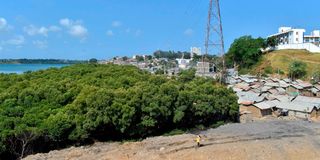
From April 30 to May 1, a high-profile mangrove planting campaign took place at Tudor Creek in Mombasa County. Branded “Kenya Goes Global: 40,000 Mangroves in 24 Hours,” the initiative was led by environmental campaigner Antoine Moses and implemented by the Kenya Forest Service in partnership with the EarthLungs Reforestation Foundation, the Ministry of Climate Change, and global firm Veritree.
The goal was not only to plant mangroves but also to break a Guinness World Record.
On paper, it was everything a modern climate campaign aspires to be: ambitious, visible, and aligned with the 15 billion trees programme. But in reality, it raises uncomfortable questions about how we are choosing to restore ecosystems in this country.
This was not just another NGO-driven exercise; it had the full weight of government presence and supervision. That is precisely why it is so disappointing.
Mangrove restoration is not an event. It is a scientific process. Species selection, hydrology, tidal flows, and site conditions determine whether seedlings survive or fail. A one-size-fits-all approach does not work. Ecological research shows that placing the wrong species in unsuitable zones leads to high mortality and wasted effort.
Yet what emerged from Tudor Creek, particularly from images circulating after the event, suggests a troubling departure from these principles. Large trenches were dug within sandflats to facilitate planting. This is not a minor technical issue; it is a fundamental ecological misstep that significantly alters ecological processes. Digging such massive trenches exposes carbon-rich soil, releasing carbon dioxide into the atmosphere – defeating the very purpose of restoration.
It also disrupts natural hydrology, potentially causing prolonged waterlogging, elevated temperatures, and increased salinity, especially during neap tides.
Furthermore, these areas have high salinity levels that Ceriops tagal (the planted species) cannot tolerate, unlike Avicennia marina. Will they survive? The sandflats are not “wastelands”; they are habitats for benthic organisms, feeding grounds for birds, and support nutrient cycling. Disturbing them at scale can lead to loss of biodiversity.
Mangrove systems are shaped by delicate sediment and water dynamics. Disrupting them at scale can do more harm than good.
Kenya has expertise. The Kenya Forestry Research Institute (KEFRI) and Kenya Marine and Fisheries Research Institute (KMFRI) exist precisely to guide restoration efforts.
Their scientists understand species-site matching, mangrove ecology, and long-term monitoring. Were they involved in site selection, assessment, and recommending the right interventions? If not, why?
When government agencies lead such initiatives, they must safeguard standards and scientific integrity. If a campaign of this scale proceeds without visible ecological guidance, it sends the wrong message: speed and spectacle matter more than sustainability.
A broader pattern is emerging. We are drawn to big numbers —hectares planted, seedlings counted, records attempted. These metrics are politically attractive but dangerously misleading.
Restoration is measured in survival rates, ecosystem recovery, and the return of biodiversity and livelihoods. It is slow, deliberate, and often invisible. True mangrove restoration focuses on processes, not outputs. Baseline assessment and research are essential to understand degradation drivers and inform interventions. It prioritises restoring tidal flows, sediment balance, and natural regeneration pathways. When conditions are right, mangroves often recover without extensive planting—plant only when necessary. When conditions are ignored, even the most ambitious campaigns fail.
Kenya’s coastal ecosystems are too important for PR exercises. They protect shorelines, sustain fisheries, and store vast carbon. Getting restoration wrong is an economic and social issue, not just environmental.
The Tudor Creek initiative should prompt reflection, not only celebration. Close monitoring is needed to inform future interventions.
Are we restoring ecosystems or ticking boxes? If we continue this way, we may hit planting targets but miss the very forests we set out to rebuild.