To understand why Kenya has become the epicenter of Africa's carbon removal movement, one must first grasp the mechanics of Carbon Dioxide Removal (CDR).
Unlike traditional carbon offsets that often focus on avoiding future emissions such as protecting an existing forest, CDR refers to technologies and natural processes that actively scrub Carbon Dioxide (CO2) from the atmosphere and lock it away. It is the process of reversing the flow of greenhouse gases, moving carbon from the air back into the earth's crust or biological sinks.
For a world reckoning with the reality that emission reductions alone are insufficient to meet Paris Agreement targets, CDR has shifted from a niche scientific pursuit to a vital pillar of global climate strategy. In Kenya, this global necessity is catalysed by a unique convergence of geological fortune, renewable energy surplus, and a government that views carbon as a sovereign asset rather than a mere liability.
A 'perfect storm' of conditions
According to Sam Davies, founder of Flux, Kenya currently hosts approximately 80 per cent of Africa's engineered carbon removal startups. This concentration is far from accidental; it is the result of what Sam describes as a "perfect storm" of favourable conditions.
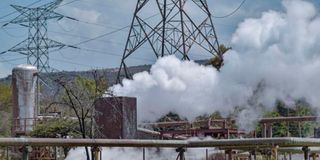
The primary driver is Kenya's power sector, which boasts a grid that is already over 90 per cent green, mainly powered by geothermal, wind, and hydroelectric sources. For energy-intensive technologies like Direct Air Capture (DAC), which require massive amounts of electricity to run the fans and chemical processors that capture CO2, Kenya offers the rare ability to operate at scale without the irony of high operational emissions.
"This clean energy foundation allows startups to achieve high 'net-negativity,' ensuring that nearly every ton of carbon captured is a win for the atmosphere," Sam notes.
Beyond the energy grid, Kenya's diverse landscape serves as a laboratory for various carbon removal pathways. The country possesses the vast biomass resources required for biochar production and the specific geological formations necessary for enhanced rock weathering. This geographical variety is bolstered by the human capital found in
The practical success of these advantages is most visible in the rapid maturation of the biochar sector. Ines Serra, founder of BIOSORRA, notes that Kenya's agricultural landscape, which employs 40 per cent of the population, provides a massive, untapped supply of biomass that was previously burned as waste.
By converting this agricultural residue into biochar, a stable, carbon-rich charcoal, companies can sequester carbon while simultaneously regenerating degraded soil. Ines highlights that this creates a virtuous cycle where climate mitigation directly increases farmers’ yields and profits.
The industry has evolved so quickly that it now dominates voluntary carbon markets. "For Kenya, biochar is a sequestration tool and an economic engine that turns environmental waste into agricultural wealth," she says.
However, a global hub requires more than just resources; it demands a rigorous scientific and logistical backbone to ensure that carbon credits represent real, durable removals. Opeyemi Adelesi, a life cycle assessment expert from Kuhne Climate Centre, emphasises that Kenya's long-term success depends on its ability to implement world-class Monitoring, Reporting, and Verification systems.
"By grounding the industry in scientific transparency, Kenya aims to prove that its carbon removals are measurable and permanent, thereby attracting the highest-tier international buyers and investors," says Opeyemi.
The ascent of Kenya as a CDR leader is also deeply rooted in its forward-thinking regulatory environment. Judy Ndicho, an Article 6 and Carbon Policy expert, points out that the Kenyan government has been proactive in integrating carbon markets into its National Determined Contributions. Recent amendments to the Climate Change Act have provided a clear and stable legal signal to international investors, positioning Kenya as a safe harbour for climate finance. Judy notes that the government's willingness to "test and learn" has allowed for an atmosphere of innovation that is often stifled by more rigid bureaucracies.
As the industry scales, the focus is increasingly turning toward the socio-economic safeguards that ensure local communities are not left behind. "There is a concerted effort to translate complex 'carbon-speak' into local languages, ensuring that land-use changes are understood and supported by those they affect most," she explains.
The financial potential of this emerging sector is staggering. Projections suggest that the CDR industry could attract over $700 million (Sh91 billion) in foreign investment to Kenya over the next decade. This influx of capital is expected to create 76,000 jobs, many of which will be high-skilled roles in engineering and data science.
Ines makes a compelling case for the urgency of this investment, arguing that it is far more cost-effective to fund these pilot projects now than to pay the astronomical costs of climate mitigation later.
She urges the global financial community to recognise that Kenya is ready to receive and deploy capital at scale, providing a rare opportunity to invest in a sector where environmental impact and economic return are perfectly aligned.