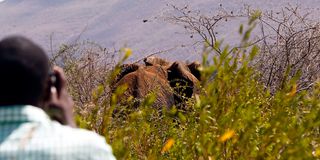
Kenya's wildlife is a global magnet for tourists, yet the country is barely scratching the surface of its transformative economic potential, according to a leading conservation expert.
Dr Julius Kipng'etich, former director-general of the Kenya Wildlife Service (KWS) and current chairman of the Northern Rangelands Trust (NRT), argues that Kenya must fundamentally shift its perspective on wildlife. He advocates for moving beyond a narrow focus on tourism to build a comprehensive "wildlife economy" that benefits the communities who are the backbone of conservation.
Speaking at the second International Wildlife Scientific Conference in Naivasha, Dr Kipng'etich identified a critical gap: the lack of an independent wildlife regulator. "The key missing link is the absence of a wildlife regulator. Just as we have the Communications Authority of Kenya overseeing telecoms, we need an independent regulator to ensure fairness and allow wildlife to flourish as a genuine economic sector."
This regulatory gap, he argued, is particularly crippling community conservancies, the backbone of Kenya's conservation efforts. While the country has about 45 community conservancies, only 14 are financially sustainable. The rest struggle to stay afloat, creating a dangerous incentive.
"If conservancies and private ranches cannot generate sufficient revenue, they will inevitably seek alternatives such as selling land to real estate developers," Dr. Kipng'etich warned. "This displaces wildlife as we are already witnessing in Laikipia."
He challenged the principle of state custodianship of wildlife, which vests all ownership in the government. "Why can't communities own wildlife the way they own cattle?" He asked. "If you allow them to own antelopes, they will farm them and supply high-end hotels instead of viewing them as destructive pests. Wildlife would become a genuine income source, just like tea or dairy farming."
This shift, he argued, would transform the relationship between communities and wildlife from conflict to a proactive one that fosters mutual benefit and collaboration.
For decades, wildlife benefits in Kenya have been almost exclusively tied to tourism revenue. Dr. Kipng'etich described this model as outdated and inadequate, particularly for communities living adjacent to national parks.
"What do you expect a hungry person living beside a park to do when they encounter an antelope? They will kill it for food," he said. "Ironically, KWS then arrests them, and taxpayers fund their imprisonment. We must expand benefits beyond tourism so people view wildlife as an asset, not a burden."
While rejecting calls to reintroduce sport hunting, noting that the reasons citing that the reasons for the 1970s ban remain valid, Dr Kipng'etich urged creative thinking about wildlife monetisation, focusing on three key frontiers:
Drawing parallels with Rwanda's premium gorilla tourism model, he suggested treating the Maasai Mara as the world's premier wildlife destination.
"Scarcity must be understood and respected. The Maasai Mara is unique, and price is the most effective allocator of resources. If we charge appropriately, both government and communities can benefit substantially."
Dr Kipng'etich advocated for payment systems that recognise ecosystem services. He cited Nairobi's water supply as a clear example.
"Nairobi receives 80 per cent of its water from the Aberdares. Why shouldn't city residents pay a modest surcharge on water and electricity bills to compensate Nyandarua, Nyeri, and Kiambu communities for protecting that crucial water tower?"
Carbon credits represent another promising frontier. NRT, for example, has generated Sh3.3 billion ($26 million) over two years by preserving rangeland ecosystems, noted. However, Dr Kipng'etich highlighted significant pricing disparities that disadvantage Kenya in the global carbon market.
"Kenya currently earns approximately $10 per kilogramme of carbon, while other countries command up to $70. This disparity underscores the need for stronger laws and institutions to ensure fair market access."
With Kenya's population projected to reach 160 million by 2100, land pressure will intensify dramatically. Dr Kipng'etich emphasised that protecting animal corridors and investing in wildlife research are not luxuries but economic necessities.
"We must learn from Israel, which has built prosperity on research excellence. Increased funding in wildlife science will generate measurable GDP growth returns," he said.
Dr Kipng'etich's vision for Kenya's wildlife economy rests on three pillars: institutional integrity, community inclusion, and innovative thinking.
"When farmers in Mt Kenya cultivate tea and coffee, they profit and prosper. The same should happen for communities coexisting with wildlife. If they benefit, both the government and KWS will find their conservation challenges significantly reduced."
His message was unambiguous: "Wildlife represents far more than a tourist attraction, it can anchor a thriving economy if Kenya has the courage to expand beyond conventional thinking."